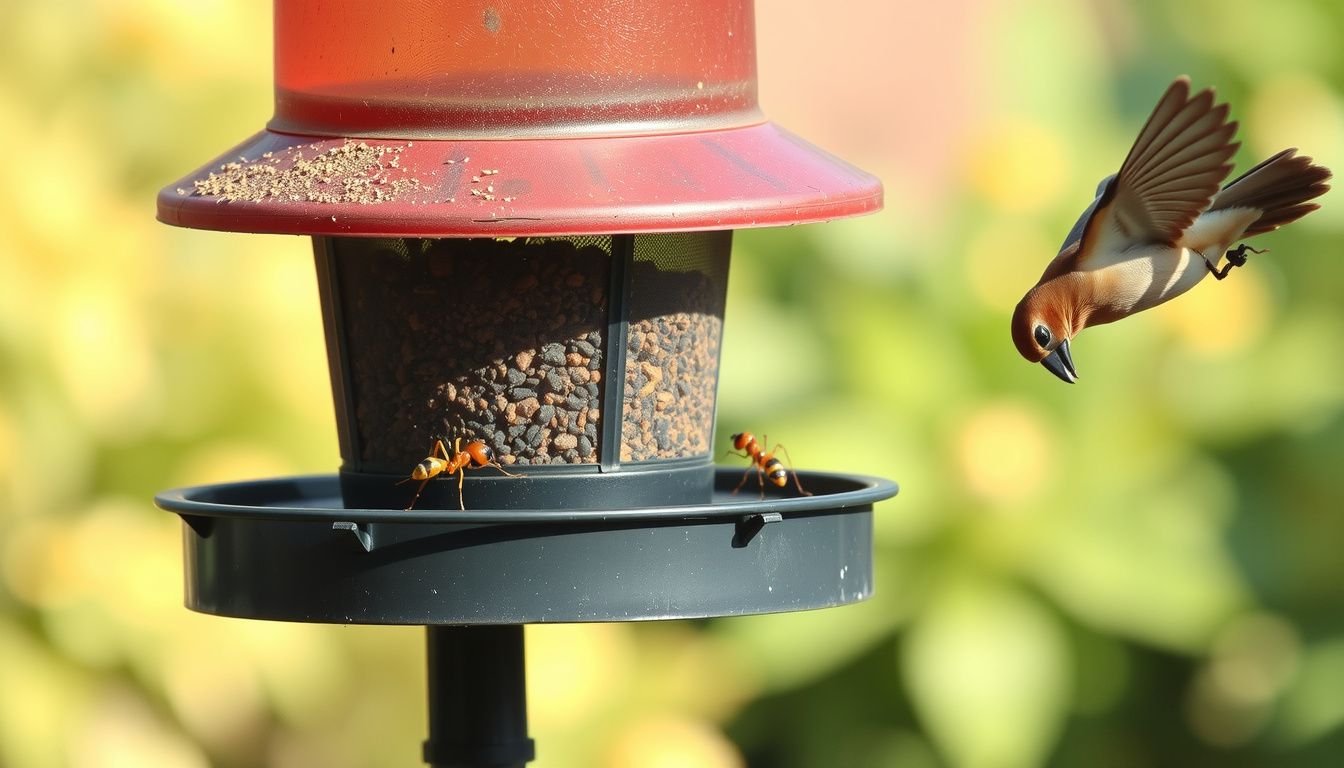
Anyone researching how to keep ants away from bird feeders usually wants fast, safe fixes that won’t harm birds or other wildlife. Ants are persistent, especially near sweet nectar and spilled seed. They can overwhelm feeders, stress birds, and even contaminate food.
The good news: a few simple changes in setup, cleaning, and barriers can dramatically cut ant traffic. This guide walks step by step through assessing the problem, choosing safe tools, applying proven methods, and maintaining results over time. Bird enthusiasts can follow along in a single afternoon, then refine their setup over the next week.
The focus stays on non-toxic, bird-safe strategies that work in real yards, on balconies, and in small gardens.
Assess the Ant Problem Around the Bird Feeder
Before changing anything, they should figure out how ants are reaching the feeder. Ants usually travel in trails along the easiest path: poles, hooks, railings, or nearby branches. A quick inspection shows where to intervene.
They can start by watching the feeder for 5–10 minutes during a warm part of the day. Look for:
- Ant trails going up a pole or down a hanging wire.
- Branches or fences touching the feeder.
- Spilled seed or sticky nectar on the ground or feeder body.
Next, they should note the feeder type. Nectar feeders attract more ants than seed-only models. Feeders mounted directly on decks or railings also give ants a direct highway.
A quick photo of the current setup helps compare “before and after” as changes are made.
Gather Safe Tools and Materials Before Starting
They don’t need much equipment, but having the right items ready makes the process smoother and safer for birds. Everything should be non-toxic and outdoor-safe.
Commonly useful items include:
- Ant moat (for nectar or hanging feeders).
- Pet-safe petroleum jelly substitute or food-grade mineral oil.
- Bird-safe cleaner (diluted vinegar or unscented dish soap).
- Bucket and soft brush for scrubbing feeders.
- Hose or watering can for rinsing and cleaning the area.
For pole-mounted feeders, a baffle or smooth plastic collar is helpful. They should avoid sticky commercial ant products near feeders, strong pesticides, and heavily scented cleaners. A quick checklist on paper ensures nothing is missed once they start moving hardware and cleaning.
Apply Step-by-Step Methods to Block Ant Access
Now it’s time to interrupt every path ants use. The goal is simple: make the route to food longer, smoother, and harder to cross, without affecting birds.
- Clean the feeder thoroughly. Disassemble, scrub with warm soapy water or vinegar solution, rinse well, and dry. Remove all sugar residue.
- Remove bridges. Trim branches touching the feeder, move it away from railings, or hang it from an isolated hook or pole.
- Install an ant moat. For nectar feeders, attach a water-filled ant moat above the feeder. Ants can’t cross the water barrier.
- Use a physical barrier on poles. Install a smooth baffle or collar. On metal hooks, a thin ring of food-grade oil can help, applied sparingly and away from bird contact points.
- Clean the ground area. Rake up spilled seed, rinse sticky spots, and remove fallen fruit that attracts ants.
Real-world example: A homeowner with a hummingbird feeder overrun by ants added a moat, wiped the hook with mineral oil, and moved the feeder 2 feet from the railing. Within 24 hours, ant numbers dropped to near zero.
Maintain an Ant-Free Bird Feeder Over Time
Once ants are under control, small habits keep them from returning. Ants constantly scout, so prevention is ongoing rather than one-and-done.
They can build a simple maintenance routine:
- Weekly: Wash feeders, especially nectar feeders, and refill with fresh food.
- Every few days: Top up ant moats with clean water and check for debris.
- After storms or heat waves: Inspect for new ant trails or branches now touching the feeder.
They should avoid overfilling feeders; less food means fewer spills and less time for ants to find it. During peak ant season, rotating feeder locations by a few feet can break established trails. If ants reappear, they can revisit the earlier steps: clean, remove bridges, refresh barriers, and recheck the surrounding area.
Common Questions
Are ant moats safe for birds?
Yes. Ant moats use plain water as a barrier, so they’re safe when kept clean. The water should be changed regularly to prevent mosquitoes and algae.
Can petroleum jelly be used on feeder poles?
It’s better to use bird- and pet-safe alternatives like food-grade mineral oil, applied thinly. Avoid thick, sticky coatings that can transfer to feathers.
Do ants harm hummingbirds or other birds?
Ants usually don’t injure birds directly, but they contaminate nectar, discourage feeding, and can overrun small feeders. Large invasive ant species may be more aggressive.
Will moving the feeder alone stop ants?
Sometimes, but not always. Moving the feeder helps, yet combining relocation with cleaning, ant moats, and pole barriers gives much more reliable, long-term control.
You’re Ready
They now have a clear process to keep ants off bird feeders: identify how ants reach the food, gather safe tools, install physical barriers, and maintain a clean, well-positioned setup. By focusing on non-toxic methods like ant moats, smooth baffles, and regular cleaning, they protect both birds and the surrounding ecosystem. The next step is simple: pick one feeder, apply the full sequence from inspection to barrier installation, then watch ant activity over the next few days.
Small adjustments based on what they see will fine-tune the system. With consistent habits, bird feeders stay inviting for birds and far less attractive to ants.
Related read: How to Get Rid of Grackles at Bird Feeders Step-by-Step