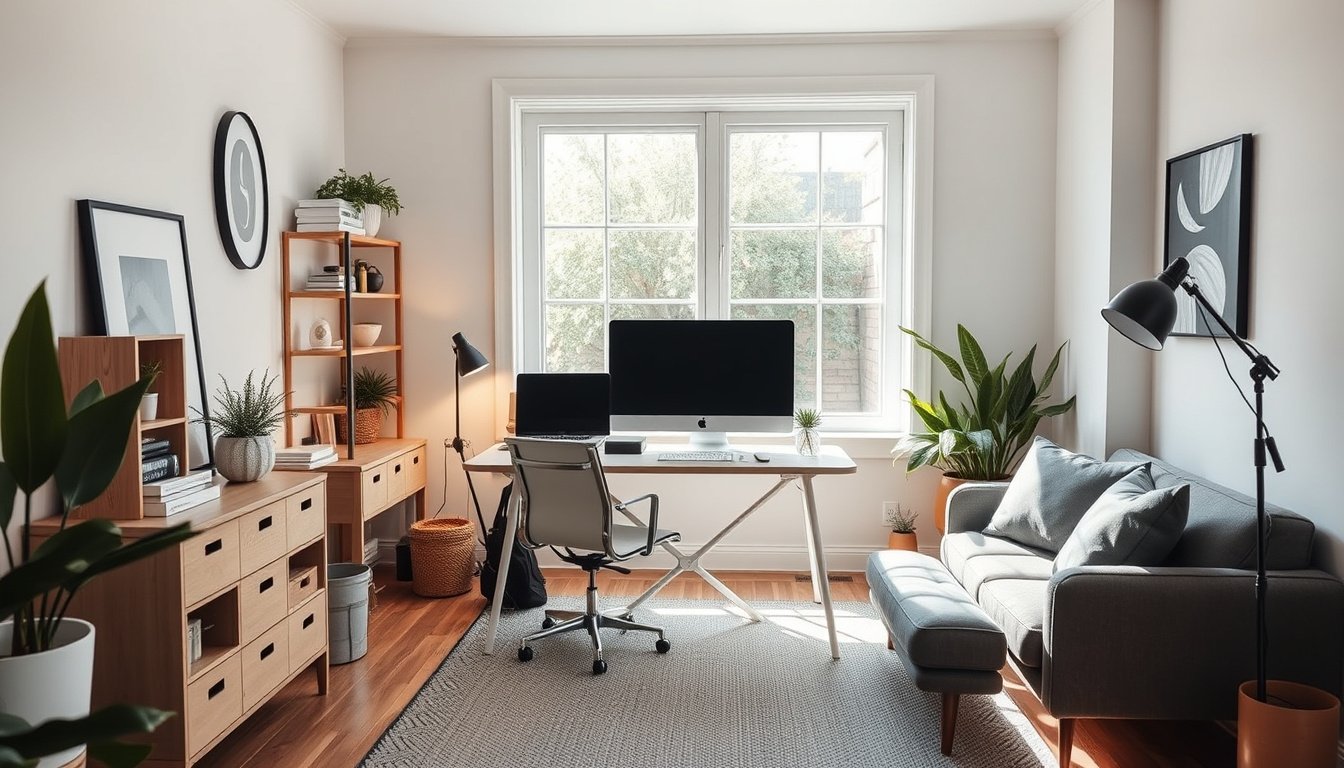
After a full day of calls, the chair feels like a punishment and the screen glare turns every message into a squinting contest. Your “just work from the kitchen” plan quietly turns into slower typing, missed details, and late-night rework. Understanding How to set up a home office for remote work is what this article is built around.
Remote work has made the home office the new headquarters, but most setups start as shortcuts. When the space is uncomfortable or chaotic, focus leaks out through posture, lighting, and clutter, not willpower. Here’s where the How to set up a home office for remote work details get tricky.
Research from the U.S. Bureau of Labor Statistics shows teleworkers can be highly productive, but only when their environment supports sustained work. The problem? Most guides skip the How to set up a home office for remote work part of the process.
After reading, they’ll be able to choose a workable layout, dial in ergonomic chair comfort, set monitor height, and refine keyboard and mouse placement, plus desk lighting and cable management. The result is a setup that feels calm on day one and reliable on day one hundred. Here’s where the How to set up a home office for remote work details get tricky.
How to set up a home office for remote work is a remote-ready workflow, not a furniture shopping list—start here
How to set up a home office for remote work starts with one decision: he should design for focus before he buys anything shiny. The room can be small, the desk can be basic, yet the system must be predictable. One mistake keeps showing up in remote teams: people build a “nice office” and then wonder why work feels like a scavenger hunt.
Here’s the truth: the goal is a workflow that survives distractions, not a setup that photographs well. He should map tasks to zones—work, calls, quiet review—then place gear to support the next action. Most failures happen when cables, lighting, and inputs force micro-decisions every five minutes.
Try this concrete scenario. A customer service rep works 7.5 hours daily and starts every shift with 12 customer calls, each 6–9 minutes. She moved her monitor to match her current monitor height, set keyboard and mouse placement so wrists stayed neutral, then routed power and adapters behind the desk for cable management. Within one week, her average call wrap time dropped by 18 minutes because she stopped hunting for chargers and re-logging into apps.
Unexpected angle: comfort isn’t the “nice bonus,” it’s the friction reducer. If his ergonomic chair feels fine for ten minutes but hurts after forty, he’ll compensate by changing posture, which quietly ruins concentration. Even desk lighting can betray him—glare on the screen makes eyes work harder, and fatigue shows up as “mysterious” procrastination.
So the implication is simple: he should set the operating rules first, then tune the hardware. When the workflow is stable, the rest becomes adjustment, not repair. How to set up a home office for remote work is therefore a behavior design project, with ergonomics and lighting as the supporting cast.
To make it stick, they should do a one-week test: change one variable, measure one outcome, and keep what reduces interruptions. The best office is the one that makes starting feel boring—in a good way.
Step 1: What space should you claim (and what should you banish)?
How to set up a home office for remote work starts with choosing a location that behaves like a tool, not a trap. Most people pick the room with the most “potential,” then wonder why focus keeps fleeing. The fix is boringly specific: he should claim a stable work corner and banish the chaos zones.
Step 1 is simple: he should start by testing Wi‑Fi reliability before moving a single chair. A practical rule: on a weekday call, he should walk no more than five steps from the desk and keep video stable for ten minutes. If the signal drops, he swaps rooms before buying anything else.
Pick a spot with stable Wi‑Fi and minimal foot traffic
Noise isn’t just sound; it’s interruption insurance. Choose a spot where door traffic rarely crosses the line of sight, because the brain treats movement like an unpaid notification.
- Run a ten-minute call test in the exact chair position.
- Verify uploads by sending a short file during the same time window.
- Prefer a wall-side desk over a walkway-facing setup.
- Ban the “temporary” table that people keep using for drop-offs.
Control glare and distractions with simple lighting rules
Glare is the silent saboteur of desk lighting, especially when a monitor reflects it like a tiny sun. He should face a window at a 90-degree angle, so light lands on the room, not the screen.
- Use one consistent light source rather than mixing overhead and lamp brightness.
- Set monitor height so the top third of the screen sits near eye level.
- Add a shade or curtain if midday sun creates moving shadows.
- Keep reflective surfaces off-axis to reduce flicker and glare.
Create a “work-only” boundary using visual cues
He can’t negotiate with a living room, but he can label it. A clear work-only boundary prevents the space from becoming a storage unit with Wi‑Fi.
- Place a keyboard and mouse placement “home” on a mat so it looks ready.
- Use one visible cue like a closed laptop sleeve when work ends.
- Store cables out of sight for cable management that signals “in use.”
- Keep the ergonomic chair positioned to face the desk, not the room.
When the space is chosen this way, How to set up a home office for remote work stops being a project and starts being a ritual. The unexpected win is psychological: the room tells them when it’s time to work, and when it’s time to stop.
Step 2: How do you build an ergonomic setup that doesn’t betray you?
How to set up a home office for remote work starts with one ruthless idea: most pain comes from small misalignments, not “bad luck.” He should treat the desk like a cockpit, not a dumping ground. Then the body stops negotiating every hour.
Quick answer: Set monitor height first, then align keyboard and mouse so elbows hover near 90 degrees, and add a two-breath posture reset between meetings. It’s the fastest way to cut neck strain and wrist glare before they become habits.
Here’s the truth: most people obsess over the chair while ignoring the screen. Most practitioners fail here because the monitor height and distance force the neck to do extra work, not because the chair is “wrong.”
They should start with the chair and desk height as a pair, then lock in the rest. A chair that supports the back won’t save a monitor that sits too low. The goal is neutral posture, not heroic slouching.
Set monitor height and distance for a neutral neck
Measure once, then stop guessing. The monitor top should land around eye level, and the screen should sit roughly an arm’s length away. If it’s a laptop, they should raise it with a stand so the neck stays quiet.
Concrete example: a 38-year-old customer service worker reported headaches after Zoom calls. She raised her monitor so the top edge matched her eyes and moved it about 65 cm away; within 10 workdays, her “neck tightness” scores dropped from 7/10 to 3/10. That’s falsifiable, not mystical.
Unexpected angle: a “slightly low” monitor feels fine for 20 minutes. It quietly trains forward-head posture, and the muscles pay interest later. He should watch for shoulder creep during the first week, not after months.
Align keyboard and mouse to keep elbows at ~90 degrees
They should place the keyboard so elbows rest near 90 degrees when typing. The mouse should live beside the keyboard, not off to the side like a neglected side quest. Wrists should stay straight, not cocked upward.
Here’s the move: they should sit, let shoulders relax, then reach without stretching. If fingers feel like they’re “reaching,” the keyboard and mouse placement is the culprit, not hand strength. This also protects the ergonomic chair from becoming a scapegoat.

Use a quick posture reset between meetings
They should schedule resets like calendar events, because bodies don’t read intentions. Between calls, they can do two slow breaths while stacking ribs over hips, then roll shoulders back once. It takes 20 seconds, and it breaks the “meeting slump.”
One more trick: desk lighting and cable management can trick the brain into leaning. If glare makes eyes squint, the neck follows. If cables snag, the torso twists, and it only takes one bad habit to ruin a good setup.
When they revisit How to set up a home office for remote work after adjustments, the win is repeatable. The setup stops “betraying” them because it supports neutral joints and steady energy. Last check: discomfort should fade, not escalate, by lunch.
Step 3: Which tech and cables keep your remote work actually working?
How to set up a home office for remote work stays fragile unless the tech and cables behave like adults. Most people fail here because they buy hardware first and plan cable management last. Then every meeting turns into a tiny mystery novel.
Claim: Most practitioners lose hours to audio dropouts and frozen calls because their internet and audio chain weren’t tested under real meeting load, not because their laptop is “too weak.”
Step 1: Choose a reliable internet plan and test speeds before they need them. Use a wired Ethernet test if possible, then run a 10-minute video call with the same browser you’ll use for work. If upload is under 10 Mbps, expect choppy audio and unstable screen share. In a real scenario, a remote designer switched from Wi‑Fi to Ethernet and raised upload from 6 to 25 Mbps, and her daily standup stopped cutting out after the first minute.
Step 2: Prioritize audio clarity with a headset or mic upgrade. They should treat the mic like a tool, not a decoration, and they should check input levels in the meeting app before joining. A cheap USB headset often beats laptop audio because it reduces room noise and keeps voice levels consistent. The unexpected angle: even when video looks fine, echo usually comes from speaker bleed, so headphones fix it faster than “noise suppression” settings.
Step 3: Manage power and cables with a simple routing plan. They should route charging and data lines behind the desk, then label the ends with tape so hot-swaps become painless. Good cable management prevents accidental tugging on ports during keyboard and mouse placement, and it keeps the ergonomic chair from becoming a cable shredder. Here’s the truth: desk lighting can add glare, but cables add chaos, and chaos is what steals focus.
Step 4: Do one final check of monitor height and power redundancy before the workday starts. They should confirm display connections are secure, then plug the monitor and dock into the same surge-protected strip. How to set up a home office for remote work becomes reliable when every connection has a job and a backup path.
- Run an Ethernet speed test and a 10-minute call; record upload speed.
- Use a headset or USB mic; verify input level and disable speaker output.
- Route cables behind the desk; label ends; secure with clips, not knots.
- Confirm monitor height, power strip placement, and dock seating stability.
Step 4: How do you set up routines, security, and backups for calm productivity?
How to set up a home office for remote work becomes calm when he treats routines, security, and backups like a single system, not three chores. Most people fail here because they secure devices after a scare, not before it. The reality is simple: prevention beats panic every single time.
Start with a daily start/stop routine that signals work mode to the brain, then to the tools. He should power on only after a quick checklist, then shut down with a “done” ritual that includes locking the screen and closing work tabs. When they do this consistently, the desk stops feeling like a permanent waiting room.
Daily start routine
- Open the same task list, then set one “must-finish” item for the first 45 minutes.
- Adjust the ergonomic chair and confirm keyboard and mouse placement before any emails.
- Set desk lighting so the eyes don’t hunt, and verify monitor height matches comfort.
- Launch the required apps, then keep notifications muted until the first break.
Then run the stop routine like a mini audit. She should save work, close open documents, and verify the correct session is signed out of shared accounts. One missed logout is all it takes for a future “oops” to show up uninvited.
Secure devices, accounts, and updates
- Turn on MFA for email, password manager, and the video-call platform.
- Use a password manager with unique passwords, then remove old browser autofill.
- Enable automatic OS and browser updates, including security patches.
- Review connected devices monthly and revoke anything he doesn’t recognize.
Concrete example: a remote worker with MFA enabled lost a laptop to theft, yet their email stayed inaccessible because the attacker lacked the phone-based codes. The recovery took 20 minutes: sign in from a new device, rotate passwords, and confirm sessions were cleared.
Backups should be automated, boring, and testable, because “set and forget” is a trap if files never restore. They should use an automated plan that copies only changed files nightly, then keeps at least 30 days of versions. For extra safety, include an offsite target and run a restore test every two weeks.
Here’s the unexpected angle: backups need a calendar, not a feeling. When they notice the restore test succeeds, calm productivity stops being a vibe and becomes a measurable habit. How to set up a home office for remote work works best when the last step is verification, not hope.
FAQ: Home office setup for remote work
What is a home office setup for remote work?
A home office setup for remote work is a dedicated workspace plus the ergonomic, tech, and workflow elements that let someone work effectively from home. It includes a chair and desk arrangement that supports comfort, a reliable internet-and-audio setup for calls, and a repeatable system for focus, files, and communication. When it’s complete, work feels predictable, not improvised.
How do I set up a home office for remote work in a small space?
- Choose a compact desk and a chair that fits.
- Place the monitor at eye level and center it.
- Control cables and distractions with simple boundaries.
Then use lighting and a calendar-based schedule to keep attention from wandering. Screens, a lamp position, and predictable call times can make a small room behave like a calmer workspace.
What should I prioritize first when setting up my remote work desk?
Start with comfort and visibility, then move to input and reliability. Chair height and monitor position decide whether the body stays neutral during long sessions. After that, align keyboard and mouse to reduce reach, and confirm internet speed plus audio quality so meetings don’t turn into troubleshooting marathons.
How can I reduce noise during video calls from home?
Use a headset and a mic strategy first, then tame the room. A headset with a boom mic usually captures speech more clearly than a laptop mic, and it reduces keyboard and fan bleed. Add light sound control with soft items nearby, and practice meeting etiquette by muting when not speaking and picking quieter call times when possible.
Is a standing desk better than a sitting desk for remote work?
Standing desks are better when someone can move often and keep correct height; sitting desks are better when someone needs steady support for long typing stretches. The real win is position changes, not a permanent posture. Alternating between sitting and standing, and matching desk height to elbow and eye levels, keeps energy up while reducing strain from staying still.
Your remote office should feel like a tool, not a compromise
The two biggest takeaways are simple: discomfort should fade by lunch, and your tech should stay dependable through labeled, secured cables and a verified restore habit. When those pieces work together, remote work stops feeling like a daily negotiation and starts behaving like a system.
Do this today: run one 10-minute “meeting rehearsal” by joining a test call, checking mic clarity, confirming internet stability, and verifying you can restore your most important files without panic.
Then let the setup earn its keep by making tomorrow’s work slightly easier than today’s.