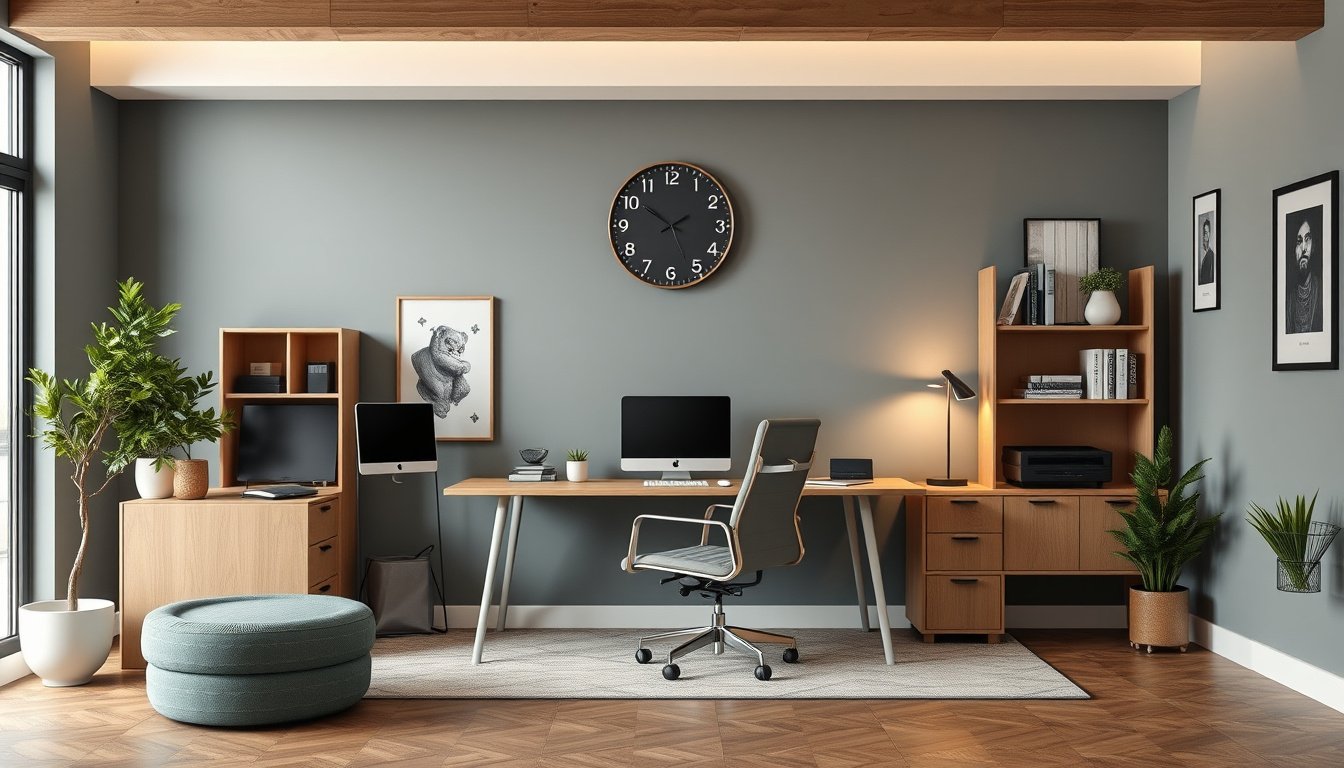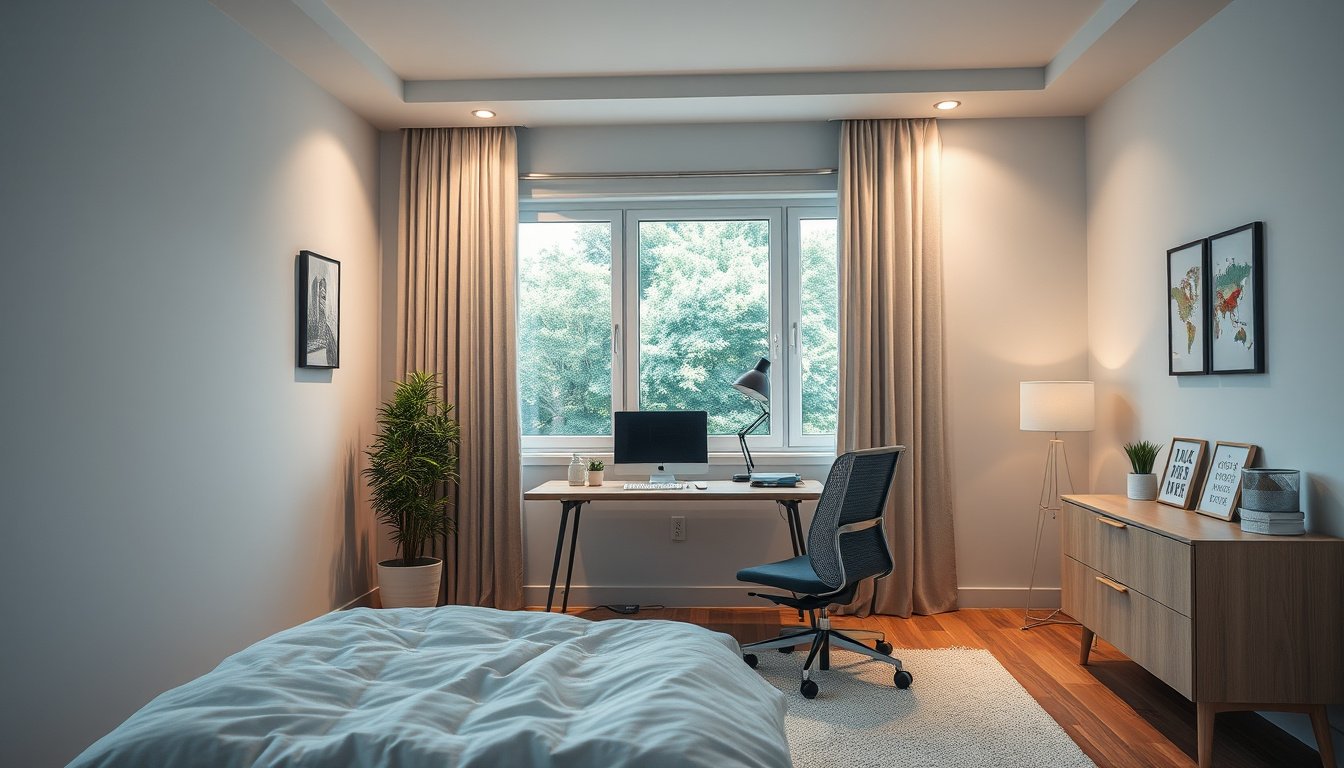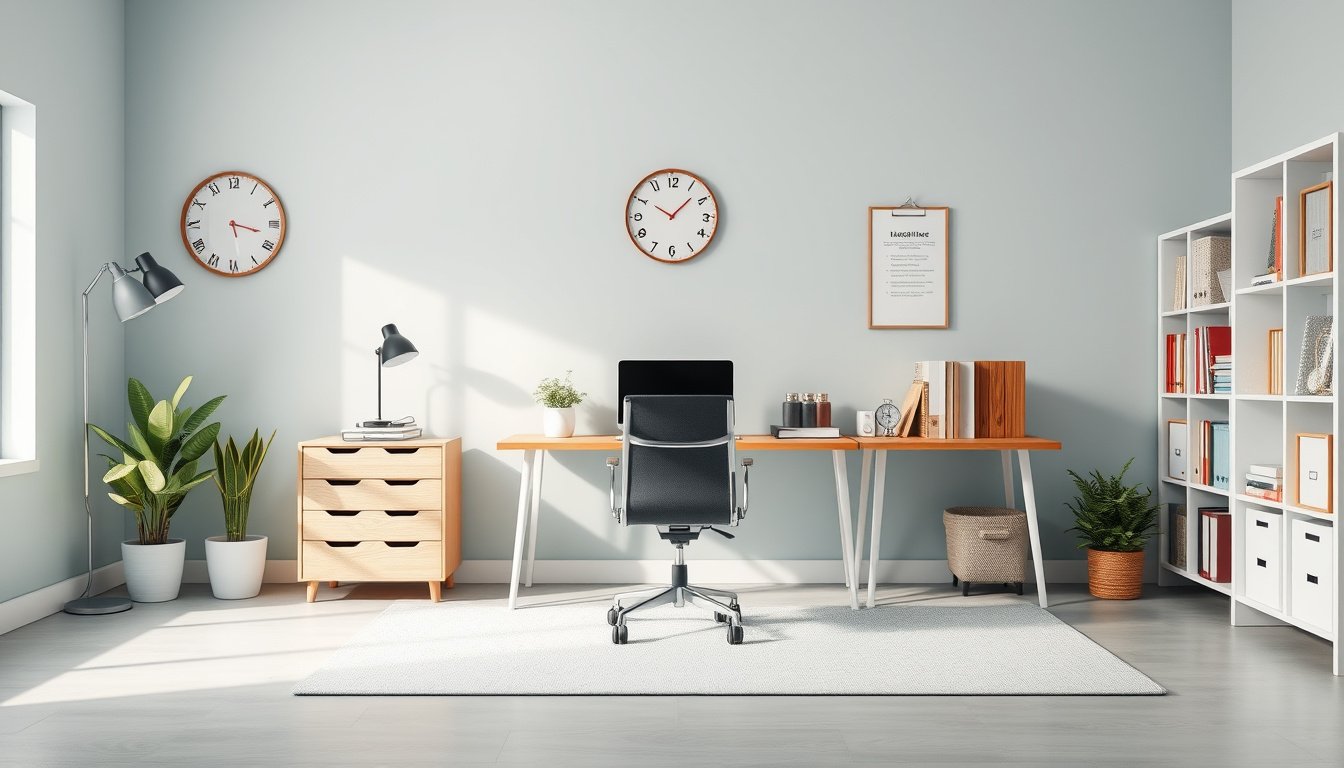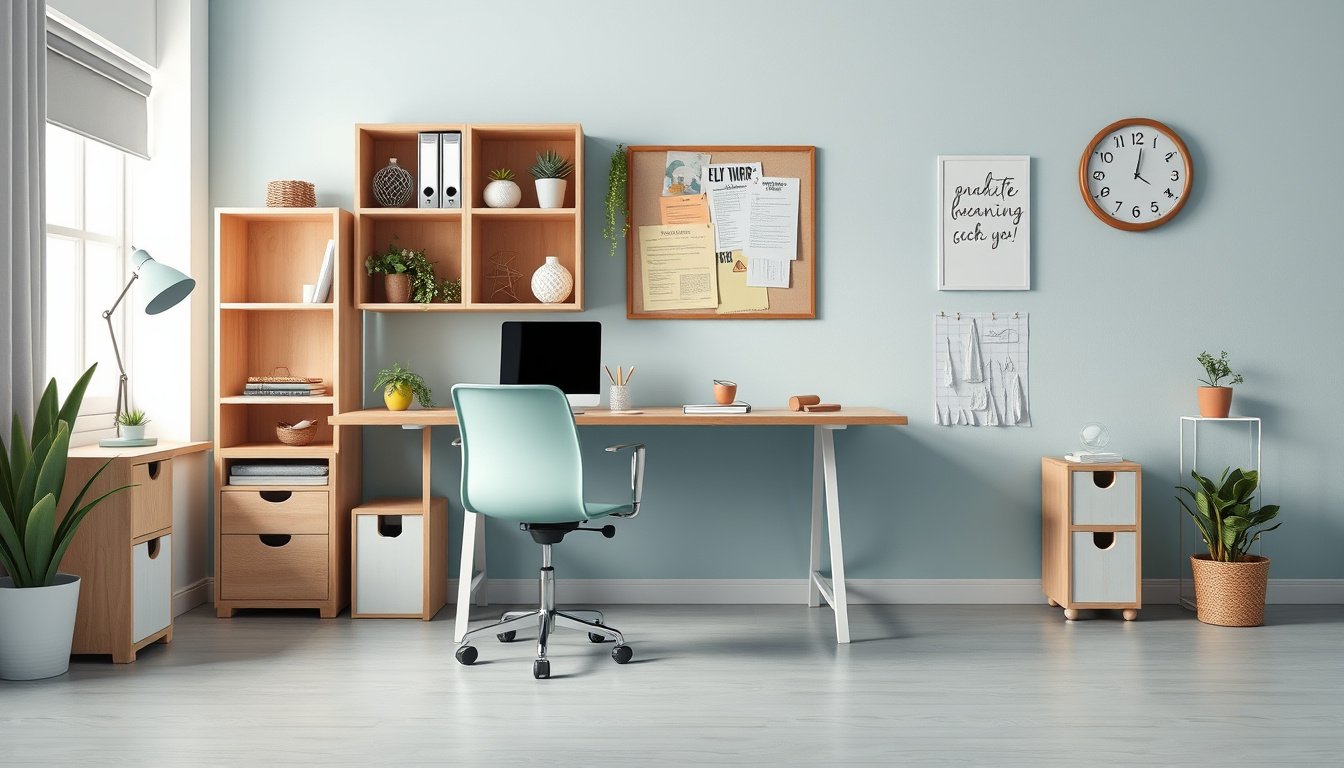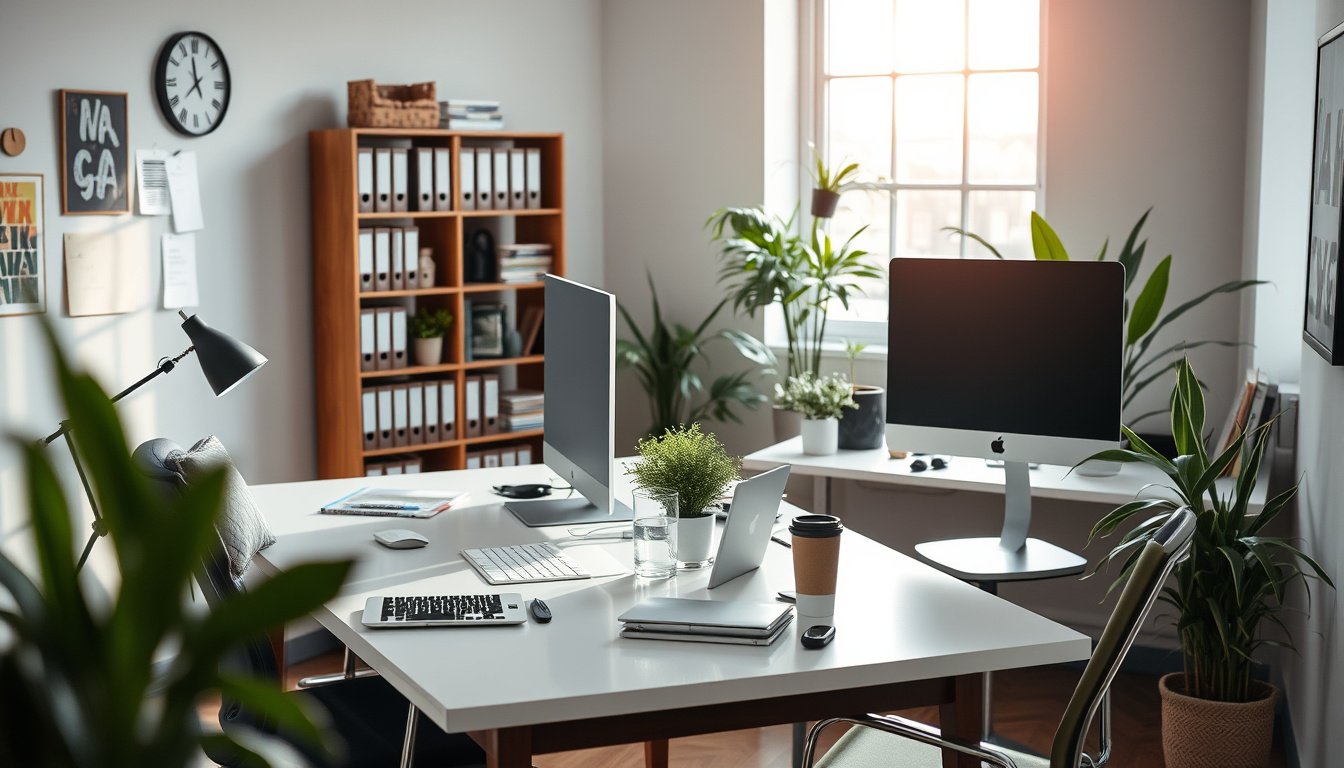
She sits at her desk, glancing around at the bland gray walls and mismatched file folders, wondering how anyone can stay inspired in this sterile environment. How to decorate my office at work suddenly feels less like a frivolous impulse and more like a creative survival strategy.
Personalizing a workspace isn’t just about aesthetics—it’s about reclaiming a sense of identity amid fluorescent lighting and generic cubicle panels. Office decor ideas and the right desk accessories can transform a professional workspace from uninspired to inviting, making even the longest days feel more manageable. Studies suggest that workspace personalization leads to higher productivity and greater job satisfaction, especially when small touches like office plants or meaningful art make an appearance. But How to decorate my office at work isn’t quite that simple in practice.
By the time you reach the end, you’ll know exactly how to turn your office into a place that feels uniquely yours—without risking a memo from HR or your own sense of professionalism. The problem? Most guides skip the How to decorate my office at work part of the process.
What Does ‘How to Decorate My Office at Work’ Really Mean?
Office decoration is the conscious transformation of a professional workspace into a personal, functional, and inspiring environment that reflects an individual’s values, fosters productivity, and supports mental well-being. But How to decorate my office at work isn’t quite that simple in practice.
At its core, “How to decorate my office at work” isn’t just a plea for stylish desk accessories or a Pinterest-worthy collection of office plants. It’s a declaration of intent: to create a space where the mind can focus, ideas can spark, and the day doesn’t drag on like a poorly written memo. The real meaning lies in balancing self-expression with the unspoken rules of the professional workspace—think less neon flamingos, more subtle flair.
The claim: Most people fail at office decor not because they lack taste, but because they underestimate the psychological impact of their surroundings. They obsess over color swatches and ignore the invisible script that workspace personalization writes into daily habits.
Take the case of Sarah, a financial analyst who swapped her bland cubicle for one accented with a framed photo from her hiking trip, a single pothos, and a quirky hourglass timer. Within three weeks, she reported fewer afternoon slumps and a measurable increase in her completed reports—her manager even noticed her sharper focus during meetings.
Here’s the twist: The real power of office decor ideas isn’t what outsiders see—it’s how small, intentional changes recalibrate the owner’s brain. A single object with personal meaning can trigger a micro-routine that cues productivity, calm, or confidence. This is why the question “How to decorate my office at work” is less about aesthetics and more about engineering a better daily experience.
Step 1: Assess Your Space and Company Policies
Before anyone attempts to answer “How to decorate my office at work,” the real step one is less about color swatches and more about reconnaissance. It’s a tactical maneuver: mapping one’s territory and decoding the office rulebook—often more labyrinthine than the floor plan itself. Most people skip this, convinced that inspiration boards alone can solve spatial puzzles, but that’s exactly where the majority trip up; it’s policy, not taste, that sets the first boundary.
Consider this: Sarah, an accountant at a mid-sized firm, took out her measuring tape before buying anything. Her cubicle was precisely 48 inches wide, boxed in by two immovable panels and a fire exit. She learned—by actually reading the handbook—that only three personal items were allowed in open view, and office plants had to be smaller than a shoebox. Result? Her workspace personalization succeeded because she measured first and bought decor second.
One-liner: The best office decor ideas die in the waiting room of HR if you ignore the fine print.
For anyone plotting their own transformation, two key sub-steps emerge:
- Measuring Your Canvas — Sketch your desk and wall space, measure every dimension, and note outlets or shared zones. Even a single misplaced lamp can block a needed plug or violate safety codes.
- Navigating Company Guidelines — Request the official decor policy, or ask HR for clarity. Are desk accessories restricted? Are certain colors or themes off-limits? Is there a limit on the number or type of office plants?
How to decorate my office at work isn’t about expressing yourself first—it’s about knowing what’s possible, and only then, what’s personal. Those who master this step find that creative freedom expands, not shrinks, within clear boundaries.
Step 2: How Can You Choose a Theme That Suits You?
Choosing a decor theme is where most people get it wrong with How to decorate my office at work—they chase aesthetics, not authenticity. The result? A Pinterest-perfect office that feels more like a staged set than a workspace. The only way to avoid this trap: filter your options through what actually fuels your best work.
The “3-Style Filter” method does the heavy lifting. Here’s how it works:
- Personal Resonance — Identify one style or motif that genuinely makes you smile (mid-century, botanical, minimalist, industrial—pick just one).
- Professional Alignment — Ask: does this theme fit my role and company culture? For instance, a legal consultant opting for neon flamingos will get questions. A tech designer with desk accessories in bold primary colors? Applause.
- Practical Sustainability — Consider the upkeep. That lush forest of office plants can wilt under fluorescent lights and neglect. Select themes you can maintain with your actual energy, not your aspirational self.
Here’s the reality: A project manager in a corporate finance office once switched from a “beach cabana” vibe to a navy-and-brass nautical theme—same spirit, but suddenly clients stopped questioning her professionalism. The ripple effect? More client trust, fewer side-eyes.
People assume “professional workspace” means beige, but playfulness can coexist with authority if you commit to a clear through-line. That’s the twist most miss when asking How to decorate my office at work.
Some popular office decor ideas that pass the filter: geometric Scandinavian, vintage academia, zen minimalism, or vibrant maximalist pops—each with a single, repeated accent for cohesion.

Step 3: What Are the Best Decor Elements for Productivity?
The secret to mastering How to decorate my office at work isn’t stuffing your desk with random knickknacks—it’s about picking decor elements that actually help you get things done. Most people assume a few inspirational quotes will suffice, but research shows productivity thrives on more tactile, sensory cues. Start by choosing decor that’s been proven to make a measurable difference.
Plants aren’t just for Instagram. According to a 2014 University of Exeter study, employees with office plants saw a 15% increase in productivity compared to those in plantless environments. A small snake plant or peace lily on the desk isn’t just pretty—it’s a scientifically validated productivity booster. This isn’t optional flair for workspace personalization; it’s a tactical move.
Lighting is next. Natural light trumps all, but where that’s not possible, opt for a daylight-balanced desk lamp. The right light not only reduces eye strain but also sharpens focus across the workday. An employee who swapped her harsh overhead bulbs for a 5000K LED task lamp reported fewer headaches and noticeably higher afternoon output.
Color isn’t just about style—blue and green hues have been linked to calm and concentration, while red can spark urgency. Here’s the twist: most ignore color’s effect on mood, assuming it’s purely aesthetic. Integrating these shades through artwork or desk accessories can subtly nudge your brain into work mode.
Comfort matters, too. A single ergonomic chair pad or a plush rug underfoot can transform an uninspired cubicle into a professional workspace that supports long hours—without the dreaded productivity slump. The best office decor ideas always balance beauty with utility.
Anyone asking How to decorate my office at work should remember this: productivity isn’t an accident—it’s built, one purposeful decor choice at a time.
Step 4: How to Personalize Without Crossing the Line
When people ask how to decorate my office at work, most get tripped up not by a lack of creativity, but by forgetting the invisible tripwires of workplace etiquette. The truth: most employees cross the line because they mistake the office for an extension of home, not a professional workspace.
Personalization should feel intentional, not accidental. Start by adding one item at a time—think a framed photo or a small, low-maintenance office plant. Observe reactions. Does the atmosphere improve, or do raised eyebrows multiply? A marketing coordinator at a mid-sized firm once placed a six-inch cactus on her desk. Subtle, tidy—her manager nodded approval. When she added a blinking neon flamingo, HR arrived before lunch.
Personal touches that pass the boss test usually share some core traits:
- They’re neat—no clutter, no dust-collectors, nothing that can topple with a sneeze.
- They’re inclusive—nothing political, religious, or likely to start a debate in the breakroom.
- They’re functional—like a quirky mug for pens or a tasteful set of desk accessories.
- They’re quiet—no noise, no flashing lights, no scents that waft beyond your immediate orbit.
Common office decor mistakes are sneakier than most expect. The classic error? Scented candles or diffusers. While they seem harmless, even a lavender whiff can send a coworker with allergies running for cover—the kind of drama nobody wants.
Here’s the twist: the best answer to how to decorate my office at work is to personalize in micro-doses and let the workspace respond before going bolder.
Anyone can buy a poster—only the thoughtful know why it belongs.
Frequently Asked Questions About Office Decoration
What is the best way to decorate a small office at work?
The best way to decorate a small office at work is to use multi-functional furniture, vertical storage, and light colors. Mirrors and plants can create the illusion of space, while clutter-free surfaces make the area feel larger. Thoughtful choices maximize both style and functionality in tight quarters.
How do I decorate my office at work on a budget?
- Repurpose household items as organizers or decor.
- DIY wall art using inexpensive materials.
- Thrift or upcycle small accent pieces.
Can I use personal photos when decorating my office?
Yes, but keep it professional and minimal. One or two framed photos are usually appropriate, especially if they’re tasteful and not too personal. Always consider company culture and avoid anything that might distract or make colleagues uncomfortable.
What colors are best for office productivity?
Blue is best for focus; green is better for calm and balance. Yellow boosts creativity, while white and gray work well for a neutral, distraction-free environment. Choose according to your work style and the atmosphere you want to create.
How often should I update my office decor?
Every six to twelve months is ideal. Refreshing your office decor keeps the space feeling inspiring and prevents it from becoming stale. Seasonal updates or after major projects can also boost motivation and reflect new goals.
Ready to Transform Your Workspace?
Two ideas stand above the rest: choosing a theme that reflects your personality and using decor elements that actively support your productivity. These are the secret levers for turning any workspace into a place you actually want to be.
Start by picking one small, intentional change—maybe a new desk plant or a piece of art—then watch how your mood and focus respond.
Give yourself permission to experiment, and let your office evolve as you do.