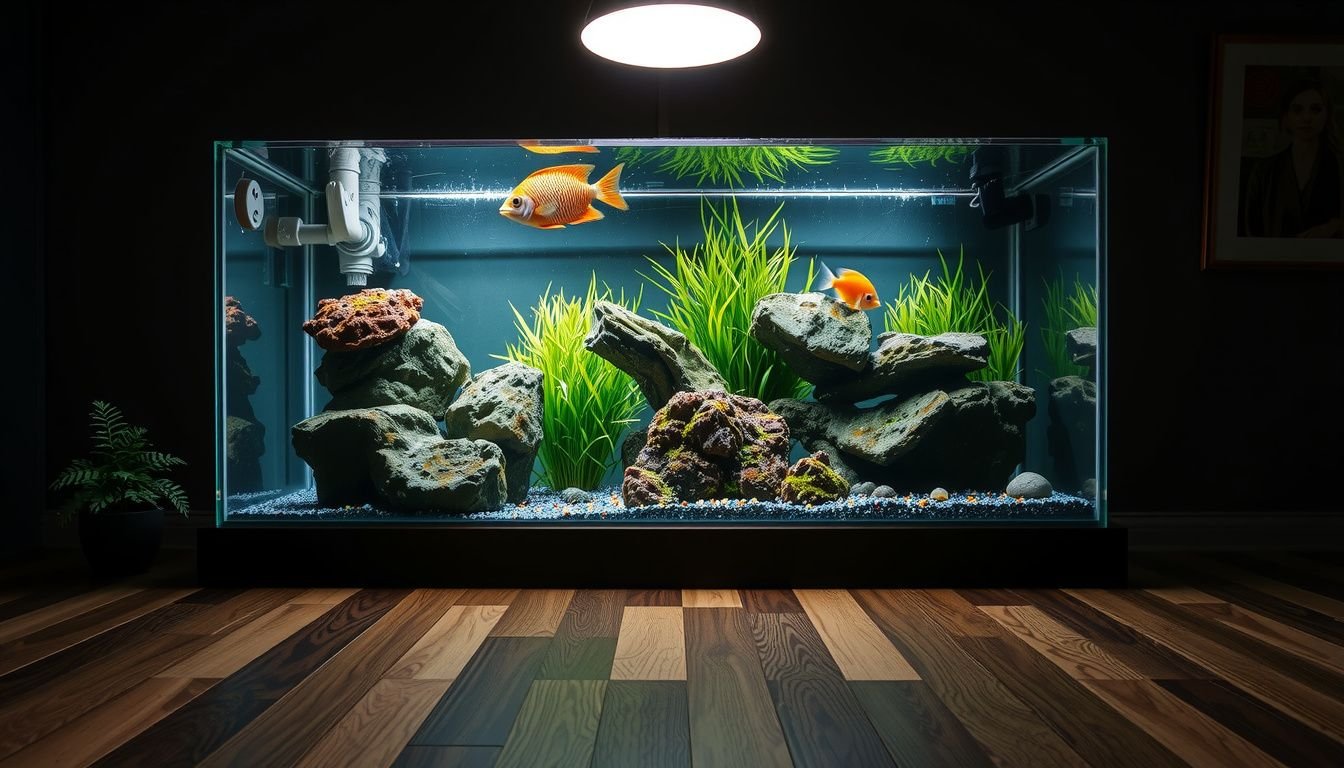
How long aquarium light should be on can make or break a tank’s look and its long-term stability. Leave lights on too long and algae often takes over; keep them too short and plants may stall while fish act off.
Most aquariums do best with a consistent daily “daylight window,” but the right number depends on what’s in the tank and what the room is doing. A planted tank needs a different schedule than a fish-only setup, and a bright living room changes the math compared to a dim office.
Aquarium keepers and aquatic biologists typically anchor lighting around the tank’s biology: plant growth, fish stress, and algae pressure. A simple timer, paired with observation, usually beats guessing or changing the schedule every week.
Look, a practical starting point is 8 hours daily: for example, 1:00–9:00 p.m. so it’s lit when people are home, then adjusted based on algae and plant response. The key is balancing:
- Plant demand (growth rate and species)
- Algae risk (nutrients, intensity, and sunlight spill)
- Fish comfort (rest cycles and hiding behavior)
Next, they’ll see clear hour-by-hour ranges for common tank types, how to fine-tune intensity and timing, and quick warning signs that the schedule is off. If they want fewer algae battles and healthier livestock, they should set a baseline schedule today and commit to it for two weeks before tweaking.
Why Aquarium Lighting Duration Matters
Now that the basics are set, the next lever is timing. Light duration controls how much energy enters the tank each day, and that energy drives plant growth, algae pressure, and even fish behavior.
A stable photoperiod helps the aquarium find a rhythm. Plants use consistent light windows to photosynthesize efficiently, while fish and invertebrates rely on predictable day–night cues to reduce stress and support normal feeding and resting patterns.
Too much light often shows up as nuisance algae, cloudy water, or plants that “melt” because nutrients and CO₂ can’t keep pace. Too little light can lead to leggy, pale plants and a tank that looks dim despite clean water.
Practical example: a beginner with a 20-gallon community tank runs the light 12 hours “for brightness” and starts seeing green dust algae on the glass within a week. They cut the photoperiod to 8 hours, keep feeding steady, and algae growth slows while plants recover.
Lighting duration also interacts with:
- Light intensity (high PAR needs shorter hours)
- Plant load (heavily planted tanks can use more light than bare tanks)
- Nutrient balance (fertilizer and CO₂ must match the schedule)
How Long Aquarium Light Should Be On: General Guidelines
Look, there’s no single number that fits every setup, but there are reliable ranges. For most tanks, how long aquarium light should be on depends on whether plants are present, the strength of the fixture, and how algae-prone the system is.
As a starting point, many aquarists land in the 6–10 hour window. Shorter schedules reduce algae risk; longer schedules can work when plant mass is high and nutrients are well-managed.
- Fish-only / decorative tanks: 6–8 hours (mainly for viewing)
- Low-tech planted tanks (no CO₂): 7–9 hours
- High-light or CO₂-injected planted tanks: 6–8 hours, then adjust
- Reef tanks: follow a staged schedule; total “daylight” often 8–12 hours
A practical approach is to set 8 hours, watch for algae and plant response for 10–14 days, then change by 30–60 minutes at a time. Consistency beats constant tweaking, so a timer is usually worth it.

Freshwater Fish-Only Tanks: Recommended Light Schedules
With timing dialed in, fish-only freshwater setups can keep lighting simple and stable. Most community tanks do best with 7–9 hours of consistent light, which supports natural viewing without pushing nuisance algae.
They should aim for one uninterrupted block of light each day, ideally synced to the room’s routine. A timer matters more than fancy fixtures, because fish respond to predictability and reduced startle cycles.
A practical baseline schedule looks like this:
- 7 hours for bright tanks, tanks near windows, or tanks prone to algae
- 8 hours for most average-lit rooms and typical stocking
- 9 hours only when algae is well-controlled and the tank isn’t sunlit
Example: a 20-gallon guppy-and-corydoras tank in a living room runs lights from 2:00–10:00 p.m. on a timer. That window matches when people are home, keeps the tank dark overnight, and avoids morning sunlight from a nearby window.
If algae creeps in, they should cut light by 30–60 minutes for a week before changing anything else. Small, measured adjustments keep fish behavior steady and make troubleshooting cleaner.
Planted Freshwater Tanks: Balancing Plant Growth and Algae
Planted tanks are where lighting becomes a true balancing act. Most planted aquariums thrive at 8–10 hours, but the “right” duration depends on plant demand, CO2 availability, and nutrient consistency.
Low-tech tanks (no injected CO2) usually perform best around 7–9 hours because plants can’t process long, intense photoperiods efficiently. High-tech tanks with stable CO2 and fertilization can handle 9–10 hours, yet they still benefit from consistency over raw duration.
They can use these guardrails to reduce algae risk:
- Start at 8 hours after a new setup or major rescape
- Increase by 30 minutes weekly only if plants show steady growth and algae stays flat
- Shorten the photoperiod if green dust or hair algae accelerates
Example: a 29-gallon planted tank with anubias, crypts, and floaters runs 1:00–9:00 p.m. If plants stall, they don’t jump to 11 hours; they first confirm nutrients and flow, then trial 8.5 hours for two weeks.
Look for plant “pearling” late in the day as a clue of strong photosynthesis, but they shouldn’t chase it. Clear water and clean leaves are the better benchmark.
Saltwater and Reef Tanks: Photoperiod Basics and Coral Needs
Now the conversation shifts to saltwater, where light isn’t just “visibility”—it’s a growth driver. In reefs, how long aquarium light should be on depends on coral type, nutrient levels, and how efficiently the fixture delivers PAR to the rockwork.
Most reef keepers land on 8–10 hours of full-intensity “daylight,” then use shorter low-intensity periods for viewing. Soft corals and many LPS often tolerate slightly shorter, steadier days, while SPS typically demand higher intensity and stable scheduling rather than extra hours.
A practical starting point is to separate the photoperiod into phases:

- Ramp up (blue-heavy): 60–120 minutes
- Peak (full spectrum): 6–8 hours
- Ramp down (blue-only): 60–120 minutes
Example: a mixed reef with zoanthids and euphyllia runs 11:00–12:30 ramp up, 12:30–19:00 peak, and 19:00–20:30 ramp down. If algae accelerates or corals pale, they’d cut peak time by 30–60 minutes before changing intensity, then reassess after two weeks.
How to Set the Right Schedule: Timers, Ramps, and Room Light
Consistency is the real “secret,” and automation makes it repeatable. A fixed schedule reduces stress behaviors in fish and prevents corals from cycling through irregular light shocks that can stall extension and coloration.
Most setups benefit from using timers or an app-controlled light with programmable ramps. Ramps don’t replace correct intensity, but they reduce abrupt transitions that can trigger skittish fish and limit sudden algae-friendly spikes.
They’ll get the cleanest results by accounting for the whole room, not just the fixture:
- Ambient daylight from windows can extend the effective photoperiod
- Evening room lamps can keep fish “awake” after lights-out
- Reflections from bright walls can slightly raise perceived brightness
Example: an aquarium in a living room near a west-facing window shows nuisance algae despite “only” 8 hours on the timer. The fix is simple: shift the main photoperiod later, add blinds during late afternoon sun, and keep a 90-minute ramp so the tank still looks natural during viewing hours.
Troubleshooting: Signs the Light Is On Too Long or Too Short
Now that the schedule is running, watch for feedback from the tank. The goal isn’t guessing how long aquarium light should be on; it’s reading the results and adjusting in small steps.
Too long often shows up as algae gaining ground faster than plants or corals can use the light. Look for these clues:
- Green dust film returning within 24–48 hours after cleaning
- Hair algae on slow-growing leaves, hardscape, or powerheads
- Fish hiding earlier, acting “spooked,” or glass-surfing near lights-on
- Corals staying retracted late in the photoperiod or developing pale tips
Too short is quieter but still measurable. Common signs include:
- Plants stretching upward, dropping older leaves, or staying stunted
- Corals losing daytime extension and looking “flat” even with stable water
- Colors dulling despite consistent feeding and nutrients
Example: a 20-gallon planted tank looks fine at first, then green film appears daily after switching to 10 hours. They cut to 8.5 hours, keep the same intensity, and algae slows within a week—no other changes.
Adjust by 15–30 minutes per week, then reassess after 7–14 days to avoid chasing noise.
The Bottom Line
Now it’s time to make the schedule stick. When someone asks how long aquarium light should be on, the best answer is the one that stays consistent and matches the tank’s goals. A stable photoperiod supports predictable feeding, calmer behavior, and steadier water parameters because the tank’s daily rhythm stops swinging.
Look for a routine that’s easy to maintain week after week, then adjust in small steps based on what the tank shows. A practical approach is to keep three checkpoints in mind:
- Consistency: same on/off times every day
- Control: timers over manual switching
- Observation: tweak only when the tank gives clear signals
Example: if a hobbyist’s living-room tank gets bright afternoon sun, they can shorten the programmed light window and still keep the total daily brightness in check. Next step: set a timer today and commit to tracking results for 14 days before changing anything.