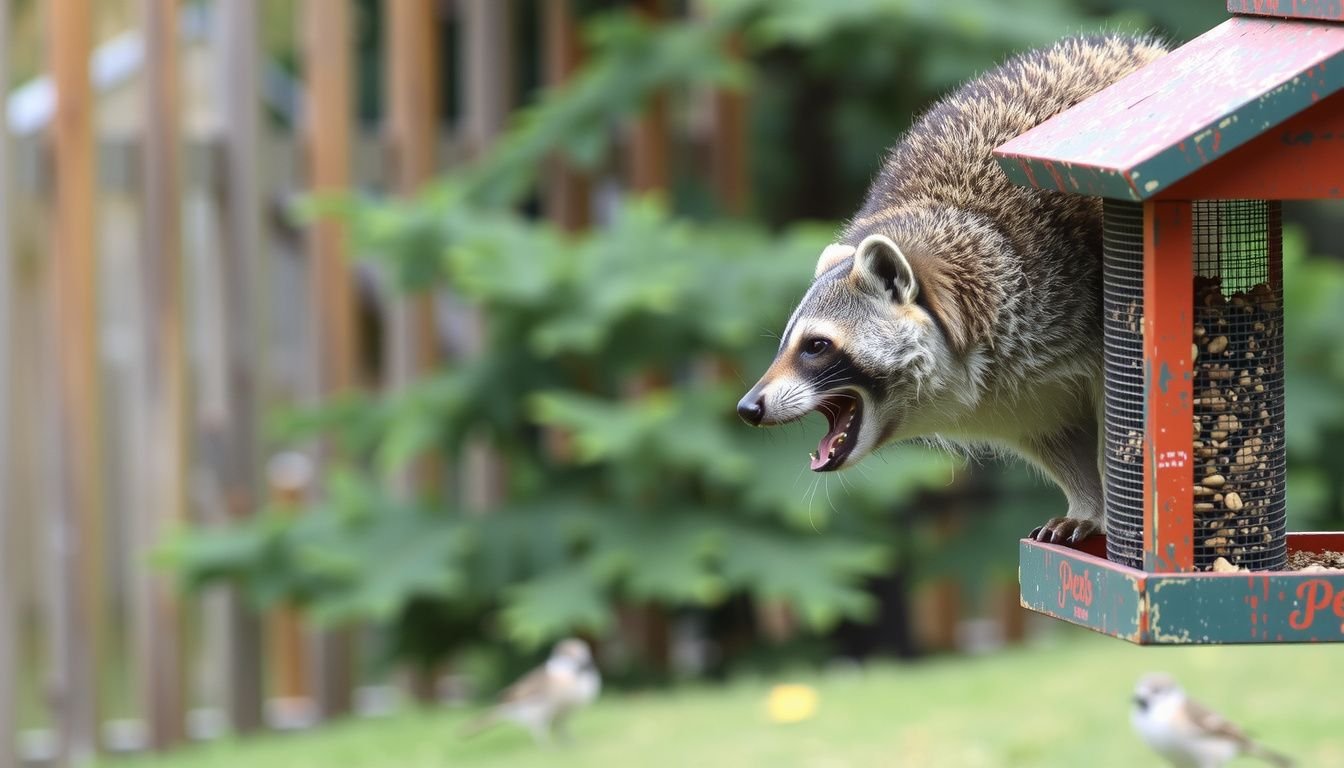
Anyone searching for how to keep racoons out of bird feeders knows the frustration of finding empty feeders and a mess below. Raccoons are clever, persistent, and surprisingly dexterous. They can climb, jump, and even unscrew simple lids.
If left unchecked, these nocturnal bandits not only empty feeders but can also damage poles, trays, and even harm local bird populations. Fortunately, there’s a systematic way to outsmart them without harming wildlife. This guide lays out clear steps, from understanding raccoon motives to choosing the right feeder and accessories.
By following these proven techniques, backyard birders greatly improve the odds of keeping seed for the birds—and raccoons at bay. Let’s get started with what makes raccoons tick and how to counter their tactics.
Understand Raccoon Behavior and Risks
Raccoons are opportunistic feeders, drawn to easy food sources like bird feeders. Their nimble paws allow them to open simple latches and flip lightweight covers. Nighttime is when they’re most active, so damage often goes unnoticed until morning.
Besides consuming birdseed, raccoons may spread disease, leave droppings, and destroy feeder mounts or poles.
Key risks include:
- Feeder destruction: Chewing, bending, or breaking parts to access food.
- Seed loss: Large amounts of seed consumed or spilled.
- Unwanted wildlife: Raccoon visits may attract skunks, opossums, or feral cats.
Understanding their tenacity helps in choosing defenses that address their climbing, jumping, and problem-solving skills. For example, one homeowner in Ohio noticed raccoons only raided their feeders when low-hanging branches provided a bridge—once trimmed, attacks dropped sharply.
Gather Necessary Tools and Materials
Preparation is half the battle. Before making changes, gather supplies for raccoon-proofing:
- Metal or plastic baffles (dome or cone style)
- Sturdy mounting poles (preferably metal)
- Raccoon-proof feeders with locking lids
- Zip ties, clamps, or screws for securing parts
- Work gloves, wire cutters, and a ladder if needed
Inspect existing feeder setups. If poles are wooden or feeders have simple snap lids, consider upgrades. The right materials ensure barriers stay in place and withstand raccoon strength.
Don’t use string or light plastic—these are easily chewed or pulled apart.
Install Baffles and Physical Barriers
Baffles are a frontline defense. Install a baffle at least 18-24 inches wide, placed 4-5 feet above ground on the pole beneath the feeder. Dome or cone styles work best—raccoons have trouble gripping slick, angled surfaces.
- Detach feeders and clear the area beneath.
- Slide the baffle onto the pole, securing it tightly with clamps or brackets.
- Reinstall the feeder above the baffle.
Avoid mounting feeders near fences, decks, or overhanging branches—these offer raccoons a shortcut past barriers. A common mistake is installing baffles too low or loose, allowing raccoons to push them aside.
Secure the Bird Feeder Mounting
Raccoons excel at toppling lightweight or poorly anchored feeder poles. Use a thick metal pole driven at least 18 inches into the ground. For added stability, use ground anchors or concrete bases.
- Check that the pole cannot be wobbled or rocked by a 20-pound animal.
- Keep feeders at least 6 feet away from trees, fences, or structures.
- Use locking fasteners, not simple push-on caps, to attach feeders to poles.
Pro tip: Avoid hanging feeders from tree limbs, as raccoons quickly climb and swing onto them. Secure mounting is essential for both safety and effectiveness.
Use Raccoon-Proof Feeders and Accessories
Specialized feeders deter raccoons using weight-sensitive mechanisms or locking lids. Choose models labeled “raccoon-proof” or “squirrel-proof,” as these often feature:
- Heavy metal construction
- Spring-loaded perches that close under heavy weight
- Tight-fitting, locking lids
Accessory options include seed trays with drainage (to prevent spillage) and cage-style guards. When refilling, double-check all closures. Even the best feeder fails if left unlatched.
A practical example: A family in Vermont switched to a locking metal feeder, and raccoon activity dropped overnight.
Eliminate Attractants Around the Feeder
Raccoons are motivated by scent and easy access. Reduce temptations by:
- Cleaning up spilled seed daily
- Storing extra seed in metal containers with tight lids
- Removing pet food, compost, or unsecured trash cans nearby
Rake the ground beneath feeders regularly. Consider using no-mess birdseed blends to minimize debris. This reduces not only raccoon visits, but also mice and other pests.
Don’t overlook this step—cleanliness is a powerful deterrent.
Maintain and Monitor the Feeding Area
Effective raccoon prevention is ongoing. Inspect feeders and barriers weekly for signs of tampering or damage. Make repairs immediately—small issues (like loose baffles) quickly become big entry points.
- Check at dawn for tracks, droppings, or scattered seed.
- Re-tighten mounts and replace worn parts as needed.
- Keep a log of raccoon sightings to spot patterns.
Regular maintenance ensures barriers remain effective and extends the life of your feeder setup. Overlooking this step invites repeat raccoon visits.
Review Additional Deterrence Strategies
If raccoons persist, consider extra deterrents:
- Motion-activated lights or sprinklers to startle nighttime visitors
- Ultrasonic animal repellents (placement matters for effectiveness)
- Natural repellents like vinegar or hot pepper solution sprayed around the base
Some homeowners install trail cameras to identify weak points. If all else fails, temporarily removing feeders may break raccoon habits. Avoid poisons or harmful traps—they pose risks to birds and pets.
Deterrence should always be humane and targeted.
People Also Ask
How high should bird feeders be to keep raccoons away?
Feeders should be mounted at least 6 feet off the ground and 8-10 feet from any structure or branch raccoons could use to jump across. Higher placement makes access much harder.
Do raccoon baffles work on squirrels too?
Yes, most raccoon baffles also deter squirrels, especially if they’re wide, smooth, and properly installed. Both animals struggle to grip or climb angled, slick baffles.
What type of birdseed attracts fewer raccoons?
Raccoons favor sunflower seeds, peanuts, and corn. Try using safflower seed, which appeals to many birds but is less attractive to raccoons and squirrels.
Can raccoons damage metal bird feeders?
Heavy-duty metal feeders are more resistant, but raccoons may still dent or pry at weak points. Quality construction and secure mounting minimize damage risk.
Is it safe to use cayenne pepper in birdseed?
Yes, birds aren’t bothered by capsaicin, but mammals (including raccoons) dislike it. Sprinkle a light coating on seed to help repel raccoons, but reapply after rain.
Your Action Plan
Keeping raccoons out of bird feeders takes a few strategic upgrades and consistent vigilance. Start by understanding raccoon behavior and gathering the right materials. Install baffles, use secure mounts, and pick raccoon-resistant feeders.
Clean up attractants and monitor for signs of intrusion. If raccoons persist, escalate to advanced deterrents. Act today—birds will thank you, and backyard chaos will drop overnight.