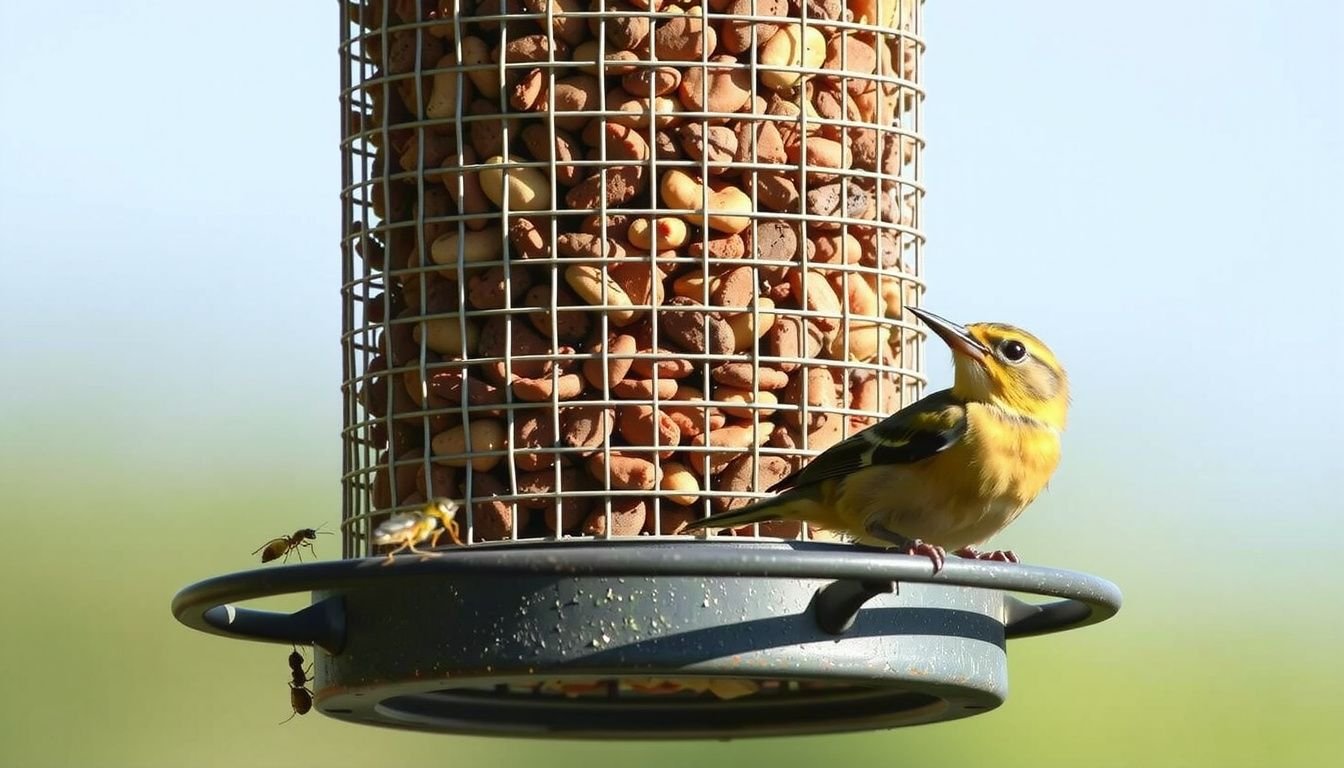
Anyone searching for how to keep ants out of bird feeders usually wants a solution that actually works, not another quick tip that fails after a week. Ants track sugar, fat, and water with relentless efficiency, and bird feeders offer all three. The good news: with a few smart changes, they can be stopped without harming birds or the environment.
This guide walks step by step through tools, setup, and maintenance so each reader can build a long-term, low-effort system. Look, the goal isn’t perfection; it’s keeping ants off the feeder and away from nectar or seed. With the right barriers, placement, and cleaning routine, most backyards can stay nearly ant‑free around feeders all season.
Understand Why Ants Target Bird Feeders
Before changing hardware, it helps to understand why ants show up so aggressively. Ants are attracted by three things: sugar, fat, and water. Bird feeders often provide all of these in one compact spot.
Common attractants include:
- Hummingbird nectar (sugar water)
- Seed dust and broken kernels with natural oils
- Sticky drips on poles, hooks, and nearby branches
Ants follow scent trails laid by scouts. Once a single ant finds nectar, it marks a path that the entire colony can follow. That’s why the problem seems to explode overnight.
Key idea: if ants can walk to the feeder and smell food, they’ll keep coming. The strategy is simple: block their path, remove their scent trails, and reduce spills so new trails don’t form.
Gather the Right Tools and Materials Before Starting
Preparation makes the actual setup fast and frustration-free. Most solutions use simple, inexpensive gear that can be reused or adjusted as needed.
They should gather:
- Commercial ant moat or cup-style barrier (for hanging feeders)
- Non-toxic petroleum jelly or food-grade mineral oil
- Pipe clamps or baffles for poles
- Small brush, bucket, and mild dish soap
- White vinegar in a spray bottle
Here’s a quick comparison of common options:
| Solution | Best For | Maintenance |
|---|---|---|
| Ant moat | Hanging nectar feeders | Refill water every few days |
| Grease/oil band | Poles and hooks | Reapply every 1–2 weeks |
| Pole baffle | Ground-mounted feeders | Occasional cleaning |
Having everything ready lets them implement a complete system in one session instead of making piecemeal fixes.
Choose and Install Effective Ant Moats or Barriers
Now the focus shifts to physical barriers. These stop ants from walking directly to the food, which is the backbone of any successful setup.
For hanging feeders, an ant moat is usually the easiest option. It’s a small cup that hangs between the hook and the feeder, filled with water that ants can’t cross.
- Detach the feeder from its hook.
- Attach the ant moat to the hook or branch.
- Fill the moat with clean water, leaving some space at the top.
- Hang the feeder from the bottom of the moat.
For pole-mounted feeders, they can install a cone or dome-shaped baffle a few feet off the ground. Ants climbing the pole hit the baffle and can’t reach the feeder above.
Pro tip: avoid moats that are too shallow; they dry quickly and become useless. Deep, easy-to-refill cups work best, especially in hot weather.
Position and Mount Feeders to Discourage Ants
Even the best barriers fail if the feeder is mounted where ants can bypass them. Placement matters more than many people expect.
They should:
- Hang feeders away from tree trunks, fences, and railings.
- Ensure no leaves or branches touch the feeder or chain.
- Use smooth metal poles instead of rough wood posts.
Here’s a practical example. A homeowner had a hummingbird feeder hanging from a shepherd’s hook near a maple tree. Ants were bypassing the ant moat by using an overhanging branch.
By moving the hook three feet away and trimming one branch, the ant problem dropped to almost zero overnight.
Common mistake: letting vines or plants grow up the pole. Ants use them as bridges, completely defeating moats and baffles.
Clean and Maintain Feeders to Break Ant Trails
Physical barriers work best when combined with consistent cleaning. Ants rely on scent trails, so washing those away is critical.
Every 3–5 days, they should:
- Take the feeder down and empty old seed or nectar.
- Wash with warm water and a few drops of mild dish soap.
- Use a small brush to scrub ports, seams, and perches.
- Rinse thoroughly and air dry before refilling.
After cleaning, they can spray the pole, hook, and surrounding area with a 50/50 mix of white vinegar and water. This helps erase ant scent trails without harming birds.
Pro tip: wipe up any spills immediately when refilling. Sticky nectar drips on the outside of the feeder are often the first thing ants discover.
Monitor, Adjust, and Use Safe Deterrents Over Time
Ant control around bird feeders isn’t a one-time project. It’s a light, ongoing process of monitoring and small adjustments.
They should check feeders briefly every few days for:
- Ants bypassing moats via nearby plants or structures
- Moats that have dried out or filled with debris
- Grease bands that have worn off or collected dust
Safe deterrents can support the physical barriers. A thin band of petroleum jelly or food-grade oil around the pole or hook makes it hard for ants to cross. Some people also sprinkle diatomaceous earth at the base of poles, keeping it dry and away from where birds bathe or dust.
Avoid chemical ant sprays or poisons near feeders. Birds can ingest residues from perches, hulls, or the ground below.
Frequently Asked Questions
Can I use regular insecticide around my bird feeders?
No. Most insecticides are unsafe near feeders. Birds can ingest toxins from treated surfaces, spilled seed, or contaminated insects.
Use physical barriers and non-toxic methods instead.
How often should I refill an ant moat?
Check moats every 2–3 days. Hot, dry, or windy weather can evaporate water quickly. Refill whenever the water level drops or becomes dirty with debris or drowned insects.
Do certain feeder types attract fewer ants?
Yes. Saucer-style hummingbird feeders with top-fill designs often drip less, reducing ant attraction. For seed, well-sealed tube feeders leak fewer crumbs than open tray designs.
Will moving the feeder alone stop ants?
Sometimes, but not always. Moving the feeder away from trees and structures helps, yet ants can still climb poles. Combine smart placement with moats or baffles.
Are there any smells that naturally repel ants?
Strong scents like peppermint, citrus, or vinegar can disrupt trails temporarily. They’re helpful for cleaning and short-term deterrence, but they don’t replace solid physical barriers.
You’re Ready
They now have a complete, practical system for keeping ants off bird feeders: smart barriers, strategic placement, and consistent cleaning. The process isn’t complicated, but each part matters. A good ant moat or baffle blocks access.
Careful mounting prevents “bridges” from branches or railings. Regular washing and vinegar rinses erase scent trails before they spread. By checking feeders briefly each week and adjusting as needed, they can keep nectar and seed available for birds, not ants.
The next step is simple: gather the tools, install one barrier on a single feeder, and watch how quickly the ant traffic drops.
Related read: How to Keep Ants Off Bird Feeders Step-by-Step