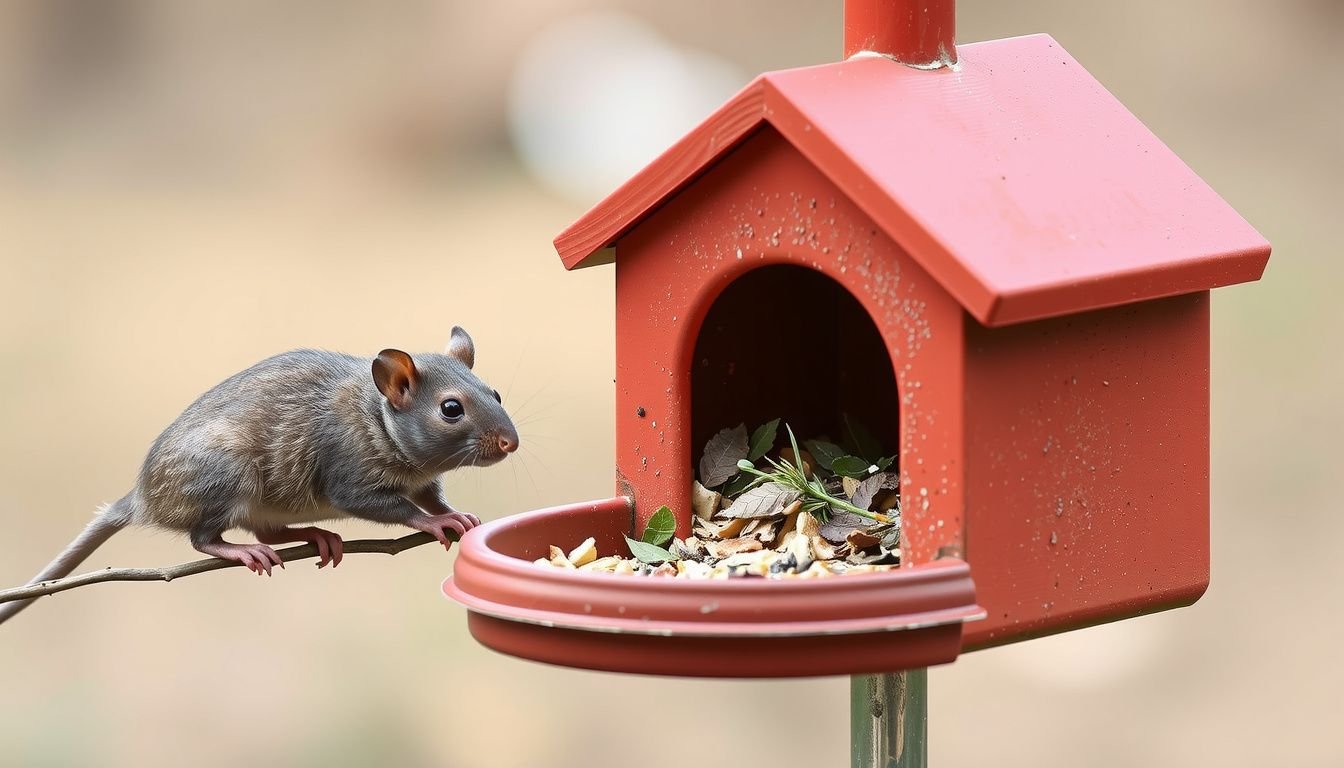
Anyone searching for how to keep rats out of bird feeders usually wants two things: healthy birds and a rodent-free yard. Rats are smart, persistent, and excellent climbers, so random fixes rarely work. They respond to food availability, shelter, and easy access.
When those three disappear, they move on. This guide walks through a practical, step-by-step plan that blends feeder choice, seed management, and yard hygiene. The goal isn’t just to scare rats temporarily, but to make the entire feeding setup unattractive to them.
With a few targeted changes, most homeowners can cut rat activity dramatically within a few weeks while still enjoying regular bird visitors.
Understand Why Rats Are Attracted to Bird Feeders
Rats visit bird feeders for three main reasons: easy calories, cover, and consistent routine. Bird seed is dense food, especially mixes with sunflower, corn, and peanuts. Spilled seed on the ground is even easier for them to eat.
They also love dense shrubs, wood piles, and clutter near feeders, which give quick hiding spots from predators. A predictable feeding schedule means they learn when food is available.
- High-fat seeds attract both birds and rodents.
- Ground spill creates a nightly buffet for rats.
- Nearby shelter lets them feed with low risk.
Once someone understands these drivers, every prevention step becomes clearer: reduce food access, limit shelter, and break their routine.
Assess the Yard and Identify Rat Activity
Before changing hardware, they should confirm whether rats are already visiting. Look for droppings, gnaw marks, and narrow runways along fences or walls. Greasy rub marks often appear where rats squeeze through tight gaps.
They can do a quick night check with a flashlight, standing back from the feeder for 5–10 minutes. Motion-activated cameras or inexpensive Wi-Fi cameras also reveal nocturnal visitors.
Key inspection points include:
- Base of feeders and beneath shrubs.
- Under decks, sheds, and woodpiles.
- Compost bins and garbage areas.
Documenting where rats travel helps position feeders, barriers, and traps more strategically, instead of guessing.
Choose Rat-Resistant Bird Feeders and Hardware
Hardware choices can drastically change how attractive a feeder is to rats. Weight-activated “squirrel-proof” feeders often shut ports when heavier animals climb on, which also deters rats.
Look for:
- Tube feeders with small perches and metal ports.
- Hanging designs that don’t rest on fences or branches.
- Metal or heavy-duty plastic that resists chewing.
A simple real-world example: a homeowner swapped a low, tray-style feeder on a deck rail for a hanging tube feeder on a tall pole with a baffle. Within two weeks, camera footage showed rats stopped visiting, while finches and chickadees still fed daily.
They should also avoid platform feeders close to the ground, which are nearly impossible to rat-proof.
Select and Store Bird Seed to Discourage Rats
Seed type and storage can either invite or discourage rodents. Rats prefer mixed seed with corn, millet, and waste grain. Cleaner feeds leave less edible material on the ground.
Better options include:
- Black oil sunflower (in moderation).
- Nyjer (thistle) for finches.
- Hulled or “no-mess” mixes that reduce shell debris.
All seed should be stored in sealed metal containers or thick plastic bins with tight lids, kept off the ground. Avoid leaving open bags in garages or sheds. They should buy smaller quantities if seed lasts more than a month, as stale seed is more likely to be spilled or wasted.
Install Baffles, Poles, and Safe Physical Barriers
Physical barriers dramatically cut rat access when installed correctly. A dedicated feeder pole placed 8–10 feet from trees, fences, or roofs is ideal.
Effective barriers include:
- Torpedo or cone baffles mounted at least 4 feet above ground.
- Greased or smooth metal poles that are hard to climb.
- Hanging lines with feeders suspended away from branches.
Baffles must be snug against the pole; gaps let rats squeeze past. They should avoid placing feeders on decks, railings, or low branches, where barriers can’t work properly. For ground-feeding birds, a small, elevated platform with a wire mesh dome can offer access to birds while excluding larger pests.
Adjust Feeding Habits and Daily Maintenance
Rats are opportunistic, so consistent cleanup matters. They should only fill feeders with what birds will eat in a single day, especially during mild weather when birds feed less aggressively.
Key habits:
- Use seed catchers or trays under feeders to limit spill.
- Rake or sweep under feeders every evening.
- Consider bringing feeders in at night in high-pressure areas.
They can also schedule brief “feed breaks” of 3–5 days if rat activity spikes. Birds will adapt and return, but rats often move on to more reliable food sources.
Secure the Surrounding Area and Remove Nesting Spots
Even a well-managed feeder can attract rats if the surrounding yard provides perfect nesting areas. The goal is to make the entire environment less comfortable for them.
They should:
- Trim dense shrubs and groundcover near feeders.
- Move woodpiles, building materials, and clutter away from the house.
- Seal gaps under sheds, steps, and decks with hardware cloth.
Garbage and compost must be in rodent-resistant containers with tight lids. Pet food should never be left outside overnight. When shelter and alternative food sources disappear, rats are less likely to linger around bird feeding areas.
Monitor, Troubleshoot, and Refine the Rat-Prevention Plan
Rats adapt quickly, so prevention isn’t a one-time task. They should review their setup every week for the first month, then monthly.
Useful monitoring steps:
- Check for new droppings or burrows.
- Inspect baffles and poles for chew marks or climbing paths.
- Review camera footage if using motion cameras.
If rats reappear, they can respond by reducing feeding volume, relocating feeders farther from structures, or adding a second baffle. In severe cases, partnering with a licensed pest professional to handle trapping while maintaining bird-safe practices is often the fastest solution.
People Also Ask
Do rats always come if you have bird feeders?
No. Rats appear when feeders offer easy food and nearby shelter. Clean feeding areas, limited spill, and secure storage often prevent infestations even where rats live in the neighborhood.
What bird seed is least attractive to rats?
Nyjer, hulled sunflower, and high-quality “no-mess” mixes produce less waste and are less appealing than cheap mixed seed with corn and millet, especially when used in well-designed tube feeders.
Will stopping bird feeding make rats leave?
Often, yes. Removing the food source for several weeks, combined with cleaning and sealing shelter areas, usually encourages rats to move toward more reliable feeding sites.
Are ultrasonic repellents effective for rats at bird feeders?
Results are inconsistent. Some rats ignore ultrasonic devices after brief exposure. Physical barriers, sanitation, and food control provide far more reliable, long-term prevention around feeders.
Can traps be used safely near bird feeders?
Yes, with care. Traps should be placed in covered, tamper-resistant boxes away from bird activity, pets, and children, ideally managed by a professional in heavy infestations.
Start Here
The most effective way to keep rats out of bird feeders is to treat the feeder, seed, and yard as one connected system. First, confirm rat activity and simplify seed choices. Next, move feeders onto dedicated poles with quality baffles, positioned away from trees and structures.
Tighten seed storage and commit to quick daily cleanup beneath feeders. Then, remove nearby shelter by trimming vegetation, organizing materials, and sealing gaps under sheds or decks. Over the next few weeks, monitor for droppings, burrows, and nighttime visitors, adjusting volume or feeder locations as needed.
With consistent habits, most homeowners can enjoy active bird feeders without hosting a rat population.