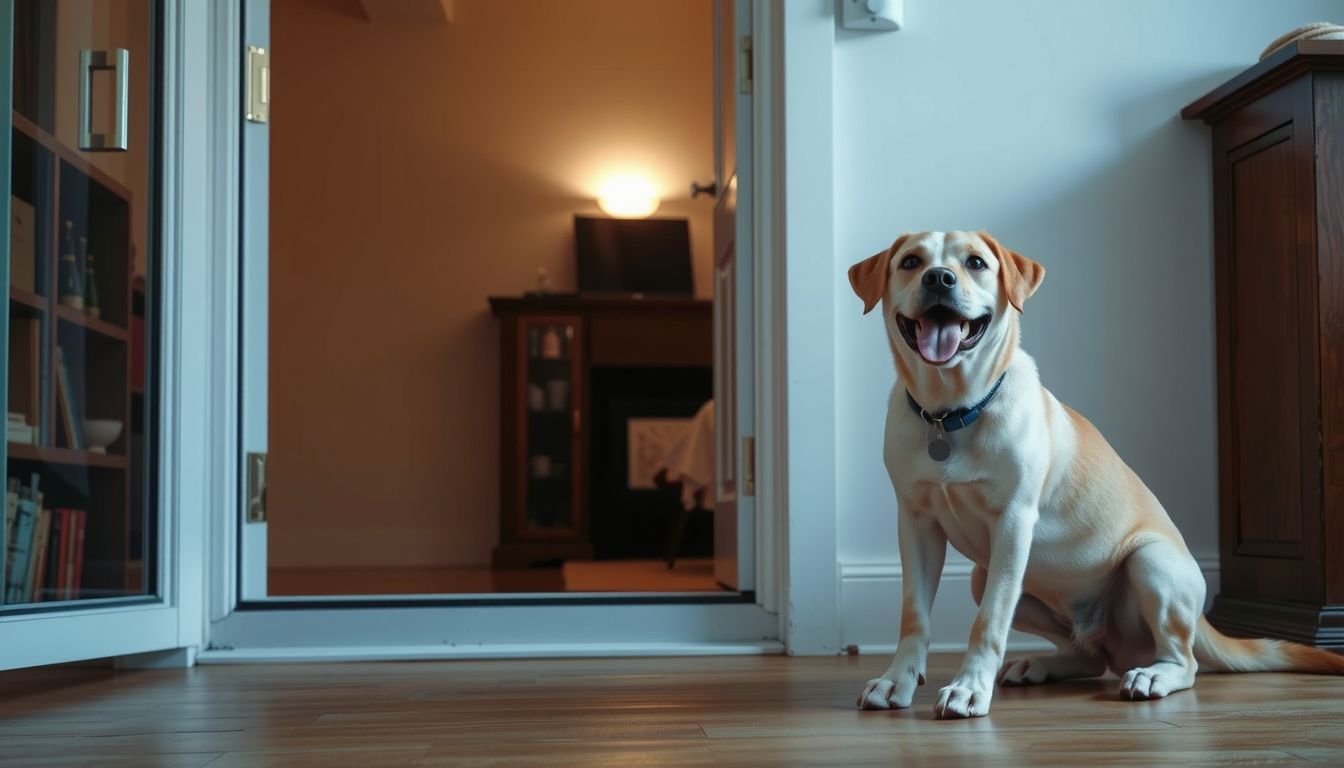
How to train dog not to bark at door starts with changing what the door predicts. Most dogs bark because the sound of a knock or bell has become an alarm: someone is here, excitement is coming, and the dog’s job is to respond. Punishment often backfires because it adds stress and can make the door feel even more intense.
The workable approach is simple: set clear rules, teach an alternate behavior, then rehearse the exact trigger in controlled reps. The goal isn’t “never bark.” It’s a dog that can hear the door, look to the handler, and settle quickly.
Look for progress in seconds, not perfection. When timing is tight and rewards are consistent, most households see quieter door behavior in days and reliable results in a few weeks.
Set Up Success Before You Start (Tools, Triggers, and Rules)
They’ll move faster if they prepare the environment before training. First, identify the trigger: doorbell, knock, voices in the hall, or the door opening. Then decide the house rule: the dog goes to a mat, sits behind a gate, or stands calmly on leash.
Gather tools that make calm easy, not heroic.
- High-value treats (pea-sized, soft)
- Leash or house line for safe control
- Baby gate or exercise pen to create distance
- Mat/bed as a “parking spot” near but not at the door
- Doorbell sound on a phone (optional for practice)
Pro tip: Start sessions when the dog has had a short walk and a bathroom break. A full tank of energy makes barking more likely.
Common mistake: Waiting for a real visitor to “train.” Real-life arrivals are too hard at first and usually rehearse the barking habit.
Teach a Quiet Cue and Reinforce Calm at the Door
They should teach “Quiet” as a cue that predicts reward for silence, not as a scolding. The easiest path is to capture a moment of silence after a bark, then pay it.
- Let the dog bark once or twice at a mild trigger (a soft knock or a helper noise).
- Hold a treat at the dog’s nose. Most dogs pause to sniff.
- The instant they stop vocalizing, say “Quiet,” then deliver the treat.
- Repeat until the dog anticipates that silence earns reinforcement.
- Pair it with an alternate behavior: “Go to mat” or “Sit” two steps back from the door.
Now, reinforce calm at the door without any visitor present. They can walk to the door, touch the handle, return, and treat calm. Small reps build a new default response.
Pro tip: Reward low, slow body language: soft eyes, closed mouth, weight shifted back. Pay calm before barking starts.
Common mistake: Repeating “Quiet, quiet, quiet.” One cue, then help the dog succeed and reward the moment they comply.
Practice Doorbell and Knock Drills With Controlled Setups
They’ll get reliability by practicing the exact chain: sound → calm → reward → controlled greeting. Use a helper when possible. Keep sessions short: 3–5 minutes, 1–2 times daily.
| Difficulty Level | Trigger | Goal |
|---|---|---|
| Easy | Very soft knock / doorbell at low volume | Dog looks to handler, takes treat |
| Medium | Normal knock / bell | Dog goes to mat, stays 3–5 seconds |
| Hard | Door opens, helper steps in | Dog stays behind gate/leash, quiet |
Run the drill like this: helper triggers the sound once, handler cues “Quiet” and “Go to mat,” then rewards a rapid stream of treats for staying quiet. If the dog barks, the helper pauses and resets; the door doesn’t open until calm returns.
Real-world example: A family with a barking terrier used a baby gate 8 feet from the door. For one week, every knock meant “mat” plus five treats in a row. By week two, the dog stayed quiet long enough for deliveries to be placed without chaos.
Common mistake: Opening the door while the dog is barking. That teaches barking “works” to make the person appear.
Troubleshoot Setbacks and Build Long-Term Reliability
They should expect setbacks. Door barking is self-reinforcing, and real life is messy. When barking spikes, it usually means the steps were raised too fast, rewards got stingy, or the dog is under-exercised or stressed.
- If the dog won’t take treats: Increase distance from the door, use higher-value food, and lower the trigger intensity.
- If barking restarts when the door opens: Add a gate, keep the leash on, and reward in position while the door moves.
- If the dog barks at hallway noise: Add white noise, block sightlines, and practice “Quiet” for those sounds too.
Build duration slowly. They can go from 3 seconds of quiet to 10, then 20, then a full greeting routine. Randomly reward calm door behavior even when nothing happens; that keeps the habit strong.
Pro tip: Teach visitors a script: ignore the dog until quiet, then calmly greet. The dog learns that calm makes people interact.
Common mistake: Only training when guests arrive. Consistent reps without pressure create the fastest change.
People Also Ask
How long does it take to stop a dog from barking at the door?
Many dogs improve within 3–7 days of daily drills, but reliability often takes 2–6 weeks. Progress depends on trigger intensity, consistency, and whether barking has been reinforced by door openings.
Should they ignore barking or correct it?
Ignoring alone rarely works because the door event is rewarding. Corrections can increase arousal. A better plan is to prevent rehearsal, cue “Quiet,” and pay silence while controlling access to the door.
What if the dog barks even after the “Quiet” cue?
They should lower difficulty: increase distance, reduce volume, or use a gate. Reward the first half-second of silence, then build. If the dog is over threshold, the cue can’t be learned.
Can they use a bark collar for door barking?
They can, but it risks fear and can worsen anxiety around visitors. Training that pairs door sounds with calm routines typically produces better long-term results and clearer communication.
Start Here
They should start with management today: leash or gate near the entry, treats ready, and a clear rule like “go to mat.” Next, teach “Quiet” by rewarding brief silence, then pair it with a calm station behavior.
After that, run controlled door drills: one trigger, one cue, immediate reinforcement, and no door opening until the dog is quiet. Keep sessions short and end on a win.
If progress stalls, reduce intensity and rebuild in smaller steps. With consistent reps, the door stops being an alarm and becomes a cue to settle.