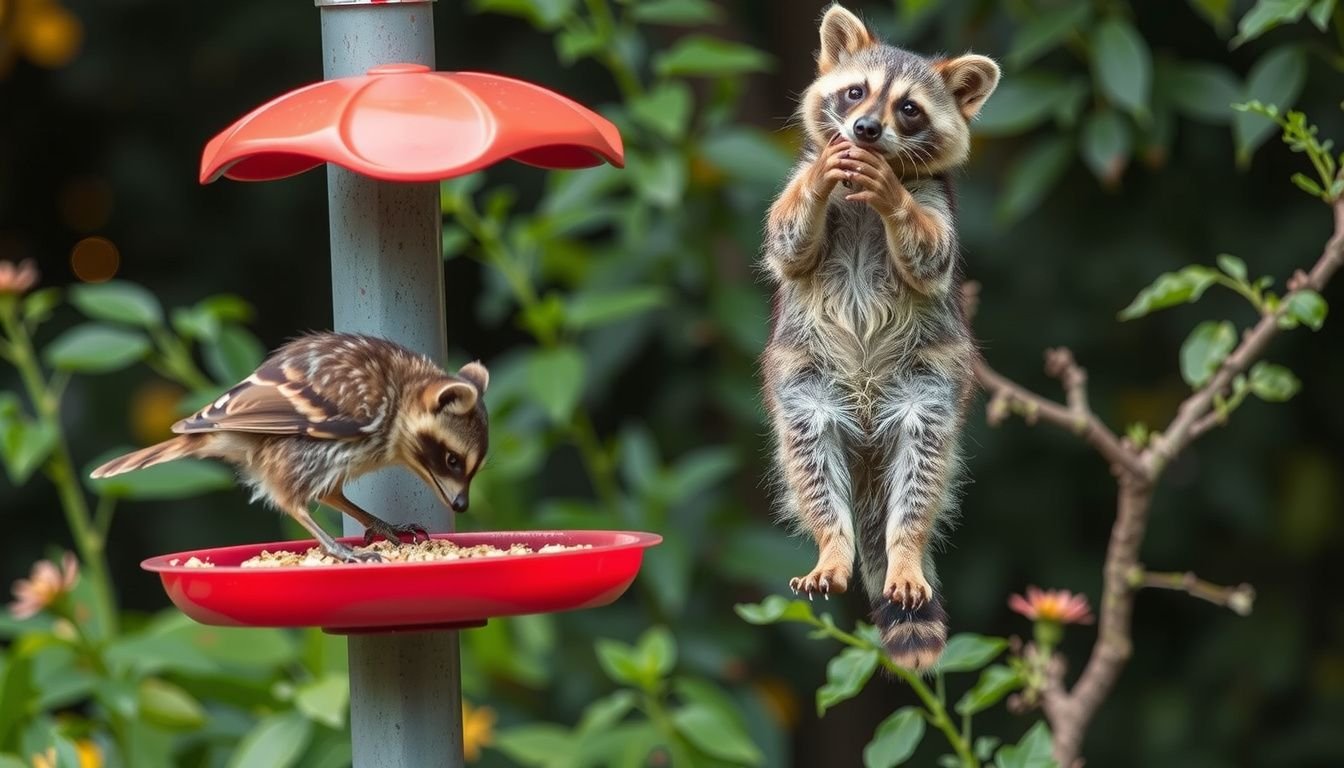
How to keep raccoons away from bird feeders comes down to removing easy access and easy calories. Raccoons are strong, clever, and persistent; if a feeder is reachable, they’ll treat it like a nightly buffet. The good news is that most raccoon problems have repeatable fixes: confirm how they’re getting in, change the feeder’s placement, add properly sized baffles, and tighten up food handling after dark.
Look for patterns instead of guessing. A single muddy paw print on a pole tells a different story than a feeder ripped off a branch. With a few targeted upgrades—and consistent maintenance—most yards can keep birds fed while making raccoon visits unrewarding.
Assess Raccoon Activity and Identify Access Routes
Start by confirming when and how raccoons reach the feeder. They’re typically active from dusk to dawn, so check the area early in the morning for clues. Focus on the feeder, the mounting point, and any nearby “launch pads” like fences or low branches.
Use a quick inspection checklist:
- Tracks and smears: muddy paw prints on poles, greasy rub marks on tree trunks, torn seed bags.
- Damage patterns: bent hooks suggest pulling; chewed plastic suggests time-on-target.
- Jump points: anything within 8–10 feet horizontally or 4–5 feet vertically of the feeder.
Pro tip: Set a motion-activated camera for two nights. It usually reveals the exact route in one clip.
Common mistake: Treating the feeder as the only problem. Raccoons often climb a nearby tree, then drop onto the setup.
Before You Start: Gather Tools, Choose Feeders, and Set Safety Rules
They’ll get better results by preparing the right gear and choosing feeders that don’t invite prying hands. Raccoons can open simple lids, twist weak hangers, and tear thin plastic. A sturdy system reduces “failure points” before any baffle goes up.
Gather basics first:
- Measuring tape, level, and work gloves
- Metal pole (1-inch outer diameter is common) or heavy-duty hanging hardware
- Wrench/screwdriver, hose clamps, and weather-resistant fasteners
- Raccoon-resistant feeder (metal body, locking lid, reinforced hanger)
Set safety rules. Work in daylight, use a stable ladder, and avoid handling droppings without disposable gloves. If a raccoon is actively denning nearby, they should contact local wildlife control rather than escalate conflict.
Common mistake: Buying a “squirrel-proof” feeder and expecting it to stop raccoons. Raccoon resistance usually requires mounting and baffles, not just a fancy feeder.
Relocate and Mount Feeders to Eliminate Jumping and Climbing Paths
Placement does most of the heavy lifting. A perfect baffle won’t help if a raccoon can jump from a deck railing or climb a tree and drop onto the feeder. The goal is a clean, isolated approach with no nearby structures.
Use these placement targets:
- Mount the feeder at least 10 feet from fences, sheds, trees, and overhanging branches.
- Hang feeders so the lowest point is 4–5 feet off the ground, but keep clearance for baffles below.
- Prefer a smooth metal pole over wood posts or textured surfaces.
Practical example: A homeowner moved a feeder 12 feet away from a maple tree and swapped a rough wooden post for a smooth metal pole. The raccoon visits stopped the same week because the “tree-to-feeder” drop route disappeared.
Pro tip: If space is tight, relocate the feeder to an open front yard area with fewer climbing routes.
Common mistake: Hanging feeders from a low branch “just out of reach.” Raccoons can jump, stretch, and swing branches down.
Install and Size Baffles Correctly for Poles, Trees, and Hanging Setups
Baffles work when they’re large enough and installed at the right height. Small domes stop squirrels; raccoons often overpower them. For raccoons, think bigger, smoother, and harder to grip.
| Mount type | Best baffle style | Key sizing/placement |
|---|---|---|
| Pole-mounted feeder | Large stovepipe or wide cone baffle | Use 6–8 inch diameter pipe; place baffle 4+ feet above ground |
| Tree-mounted/hanging from limb | Tree trunk baffle + branch management | Wrap trunk baffle high enough; prune branches within jumping range |
| Hanging wire/cable | Inline “torpedo” baffle + strong hardware | Install between support and feeder; use locking carabiners |
Pro tip: Use hose clamps and a tight-fitting collar so the baffle can’t be pushed down over time.
Common mistake: Installing a baffle too low. A raccoon can stand under it and reach around if the feeder hangs close.
Reduce Nighttime Attractants With Feed Control and Yard Cleanup
Raccoons return for reliable calories. Cutting off the reward at night reduces repeat visits and makes physical barriers more effective. Birds don’t need fresh seed overnight, and raccoons don’t need a reason to patrol the area.
They should tighten food management:
- Bring feeders in at dusk if pressure is high, then put them back out at dawn.
- Use seed trays sparingly; clean spilled seed daily.
- Store seed in sealed metal containers, not thin plastic bins.
Clean the yard like a raccoon would search it. Secure trash lids, remove fallen fruit, and avoid leaving pet food outside. If they use suet, switch to “no-melt” blocks and consider morning-only feeding.
Common mistake: Leaving a “little bit” of seed out overnight. That’s enough to train consistent visits.
Test, Troubleshoot, and Maintain a Raccoon-Resistant Setup
After changes, they should test for two weeks and adjust based on evidence. Raccoons learn quickly, so a setup that works on day one can fail if hardware loosens or a new jump point appears.
Run a simple maintenance routine:
- Weekly: check clamps, hooks, and hangers for bending or slippage.
- Weekly: wipe poles and baffles clean; dirt adds grip.
- Monthly: re-measure clearances as plants grow and branches sag.
Troubleshooting tips: If raccoons still reach the feeder, increase the distance from structures, enlarge the baffle diameter, or shorten the hanging drop so the feeder can’t be grabbed from below. If they’re pulling the feeder down, upgrade to locking carabiners and heavier chain.
Common mistake: Fixing only one weak link. Raccoon control works as a system: placement + baffle + hardware + feed discipline.
Common Questions
Do raccoon repellents work near bird feeders?
Most scent or spray repellents provide short, inconsistent results outdoors. Rain, irrigation, and dust reduce effectiveness fast. Physical exclusion (distance, baffles, strong hardware) and removing nighttime food rewards work more reliably.
Will a squirrel baffle stop raccoons?
Sometimes, but many squirrel baffles are too small or too low. Raccoons can grip, hang, and reach farther. A larger stovepipe-style baffle installed at the correct height is a better choice.
Is it safe to bring feeders in at night?
Yes. Most songbirds feed during daylight and don’t rely on nighttime access. Night removal is one of the fastest ways to break a raccoon’s routine while longer-term mounting and baffle upgrades are installed.
What if raccoons keep coming even after changes?
They may be attracted by another food source like trash, pet food, or fallen fruit. They should audit the whole yard, secure attractants, and consider a camera to confirm the new access route.
Your Action Plan
They should start by identifying the access route with tracks or a two-night camera check. Next, relocate the feeder to open space and mount it on a smooth metal pole with at least 10 feet of clearance from trees and structures. Then install a correctly sized baffle—wide, smooth, and secured so it can’t slide.
After that, cut off the reward: bring feeders in at dusk during heavy raccoon pressure, clean spills, and lock down trash and pet food. Finally, maintain the system weekly, because a loose clamp or a new branch can undo the work. If denning or aggressive behavior is suspected, they should contact local wildlife professionals.