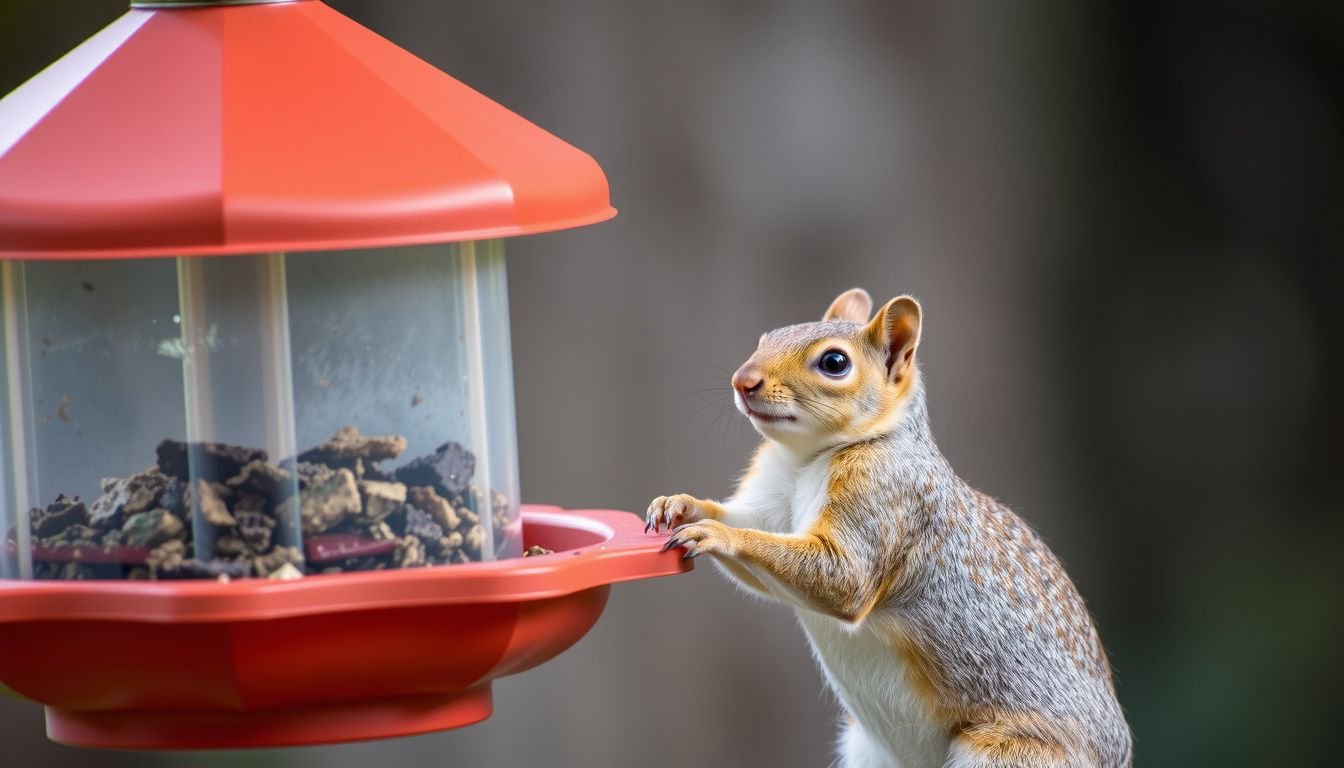
Anyone trying to learn how to get squirrels away from bird feeders quickly discovers there’s no single magic trick. Squirrels are smart, persistent, and athletic. The solution is a layered strategy that makes feeders less accessible, less rewarding, and easier to protect over time.
This guide walks through a practical, step-by-step process. They’ll start by assessing how squirrels currently reach the food, then gather simple tools, reposition feeders, and add physical barriers. From there, they’ll adjust seed choices and create a maintenance routine that keeps squirrels guessing.
Used together, these actions dramatically cut down on raids while keeping birds comfortable and safe.
Assess Squirrel Activity and Current Feeder Setup
Before changing anything, they should watch how squirrels actually reach the feeders. Observation for just a few days often reveals the real weak points.
They can note:
- Where squirrels launch from (trees, fences, roofs, rails).
- Whether they jump, climb poles, or drop from above.
- Times of day with the most activity.
They should also assess the current hardware: feeder style, mounting method, and pole type. Are there nearby “launch pads” within 10–12 feet horizontally or 6–8 feet vertically? Is the feeder hanging from a branch squirrels can easily run along?
A quick phone video can help replay squirrel routes in slow motion. That footage often shows exactly where a baffle, relocation, or pruning cut will have the biggest impact.
Gather Tools and Materials Before Making Changes
Once the weak points are clear, it’s time to gather what’s needed so changes happen in one efficient session. A basic kit usually covers most yards.
Common items include:
- Metal or PVC pole (1–1.25″ diameter) and ground stake.
- Squirrel baffle (torpedo or dome style).
- Carabiners, hooks, and chain for hanging feeders.
- Pruning saw or loppers for branches.
They may also want squirrel-resistant feeders, hot-pepper suet, and storage bins with tight lids. Gloves and a small step ladder make adjustments safer and easier.
Look, gathering everything upfront reduces half-done fixes. When people have the right parts at hand, they’re far more likely to implement a complete, effective deterrent system instead of a patchwork of quick hacks.
Reposition Feeders to Make Access Harder for Squirrels
Placement is the cheapest, most powerful change. Squirrels rely on nearby structures to launch long jumps, so distance is their first line of defense.
They should follow the “5-7-10 rule” as closely as possible:
- 5 feet minimum off the ground.
- 7 feet from any overhead branch or structure.
- 10 feet horizontally from trees, fences, and decks.
Mount feeders on a dedicated pole in open space, not on deck rails or trees. If the yard is small, they should prioritize vertical clearance and eliminate the closest launch points.
Real-world example: A homeowner moved a feeder from a deck rail to a pole 9 feet from the nearest tree, 5.5 feet high, and away from the roofline. Squirrel visits dropped from hourly to occasional attempts that failed.
Install Physical Barriers and Squirrel-Proof Hardware
Once the feeder is in a better spot, they can add hardware that physically blocks or destabilizes squirrels. This step often makes the biggest difference.
Key options include:
- Pole baffles placed 4–5 feet above ground.
- Dome baffles above hanging feeders.
- Weight-activated squirrel-proof feeders that close ports under heavier animals.
They should ensure baffles are wide enough (at least 16–18″) and can’t be bypassed from above. All connections—hooks, chains, brackets—need to be metal, not chewable plastic or rope.
A simple comparison helps decision-making:
| Hardware | Best For | Key Advantage |
|---|---|---|
| Pole baffle | Climbing squirrels | Blocks upward access |
| Dome baffle | Overhead access | Stops drop-ins |
| Weight-activated feeder | Persistent jumpers | Closes ports automatically |
Adjust Food Choices and Feeding Habits Strategically
Even the best hardware fails if the food reward is irresistible. They can make the feeder less attractive to squirrels while still appealing to birds.
Effective tactics:
- Switch to safflower seed, nyjer, or straight sunflower hearts (no shells).
- Avoid corn, peanuts, and mixed seed with large grains, which squirrels love.
- Use hot-pepper-coated suet or seed products labeled for birds only.
They should also reduce ground spillage by choosing feeders with trays and cleaning under feeders regularly. Less seed on the ground means fewer squirrels hanging around.
Feeding on a consistent schedule, and not overfilling feeders, keeps the buffet from becoming a 24/7 squirrel magnet while still supporting local bird populations.
Maintain, Monitor, and Fine-Tune the Squirrel Deterrents
Deterrents aren’t “set and forget.” Squirrels test systems over time, so maintenance and small tweaks keep the upper hand.
They should create a simple routine:
- Weekly: Check baffles for tilt, gaps, or damage.
- Weekly: Clean up spilled seed and inspect poles for chew marks.
- Monthly: Confirm clearances—branches grow, structures shift.
If squirrels find a new route, they can respond quickly by raising baffles, moving the pole a few feet, or trimming a fresh launch branch. Small, fast adjustments are easier than starting over.
They may also rotate feeder types or food blends a couple of times a year. That unpredictability, combined with solid hardware, makes the feeder system far less rewarding for persistent squirrels.
Common Questions
Do squirrel-proof bird feeders really work?
Yes, high-quality squirrel-proof feeders work well when paired with proper placement and baffles. If they’re installed too close to trees or decks, squirrels can still bypass the mechanisms.
Is hot pepper bird seed safe for birds?
Capsaicin affects mammals, not birds, so birds can eat hot pepper seed safely. People should still avoid touching their eyes after handling it and store it away from pets.
Should they feed squirrels separately to protect bird feeders?
Sometimes offering a separate corn or peanut station away from feeders reduces pressure. It’s not foolproof, but it can distract squirrels when combined with good hardware and placement.
What to Do Now
They can start by watching their feeders for two or three days and mapping exactly how squirrels get in. From there, they should reposition feeders using the 5-7-10 rule, then install a solid pole baffle and, if needed, a dome baffle above.
Next, they can shift to less tempting seed mixes and clean up any ground spillage. Over the following weeks, they’ll monitor squirrel behavior and tweak heights, distances, or branch pruning. With this layered, step-by-step approach, most yards see a sharp drop in squirrel raids while bird activity stays high and healthy.