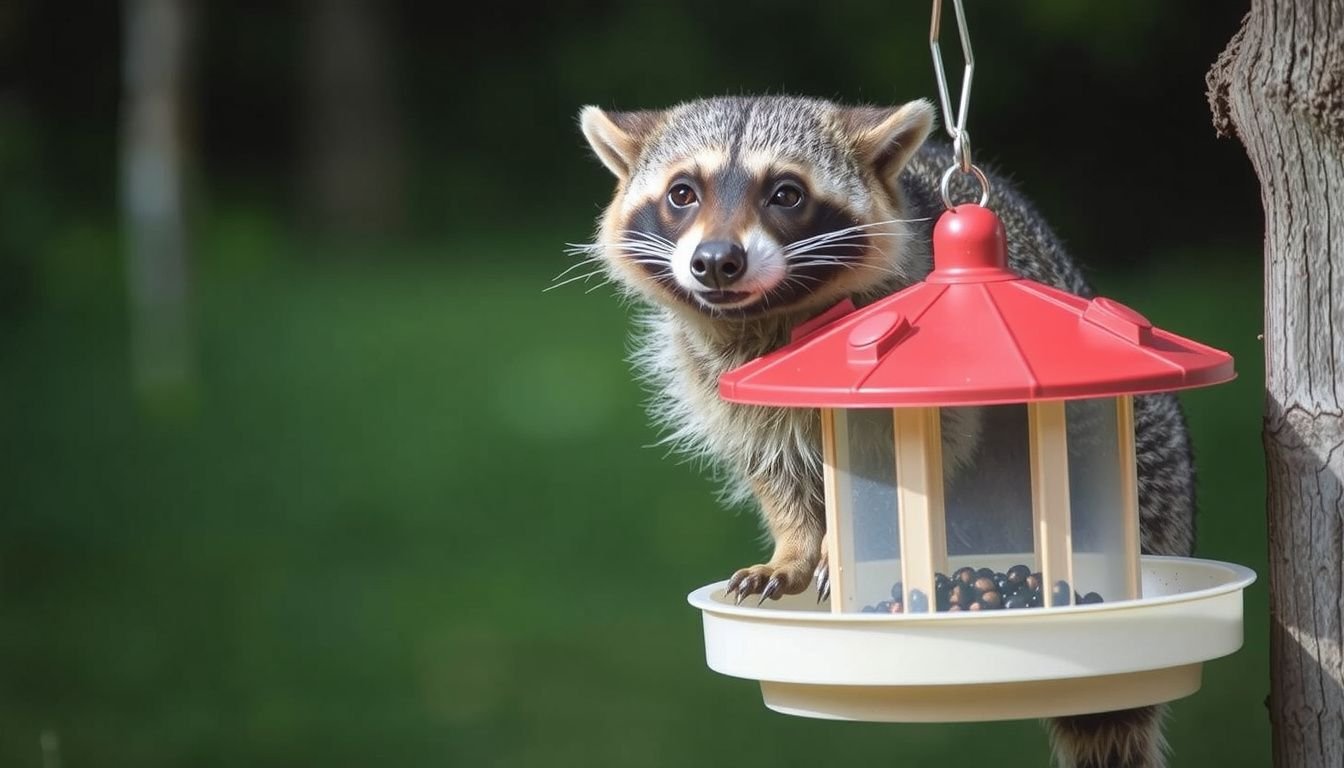
Anyone wondering how to deter racoons from bird feeders usually wants one thing: birds at dawn, not raccoons at midnight. Raccoons are strong, clever, and relentless once they find an easy food source. They’ll climb, jump, hang, and even shake poles until seed spills everywhere.
The good news: a few targeted changes can drastically cut raccoon visits without harming wildlife. This guide walks through a clear sequence: understand raccoon behavior, evaluate the yard, upgrade feeders and hardware, manage smells and food, then maintain a simple routine. By following these steps in order, a homeowner can protect feeders, reduce mess, and keep birds visiting while raccoons move on to easier opportunities.
Understand Why Raccoons Target Bird Feeders
Raccoons visit bird feeders for three reasons: easy calories, strong smells, and predictable routines. They’re omnivores with a special love for high-fat foods like sunflower seeds, suet, peanuts, and corn. A single feeder can provide hundreds of calories in minutes.
They’re also nocturnal problem-solvers. If they succeed once, they’ll return night after night at roughly the same time. Any spilled seed on the ground becomes a backup reward, training them to keep checking the area.
Key raccoon advantages include:
- Strong paws that open lids and twist feeders.
- Excellent climbing on wood, metal, and trees.
- Good memory for food locations and access routes.
Knowing this helps someone design a setup that’s physically difficult, unrewarding, and inconsistent for raccoons.
Assess the Yard and Feeder Setup Before Making Changes
Before buying new gear, they should walk the yard at dusk or early morning and study how raccoons might reach the feeders. The goal is to map access points and weak spots.
They should check:
- Feeder height: Anything under 6–7 feet is easy to reach from a jump or climb.
- Nearby launch points: Branches, fences, decks, and roofs within 6–8 feet.
- Climbable poles: Rough wood, textured metal, or posts without baffles.
- Ground mess: Seed piles, shells, and suet crumbs under feeders.
Look at nighttime evidence: tracks, droppings, disturbed soil, or bent shepherd’s hooks. A quick phone photo of the current setup helps when measuring for new poles, baffles, or feeder replacements.
Choose and Install Raccoon-Resistant Bird Feeders
Raccoon-resistant doesn’t mean raccoon-proof, but it can make access much harder. They should favor sturdy, enclosed designs over open trays or cheap plastic tubes.
Good options include:
- Weight-activated feeders that close ports under heavier animals.
- Caged feeders with metal surrounds that allow small birds but block paws.
- Locking lids with metal clips or screw tops.
They should avoid platform feeders, flimsy suet cages, and large, open hoppers. When installing, they need to secure every connection: tighten hooks, use locking carabiners, and confirm lids snap or screw shut. A metal body is far harder for raccoons to chew or crack than plastic.
Raise, Relocate, and Secure Feeders to Limit Access
Height and distance are powerful deterrents. As a rule, feeders should be at least 6–7 feet off the ground and 8–10 feet away from trees, fences, and decks that raccoons can climb.
Action steps:
- Move feeders off decks and railings to isolated poles.
- Trim branches that hang within jumping range.
- Place new poles in open lawn, not right beside trees or sheds.
All hanging points should be secure. They should use closed hooks or carabiners rather than open S-hooks that raccoons can knock off. One homeowner, for example, cut raccoon visits by 90% simply by moving feeders 12 feet away from a fence line and raising them from 5 to 7 feet.
Add Baffles, Poles, and Hardware to Block Climbing
Baffles are one of the most effective tools when installed correctly. They prevent raccoons from climbing up poles or down from above.
Best practices:
- Use large, smooth baffles (at least 16–18 inches wide).
- Mount pole baffles 4–5 feet above ground so raccoons can’t jump past them.
- Use torpedo or cone-style baffles on smooth metal poles.
They should avoid rough wooden posts that provide easy grip. If using a hanging setup from a branch, they can add a dome baffle 1–2 feet above the feeder. All clamps and collars must be tight; raccoons exploit loose hardware.
A quick monthly check with a screwdriver keeps the system effective.
Manage Food, Smells, and Habits That Attract Raccoons
Even the best hardware fails if the yard smells like a buffet. They should start by changing feeding habits and food management.
Key changes:
- Feed measured amounts so feeders are nearly empty by dusk.
- Clean up spilled seed under feeders every few days.
- Store seed in sealed metal containers, not bags in the garage.
- Avoid leaving pet food, compost, or trash accessible at night.
They can also switch to foods raccoons like less, such as safflower seed, which many songbirds enjoy. Routinized evening refills should be avoided; unpredictable schedules make it harder for raccoons to time their visits.
Use Humane Deterrents and Maintain a Long-Term Routine
Humane deterrents work best as part of a layered strategy, not as the only line of defense. Motion-activated tools can surprise raccoons and push them to give up.
Useful options:
- Motion-activated lights or sprinklers near feeder poles.
- Wildlife-safe repellents (granules or sprays) around the feeder area.
- Occasional temporary feeder removal for a week if raccoons become persistent.
They should inspect feeders, poles, and baffles at least once a month. Tighten hardware, wash feeders, and reassess nearby branches or structures. Consistency is critical: raccoons quickly exploit lapses but usually move on when access stays difficult and unrewarding over several weeks.
People Also Ask
Do raccoon-proof bird feeders really work?
They work when combined with proper placement and baffles. A “raccoon-proof” feeder on a low, climbable pole will still be raided. On a tall, baffled pole, success rates are much higher.
What smell keeps raccoons away from bird feeders?
Strong scents like predator urine, garlic, or commercial repellents can discourage raccoons, but results vary. They’re most effective when paired with good sanitation, sealed trash, and secure feeder setups.
Is it OK to remove bird feeders at night?
Yes. Taking feeders indoors at dusk is one of the simplest ways to stop nighttime raids. It’s especially effective for smaller setups or during periods of heavy raccoon activity.
Will feeding birds attract more raccoons permanently?
Feeding birds can attract raccoons if food is easy to access or frequently spilled. With raised, baffled feeders and good cleanup habits, most raccoons move on to easier food sources.
Next Steps
The most effective plan is sequential. First, they should assess their current setup and identify how raccoons are getting in. Next, they can upgrade to sturdier feeders, move them to open areas, and install proper baffles on smooth poles.
From there, they should tighten food management: less waste, sealed storage, and no nighttime buffets. Finally, they can layer in humane deterrents and a monthly inspection routine. With these habits in place, raccoon visits typically drop sharply, bird activity rebounds, and the yard stays cleaner and safer for wildlife.
Related read: How to Keep Deer Out of Bird Feeders: Step-by-Step Guide