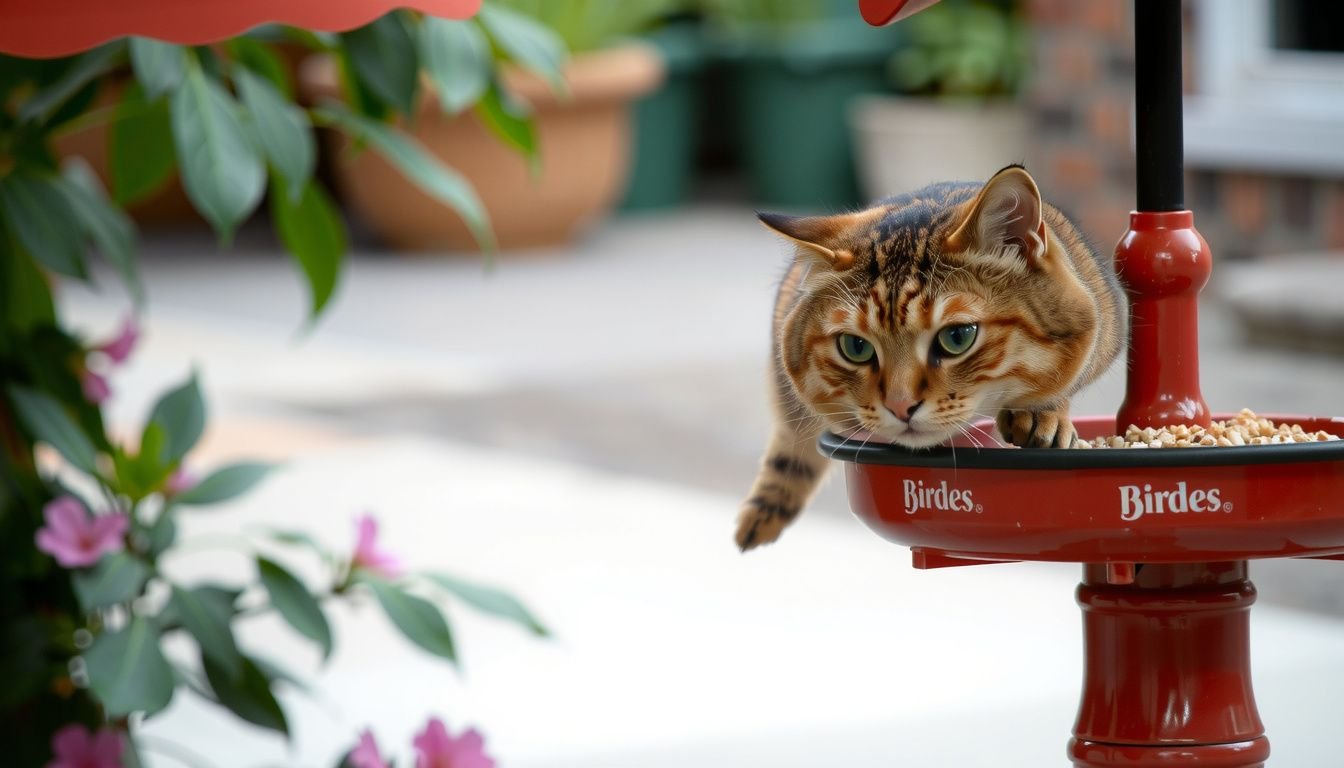
How to keep cats away from bird feeders comes down to controlling access, not “winning” a battle of wills. Cats are fast, quiet, and persistent, and even well-fed pets may stalk birds out of instinct. A good plan protects birds while staying humane and neighbor-friendly.
They’ll get better results by treating the yard like a system: feeder placement, mounting hardware, climbing barriers, and a routine that removes easy opportunities. One change helps, but stacked layers work. Look for signs first—paw prints, flattened plants, or cats watching from cover—then build defenses in the right order.
The steps below walk through assessment, setup, and maintenance. Each step includes quick action items, pro tips, and common mistakes so the feeder stays active and birds stay safer.
Assess the Risk and Gather Supplies (Before You Start)
They should start by identifying where cats approach from and what “launch points” exist. Cats usually use shrubs, low fences, stacked pots, or patio furniture to get within one jump of the feeder. A quick yard walk at dawn or dusk often reveals the routes.
Next, they’ll gather supplies so the installation is done once, not in repeated fixes.
- Feeder pole (metal, smooth-sided) or a wall mount with clearance
- Baffle (stovepipe-style or cone), sized for the pole diameter
- Measuring tape, level, shovel (for setting a pole), and hose clamps
- Gravel or concrete (optional, for a stable pole base)
Pro tip: They should measure the cat’s likely jump distance from nearby surfaces; many cats can clear 5–6 feet horizontally if there’s a solid takeoff point.
Common mistake: Buying a baffle first, then discovering it doesn’t fit the pole or sits too low to matter.
Choose a Cat-Resistant Feeder Location and Mount
Location does most of the work. They should place the feeder where cats can’t hide and can’t jump from nearby structures. A wide, open sightline gives birds time to react and reduces ambush success.
- Set the feeder 10–12 feet from shrubs, fences, decks, or furniture
- Keep it at least 6 feet away from any “launch” surface at the same height
- Mount the feeder 5–6 feet high so baffles can sit below it
If they’re using a pole, a smooth metal pole is better than wood, which offers grip. If wall-mounting, they should choose a bracket that pushes the feeder well away from the wall and any railing.
Pro tip: They can temporarily mark a 10-foot radius with a garden hose to visualize what needs moving.
Common mistake: Hanging a feeder near a pretty shrub “for cover.” That cover helps cats more than birds.
Install Physical Barriers That Block Climbing and Jumping
Physical barriers are the most reliable and humane layer. A properly installed baffle prevents climbing, while spacing prevents jumping. They should aim to make the feeder frustratingly inaccessible from every angle.
- Install a smooth pole (or verify the existing pole isn’t textured).
- Attach a baffle 4–5 feet above ground so cats can’t reach above it.
- Confirm the feeder hangs at least 18–24 inches above the baffle.
- Remove nearby “step-ups” like planters, benches, or stacked firewood.
A cone baffle works well for jumpers; a stovepipe baffle often works best for climbers. They should pick the style that matches the problem observed.
Pro tip: They can add a second, smaller baffle above the first if squirrels and cats both climb.
Common mistake: Setting the baffle too low, which lets a cat jump and grab the feeder above it.
Add Humane Deterrents and Maintain a Cat-Proof Routine
Once access is controlled, deterrents help keep cats from “patrolling” the area. These should be humane, consistent, and aimed at the approach routes—not at the birds.
- Motion-activated sprinklers aimed at entry paths
- Motion lights for nighttime prowling
- Prickly ground cover or dense plantings under approach lines (not under the feeder)
- Keep seed spills cleaned up to avoid attracting ground-feeding birds into cat range
Practical example: A homeowner with an outdoor cat placed a feeder on a smooth pole 12 feet from shrubs, added a cone baffle at 4.5 feet, and set a motion sprinkler along the fence line. Within a week, the cat stopped waiting near the feeder because it couldn’t reach it and the approach felt unpredictable.
Pro tip: They should refresh the routine weekly—tighten clamps, rake spilled seed, and trim “new” jump points as plants grow.
Common mistake: Relying on scent repellents alone; rain and irrigation make them inconsistent.
Quick Answers
How far should a bird feeder be from bushes to keep cats away?
They should aim for 10–12 feet of open space from shrubs, fences, or furniture. That distance reduces ambush cover and removes common launch points that let cats jump directly to the feeder.
Do baffles really stop cats?
Yes, when installed correctly. A smooth pole plus a baffle placed around 4–5 feet high blocks climbing. It only fails when the feeder is close enough for a cat to jump past it.
Is it safe to use cayenne pepper or hot sauce as a deterrent?
They should avoid putting irritants on feeders or seed. It can blow into birds’ eyes or contaminate food. Physical barriers and motion deterrents work better and stay safer for wildlife.
What if the cat is the homeowner’s pet?
They can keep the pet indoors during peak bird activity, use a “catio,” or add a breakaway collar with a bell. The feeder setup still matters, since instinct can override training.
Putting It Into Practice
The most effective approach stacks defenses: smart placement, the right mount, and a correctly positioned baffle. Then deterrents and cleanup keep cats from turning the feeder into a hunting station. They should start with distance and mounting first, since those changes reduce risk immediately.
Next, they can add motion deterrents on the routes cats use most, and adjust as the yard changes through the season. A quick monthly check—tight clamps, trimmed shrubs, and less spilled seed—keeps the system working. If birds begin avoiding the feeder, it’s usually a sign a cat has found a new approach line, and the spacing needs a refresh.
Related read: How Do Birds Find Feeders: Senses, Signals, and Habits