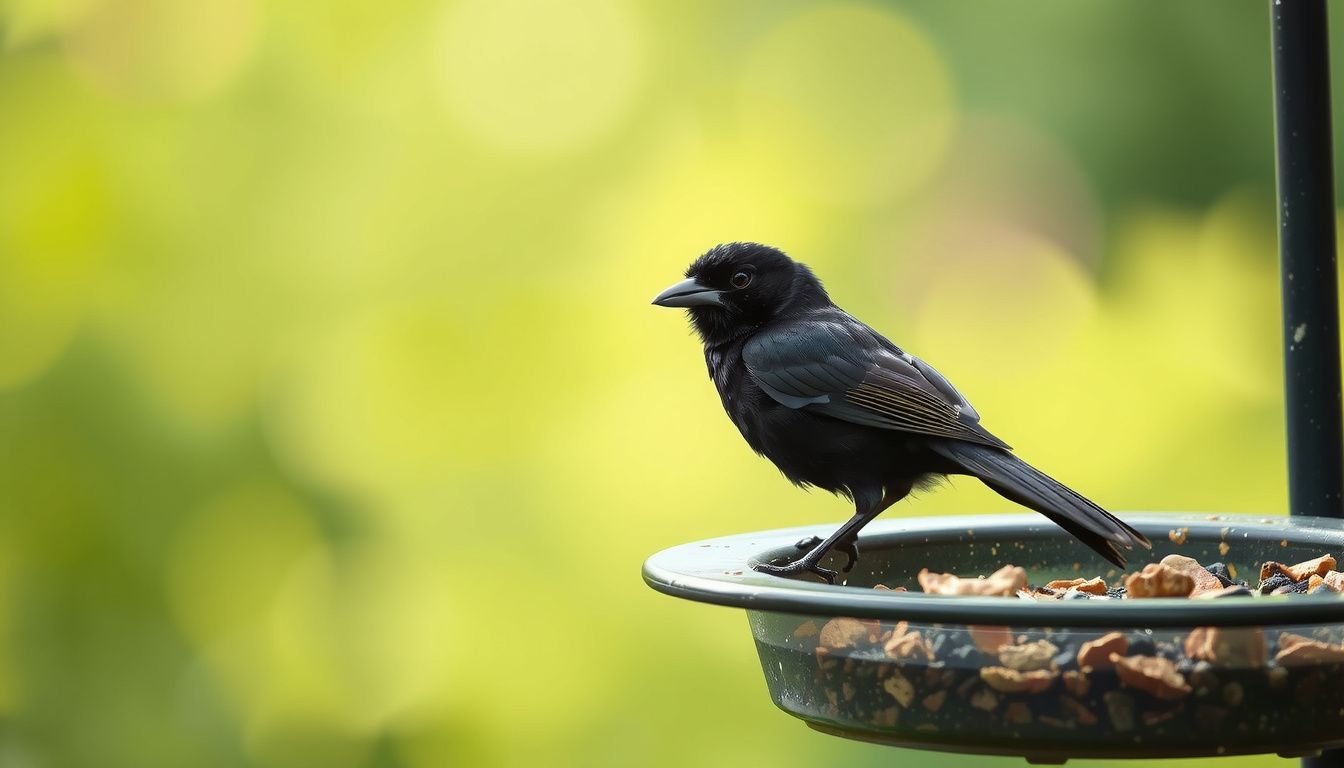
How to keep black birds away from feeders usually comes down to one thing: reducing the payoff that flocking birds get from showing up. Grackles, starlings, cowbirds, and blackbirds can drain seed fast, intimidate smaller songbirds, and turn a calm feeding station into a noisy crowd.
They aren’t “bad” birds. They’re efficient. Many travel in groups, spot easy food quickly, and return repeatedly once a feeder becomes reliable.
The goal isn’t to harm or eliminate them. It’s to redesign the feeding setup so smaller birds keep access while problem species find it less worth their time. The steps below walk through identification, seed choices, feeder hardware, placement, timing, and safe deterrents—then show how to monitor results for long-term control.
Identify the Black Birds and Their Feeding Patterns
Control starts with identification because different species respond to different tactics. Most “black birds” at feeders are European starlings, common grackles, red-winged blackbirds, or brown-headed cowbirds.
They tend to feed in bursts, often mid-morning and late afternoon, and they prefer wide, easy perches. Many also favor open trays where multiple birds can eat at once.
- Starlings: aggressive, clingy, love suet and large openings.
- Grackles: large, pry at ports, dominate platforms.
- Blackbirds/cowbirds: flocking ground-feeders, quick to mob spills.
Look for patterns: which feeder they hit first, how long flocks stay, and whether spills on the ground are drawing more birds than the feeder itself.
Before You Start: Gather Tools, Seeds, and Safety Basics
They’ll get better results by prepping supplies before changing anything. A few small adjustments made together outperform one big change made once.
- Seeds: safflower, nyjer (thistle), striped sunflower (optional test), quality suet alternatives.
- Hardware: weight-activated feeder or cage, baffle, sturdy pole/hook, squirrel-resistant hanger.
- Deterrents: reflective tape, predator-eye balloons (temporary), mild motion devices.
Safety matters. They should avoid sticky substances, poisons, glue traps, or anything that can entangle feet or feathers. They should also clean feeders weekly during heavy use to reduce disease spread.
Now, they can change one variable at a time and keep notes, so they know what actually worked.
Switch to Seeds Black Birds Avoid (Without Losing Songbirds)
Seed selection is the fastest lever. Many flocking black birds prefer cheap mixes heavy in milo, cracked corn, wheat, and millet. Those ingredients also create ground spill that attracts more birds.
They can pivot to seeds that common songbirds love but many black birds avoid.
| Seed | Best For | Often Discourages |
|---|---|---|
| Safflower | Cardinals, chickadees, finches | Many grackles/blackbirds (not all) |
| Nyjer (thistle) | Goldfinches, siskins | Most black birds |
| No-mess sunflower hearts | Most songbirds | Reduces ground-feeding crowds |
Common mistake: continuing “wild bird mix” while trying deterrents. The mix itself is the invitation.
Choose Feeder Styles That Limit Access and Reduce Crowd Size
Feeder design controls who can physically feed. Black birds do best on large trays and wide perches where several can land at once.
They should prioritize feeders that reward small, agile birds and limit flocking access.
- Tube feeders with short perches: reduce leverage for larger birds.
- Nyjer-only finch feeders: tiny ports, low interest for black birds.
- Caged feeders: outer wire keeps large birds out while small birds slip through.
- Weight-activated feeders: close ports when heavier birds land.
Pro tip: if they keep a platform feeder, they should use it only for short “songbird hours” and remove it when flocks arrive.
Adjust Feeder Placement to Remove Perches and Ambush Points
Placement changes bird behavior. Black birds like clear sightlines, easy approach routes, and nearby staging branches where flocks gather before a rush.
They can make the site less convenient without removing food entirely.
- Hang feeders 8–10 feet from thick shrubs where flocks can mass.
- Keep 5–6 feet clearance from branches that act as waiting-room perches.
- Use a smooth pole and add a baffle to reduce climbing and jostling.
Common mistake: placing feeders directly over bare ground. Spilled seed becomes a buffet and trains ground-feeding black birds to return.
They should rake up hulls and consider a seed tray that catches waste if spills are a persistent trigger.
Set a Feeding Schedule and Use Temporary Feed Pauses
Flocking birds rely on predictability. If food is always available, they’ll check repeatedly and recruit more birds. A schedule breaks that loop while still supporting backyard songbirds.
They can start with “target windows” when desired birds are most active.
- Put feeders out at dawn for 60–90 minutes.
- Bring them in for midday if flocks surge.
- Offer a second short window late afternoon if needed.
Short feed pauses work too. If black birds take over, they should remove seed for 2–4 days, then restart with safflower/nyjer and improved feeder styles.
Pro tip: keep fresh water available; many songbirds stay in the yard even when food is briefly paused.
Add Practical Deterrents That Don’t Harm Birds
Deterrents work best as a rotating layer, not a permanent fix. Black birds habituate quickly, so variety matters.
- Reflective tape or spinners: place near (not on) feeders and move weekly.
- Monofilament lines: a few vertical lines around a platform can reduce landing space.
- Motion: intermittent sprinklers or sensor devices can disrupt flock settling.
They should avoid loud constant noise makers; they annoy neighbors and birds acclimate anyway.
Real-world example: a homeowner switched from a tray feeder with mixed seed to a caged safflower tube plus a nyjer finch feeder, then paused feeding for three days after a grackle wave. Within two weeks, finches and cardinals returned while large flocks stopped lingering.
Monitor Results and Fine-Tune for Long-Term Control
They’ll get the best control by tracking what changes the ratio of songbirds to black birds. Quick observations beat guessing.
- Note species, time of day, and feeder type used.
- Measure seed use weekly to spot “mob feeding” spikes.
- Watch the ground: spills often explain repeat visits.
If black birds persist, they should tighten access: swap to a weight-activated model, remove platforms, and reduce feeding windows. If songbirds disappear too, they should reintroduce food gradually and add habitat cover like native shrubs away from the feeder line.
Season matters. During fledgling season and migration, pressure can rise; temporary scheduling and deterrents are often enough until numbers drop.
What Readers Ask
Will safflower seed always keep black birds away?
No. Many black birds dislike it, but some learn to eat it. The best results come from pairing safflower with a caged or weight-activated feeder and reducing ground spill.
Is it okay to stop feeding birds for a few days?
Yes. Most backyard birds adapt by foraging naturally. A short pause can break flock routines, especially when feeding restarts with different seed and feeder access controls.
Do fake owls or hawks work?
Sometimes, briefly. They work best when moved every few days and combined with other changes. Stationary decoys quickly become background objects to flocking birds.
You’re Ready
They can keep black birds from dominating feeders by stacking simple changes: identify the species, remove cheap mixes, switch to safflower and nyjer, and use tube, caged, or weight-activated feeders. Placement and cleanliness matter just as much as seed choice.
Next actions are straightforward. They should pick one feeder to “optimize” first, adjust placement to reduce staging perches, and run a short feeding schedule for two weeks. If flocks return, they should pause feeding briefly and restart with tighter access.
Consistent monitoring keeps the yard welcoming for songbirds without turning the feeder into a flock magnet.
Related read: How Do You Keep Squirrels Off Bird Feeders: 9 Fixes