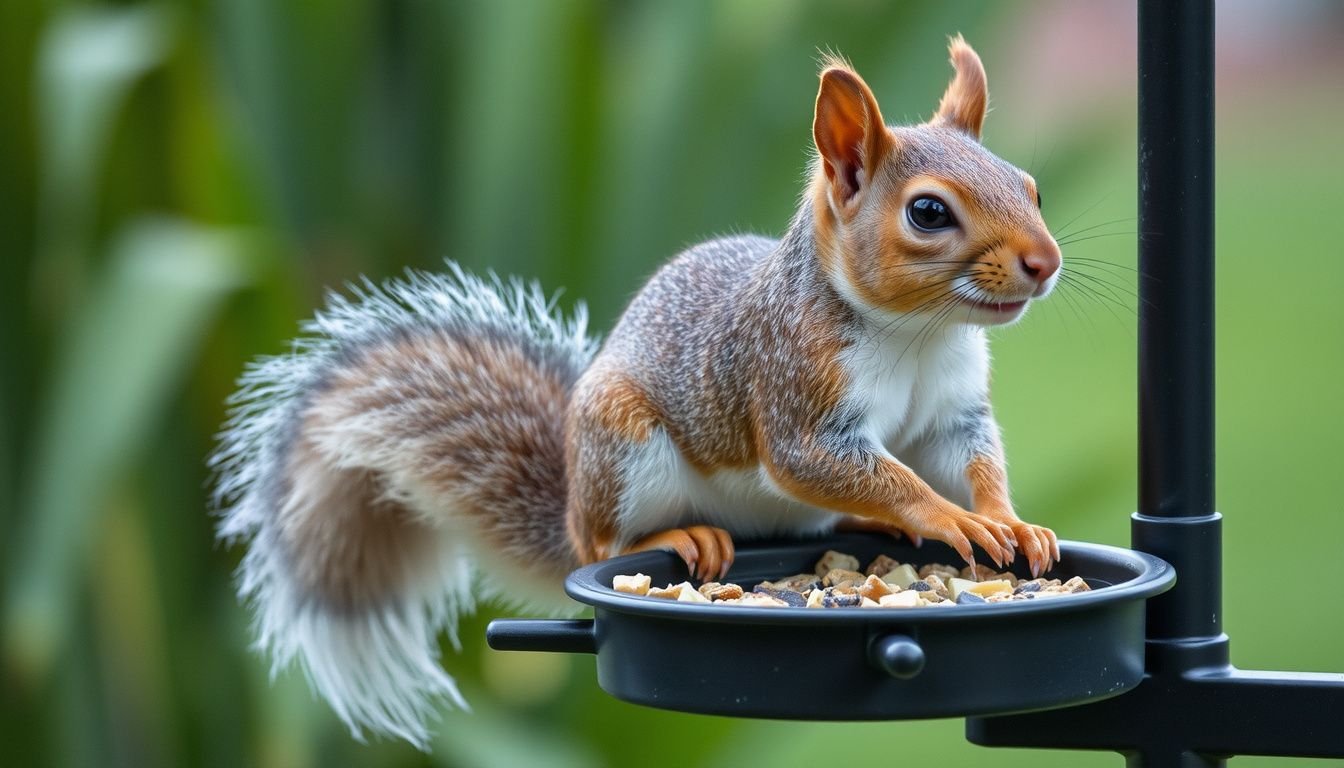
How do you keep squirrels off bird feeders without giving up on backyard birding? Most homeowners run into the same problem: squirrels are fast, clever, and highly motivated by free calories. They’ll climb poles, leap from branches, and even chew through plastic to reach seed.
A few strategic changes usually fix it, though, and they don’t require harsh chemicals or harming wildlife. The most reliable approach combines the right feeder hardware, smart placement, and foods that birds love but squirrels dislike. The sections below lay out proven options, when to use each one, and how to troubleshoot the “one squirrel that won’t quit.”
Why squirrels target bird feeders
Squirrels go after feeders for one simple reason: it’s the easiest buffet in the yard. Birdseed is calorie-dense, available daily, and often placed in safe cover near trees. Once a squirrel learns a feeder’s location, it’ll revisit it like clockwork.
They’re also built for the job. Their claws grip bark and poles, their balance is exceptional, and they can jump surprisingly far. Many can leap 8–10 feet horizontally if they have a solid launch point.
Common “squirrel magnets” include:
- Feeders hung near branches, fences, or deck rails
- Mixed seed blends heavy on corn, peanuts, and sunflower
- Spilled seed on the ground that rewards repeat visits
Choose squirrel-resistant feeder designs
Squirrel-resistant feeders work by using weight, cages, or mechanics to block access. The best models are metal-heavy, have chew-resistant ports, and include warranties that reflect real-world durability.
Three designs tend to perform best:
- Weight-activated feeders that close ports when a heavier animal lands
- Caged feeders that allow small birds in but keep squirrels out
- Tube feeders with metal ports and short perches that limit leverage
Look for adjustable weight settings if larger birds (like grackles) are common. Avoid thin plastic hoppers; squirrels often chew lids, seams, and hanging loops.
Install baffles and guards the right way
A baffle is often the single highest-impact upgrade. It blocks climbing access on a pole or prevents drops from above when placed correctly. The key is sizing and placement, not just buying one.
For pole-mounted feeders, use a stovepipe or dome baffle below the feeder. Install it 4–5 feet above ground, and keep the feeder at least 18 inches above the baffle so squirrels can’t reach around it.
For hanging setups, an overhead baffle can help, but only if squirrels can’t jump in from the side. Choose a wide diameter (at least 15–18 inches) and secure hardware tightly so it doesn’t tilt and become a launch aid.
Place feeders to block squirrel access routes
Placement beats gadgets when it removes the squirrel’s “path.” Most feeder raids start from a tree trunk, fence, roofline, or deck post. If a squirrel can reach a feeder with one jump, it will.
Use these spacing rules:
- Keep feeders 10–12 feet away from branches, fences, and railings
- Mount on a smooth metal pole, not wood
- Hang feeders so the nearest launch point isn’t level with the feeder
Now look up, not just around. Overhanging limbs can create a drop-down route that defeats otherwise good setups.
Use seed and food choices squirrels avoid
Food selection can reduce squirrel pressure fast. Squirrels strongly prefer black oil sunflower, peanuts, and corn. When those are the main ingredients, squirrels keep coming back even after deterrents.
Better options include:
- Safflower (many squirrels dislike it; cardinals often love it)
- Nyjer (thistle) for finches (use a proper finch feeder)
- White proso millet in moderation (less “squirrel-attractive” than peanuts/corn)
Suet can be tricky: squirrels may target it. If suet is needed for woodpeckers, use a caged suet feeder or a weight-activated suet setup.
Try safe deterrents and sensory repellents
Deterrents work best as a layer, not a standalone fix. The goal is to make the feeder less rewarding while staying safe for birds and pets. Avoid glue traps, poisons, or sticky coatings; they’re inhumane and can injure non-target wildlife.
Common, bird-safe approaches include:
- Capsaicin-treated seed (birds don’t feel heat; many mammals do)
- Motion-activated sprinklers aimed at approach routes
- Predator decoys moved frequently (limited effect, but can help short-term)
Use capsaicin products labeled for bird feeding and apply as directed. Keep treated seed away from areas where children or pets might rub their eyes after contact.
Maintain the feeding area to reduce squirrel visits
Maintenance removes the “extra rewards” that train squirrels to return. Even if they can’t access the feeder, spilled seed below it can keep them hanging around and trying new angles.
Simple habits that matter:
- Rake or sweep hulls and spilled seed weekly
- Use a seed tray only if it doesn’t overflow onto the ground
- Store seed in a sealed metal container to avoid attracting rodents
Also check hardware monthly. Loose hooks, bent poles, or wobbling mounts create leverage points squirrels exploit. Tighten fasteners and replace worn parts before they become failure points.
Troubleshoot common setups and persistent squirrels
When squirrels keep winning, it’s usually one of three issues: a jump route exists, the baffle is too small/too high, or the feeder design isn’t truly resistant. Fix the access route first, then upgrade equipment.
Quick diagnostics:
- If squirrels climb the pole: baffle is missing, too small, or installed too high
- If squirrels jump in: feeder is too close to a launch point
- If squirrels chew in: feeder has plastic parts or exposed seams
Practical example: A homeowner mounts a feeder on a 7-foot metal pole, adds a 16-inch stovepipe baffle at 4.5 feet, and moves the pole 12 feet from the nearest branch. They switch to safflower and capsaicin-treated sunflower. Squirrel visits drop within a week because climbing and jumping both fail, and the food payoff is lower.
Common Questions
Do squirrel baffles really work?
They work well when sized and placed correctly. A wide baffle on a smooth pole, installed 4–5 feet high with clearance above it, stops most climbing attempts and reduces repeat visits.
Will cayenne pepper hurt birds?
Birds don’t respond to capsaicin the way mammals do, so heat doesn’t “burn” them. Use products formulated for birdseed, follow label directions, and handle carefully to avoid eye irritation.
What’s the best distance from trees?
Keeping feeders 10–12 feet from branches, fences, and roofs blocks most jumps. If space is limited, prioritize a pole baffle and remove nearby “launch points” like adjacent rails or chairs.
Should they feed squirrels separately?
Separate feeding can reduce pressure for some yards, but it often increases squirrel numbers over time. If tried, place squirrel food far from bird feeders and keep portions small and inconsistent.
Final Thoughts
Keeping squirrels away is less about “winning a battle” and more about removing easy access and easy rewards. The most dependable setup pairs a chew-resistant feeder with a properly installed baffle and smart placement away from launch points. Food choices like safflower and capsaicin-treated seed can lower motivation, while cleanup prevents the yard from becoming a training ground.
When one tactic fails, it’s usually a clue about the squirrel’s route. Adjust the hardware, move the feeder, and tighten the system until every approach is inconvenient and unrewarding.
Related read: How to Make Bird Feeders: Step-by-Step Backyard Setup