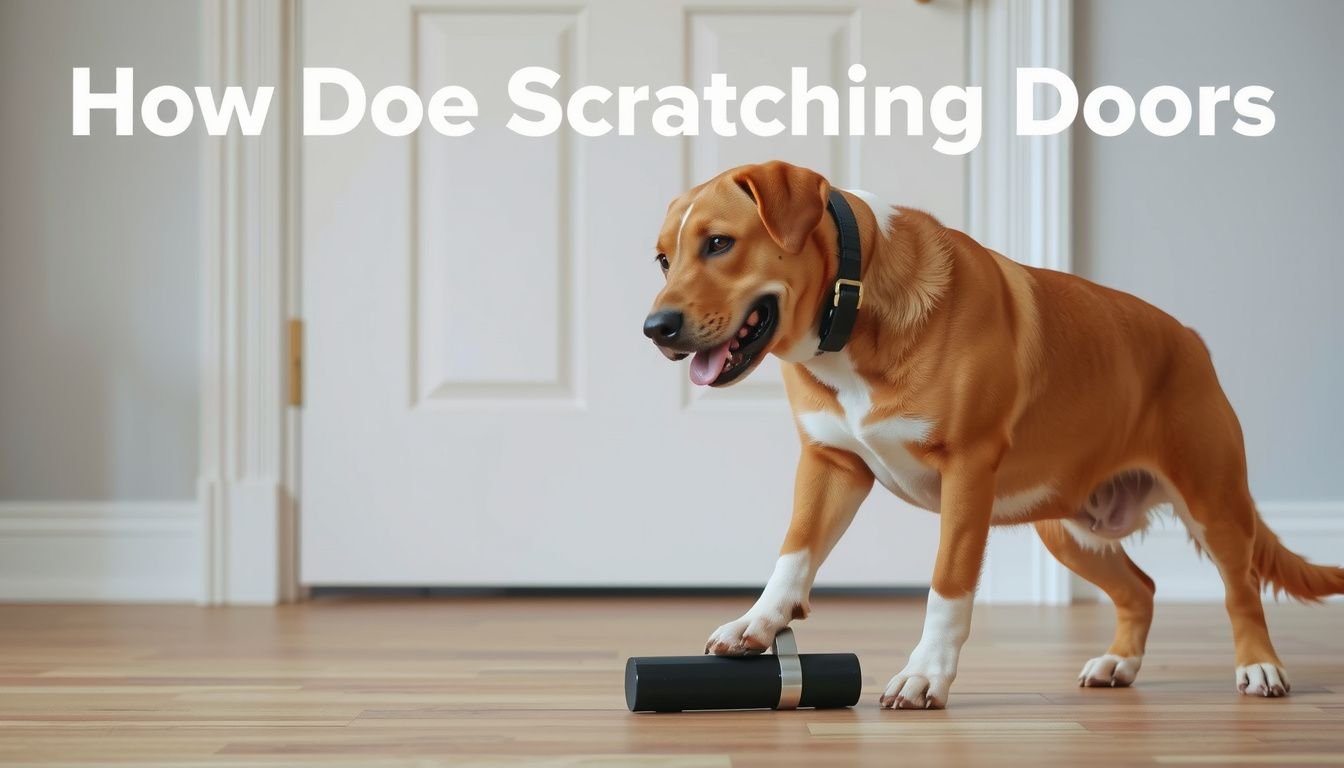
How to stop a dog scratching doors starts with identifying what the dog is trying to achieve: access, attention, relief, or escape. Door scratching isn’t “stubbornness.” It’s a behavior that has been reinforced by outcomes like the door opening, someone calling out, or the dog finally getting to the yard. Left unaddressed, it can escalate into torn nails, anxiety spirals, and expensive damage.
They’ll get the best results by combining three levers: management (prevent rehearsal), training (teach an alternative), and meeting needs (exercise, enrichment, health). The sections below map triggers to solutions, then show what to do today, what to train next, and what to buy only when it genuinely helps.
Why Dogs Scratch Doors: The Most Common Triggers
Most door scratching falls into a few buckets: the dog wants to go out, wants to follow a person, hears/ smells something, or has learned that scratching makes humans respond. Some dogs also scratch when conflicted—excited and frustrated behind a barrier.
Best For: Owners who need a fast diagnosis.
- Pros: Clarifies the “why,” prevents random fixes, speeds improvement.
- Cons: Triggers can overlap; misreading them leads to inconsistent results.
Common triggers they should check:
- Separation anxiety (panic when alone)
- Attention-seeking (human reaction is rewarding)
- Barrier frustration (can see/hear others but can’t access)
- Potty/yard access habits
- Noise triggers (delivery, neighbors, wildlife)
Best for… Matching the Right Solution to the Dog and Household
One-size plans fail because households differ: apartments vs yards, shared hallways, kids opening doors, or multiple dogs. They should match the solution to the dog’s motivation and the home’s constraints.
Best For: Busy households choosing a realistic plan.
- Pros: Reduces trial-and-error; improves consistency across family members.
- Cons: Requires agreement on rules; mixed handling slows progress.
Fast matching guide:
- Scratches when left alone: separation-anxiety protocol + management.
- Scratches when people move: “place” training + baby gate routines.
- Scratches at front door noises: threshold manners + sound/visual blocking.
- Scratches to go out: scheduled potty + bell/target alternative.
Quick Safety and Damage-Control Steps to Use Today
They should stop rehearsal immediately. Every successful scratch-to-open cycle strengthens the habit. Management buys time for training to work.
Best For: Anyone needing immediate relief and door protection.
- Pros: Instant reduction in damage; lowers stress; protects nails/paws.
- Cons: Doesn’t teach new behavior; can increase frustration if used alone.
- Use a baby gate/x-pen to create distance from the door.
- Add a scratch guard or temporary paneling at paw height.
- Place a heavy-duty mat/runner to reduce slipping and noise.
- Keep the dog on a drag leash during peak times to interrupt calmly.
Rule Out Medical and Grooming Causes That Increase Scratching
Some dogs scratch doors harder when they’re uncomfortable. Allergies, ear infections, arthritis, or nail pain can lower frustration tolerance and raise reactivity at thresholds.
Best For: Dogs with sudden onset scratching or intense agitation.
- Pros: Prevents missed health issues; improves training response.
- Cons: Vet workups cost time/money; not the sole cause in many cases.
- Nails too long: more traction and damage; trim weekly or grind.
- Itch/pain: licking paws, head shaking, restless sleep—book a vet visit.
- Senior stiffness: consider non-slip mats and easier access to potty breaks.
Training Foundations: Teach a Calm “Wait” and “Place” at Doors
They should teach the dog what to do instead of scratching: hold position and earn access. “Wait” controls the door opening; “place” creates a default station away from the door.
Best For: Food-motivated dogs and households that can practice daily.
- Pros: Long-term behavior change; improves safety at exits; generalizes well.
- Cons: Requires repetition; inconsistent door-opening ruins clarity.
- Place: lure to a mat, mark, reward; build duration; release cue.
- Wait: touch the knob; if they move, reset; reward stillness; open a crack, then close if they surge.
- Real access pays: the door opens only after calm behavior.
Fix Separation Anxiety and Attention-Seeking Door Scratching
If scratching happens when they leave, the dog may be panicking, not misbehaving. If it happens when someone’s home, the dog may have learned that scratching produces eye contact, talking, or the door opening.
Best For: Dogs scratching at exit doors during departures or when humans are nearby.
- Pros: Addresses root emotion; reduces escalation; improves overall calm.
- Cons: Separation anxiety can require professional help; progress can be non-linear.
- SA approach: suspend long absences when possible; do sub-threshold departures; pair with high-value chews; consult a CSAT/behavior vet for severe cases.
- Attention approach: remove the payoff—no talking/yelling; reward calm on the mat; open doors only after quiet.
Reduce Barrier Frustration: Leash Skills, Threshold Manners, and Access
Barrier frustration shows up as scratching, whining, and lunging when the dog can see people, dogs, or outdoor activity. They’ll need to lower arousal and teach that calm behavior brings access.
Best For: Reactive or highly social dogs at front doors, patios, and fences.
- Pros: Cuts reactivity; improves safety; reduces neighbor complaints.
- Cons: Triggers can be unpredictable; requires controlled setups.
- Practice leash “1-2-3” treat walking away from the door, then return.
- Use threshold reps: approach, cue “place,” reward, retreat—repeat until calm.
- Control visuals: frosted film, curtains, or a gate to block the direct line to the door.
Enrichment Plan: Exercise, Mental Work, and Predictable Routines
A bored dog scratches. A tired dog still scratches if anxious, but enrichment lowers baseline arousal and makes training stick. Predictability matters; random access to outdoors creates constant door monitoring.
Best For: High-energy breeds and adolescent dogs.
- Pros: Reduces excess energy; improves impulse control; supports behavior change.
- Cons: Takes planning; exercise alone won’t fix anxiety-based scratching.
- Daily: sniff walk + short training + chew time.
- Meals: puzzle feeders, scatter feeding, or frozen Kongs.
- Routine: scheduled potty breaks; calm “place” before door outings.
Compare Options: Training vs Deterrents vs Physical Barriers
They’ll get the cleanest results when training is the core and tools are support. Deterrents can suppress scratching but may raise stress if the underlying need isn’t met.
Best For: Households deciding where to invest time and money.
- Pros: Clarifies tradeoffs; prevents over-reliance on gadgets.
- Cons: Some dogs need a blended plan; no single “winner.”
| Option | Best For | Strength | Watch-Out |
|---|---|---|---|
| Training (wait/place) | Most dogs | Long-term change | Needs consistency |
| Deterrents (tape/scent) | Mild habits | Fast interruption | Can increase anxiety |
| Barriers (gate/guard) | Damage control | Stops rehearsal | Doesn’t teach skills |
Buying Guide: Door Protectors, Scratch Guards, Mats, and Nail Care Tools
They should buy to support a plan, not replace it. The right products prevent injury and protect the home while training runs its course.
Best For: Renters, new dog owners, and homes with repeated door damage.
- Pros: Immediate protection; reduces repair costs; improves safety.
- Cons: Poor fit looks messy; some adhesives damage paint; tools require upkeep.
- Scratch guards: clear acrylic or metal kick plates; choose tall coverage for jumpers.
- Mats/runners: non-slip rubber backing; protect floors and reduce noise.
- Nail tools: grinder for frequent micro-trims; styptic powder for safety.
Real-world example: A renter used a tall clear guard plus a gate 6 feet back, then paid access with “place” for two weeks. Scratching dropped within days because the dog couldn’t rehearse, and the door only opened after calm.
Bringing It Together
They stop door scratching fastest when they prevent practice, teach a clear alternative, and meet the dog’s underlying need. Management tools—gates, guards, mats—protect the door and the dog’s nails today. Training—“place,” “wait,” and calm door routines—builds a durable replacement behavior.
If scratching is tied to being alone, they should treat it as an emotional problem, not a manners issue, and scale departures to what the dog can handle. If it’s frustration or excitement, they should lower arousal with structure, enrichment, and controlled access. When the household stays consistent, the door stops being a battleground and becomes just another cue for calm.
Related read: How to Stop Dog From Scratching Door Without Damage