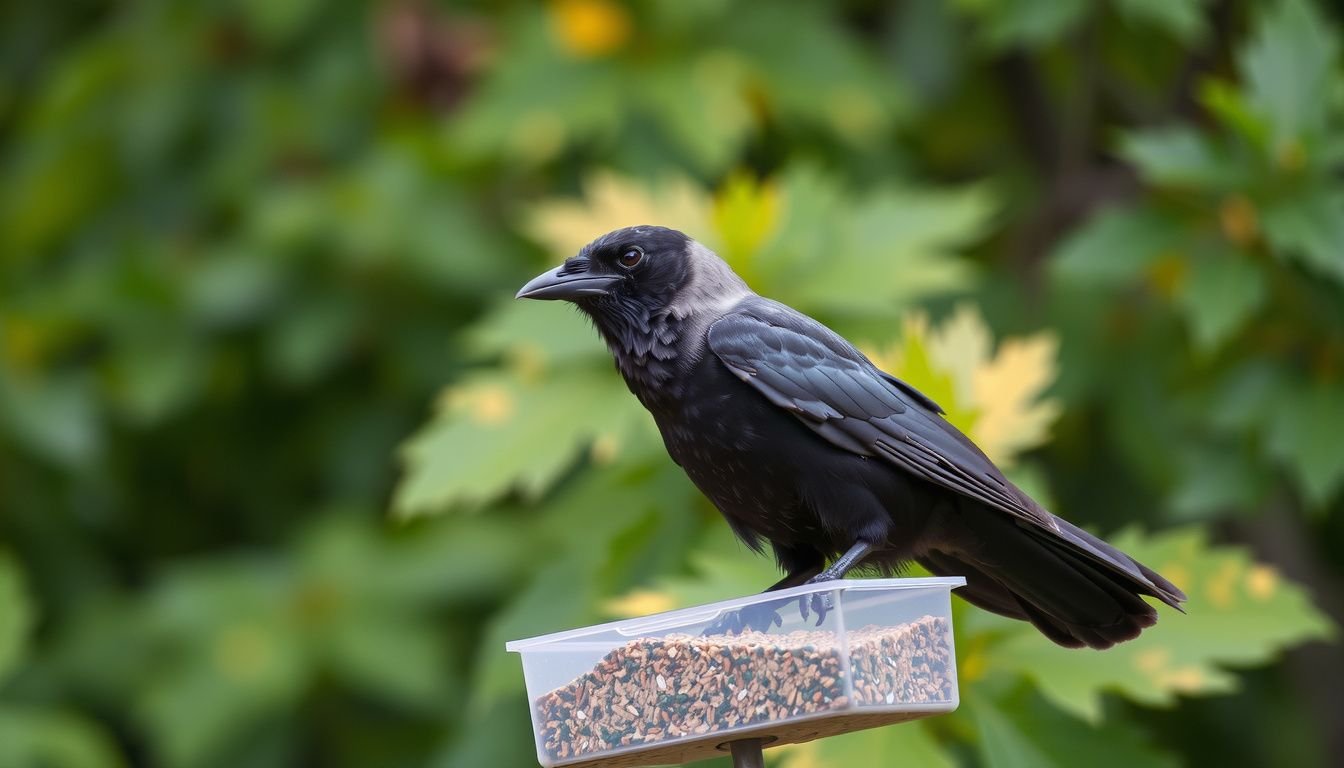
How to keep crows away from bird feeders starts with understanding why they’re showing up and removing the easy payoff. Crows are smart, social, and persistent; once they learn a feeder is reliable, they’ll recruit others. That doesn’t mean backyard birding is doomed.
It means the setup has to favor smaller songbirds and reduce access for large, strong birds that can empty a feeder fast.
The most effective approach uses layers: change what’s offered, limit where and when food is available, and add physical barriers that crows dislike but songbirds tolerate. Look for small, repeatable actions. A few consistent tweaks usually outperform flashy “scare” gadgets that work for a day and then fail.
Assess Crow Activity and Identify What’s Attracting Them
They should start with a quick assessment before buying anything. Crows typically target large trays, open platforms, spilled seed, and predictable feeding times. If they can perch comfortably and eat fast, they’ll return.
They can run a simple 3-day check: note arrival times, where crows perch, and what they eat first. This pinpoints the “weak link” in the yard—often the ground below the feeder or a wide perch rail.
- Watch the ground: spilled seed and hulls attract crows and other pests.
- Check feeder style: platform and hopper feeders are easiest for crows.
- Identify preferred seed: peanuts, corn, and mixed seed with fillers are crow magnets.
Common mistake: assuming one deterrent will solve it. If food remains easy, crows simply adapt.
Prepare Before You Start: Choose Feeder Types, Seed, and Tools
They’ll get better results by preparing a “crow-resistant” baseline. That means switching to feeder designs that limit access by weight or body size, and choosing seed that songbirds love but crows don’t prioritize.
Seed choice matters. Black oil sunflower attracts many birds, but crows will eat it too if it’s abundant and easy. Safflower is a stronger filter; many songbirds accept it, while crows often lose interest compared to easier options.
- Best feeder types: weight-activated (squirrel-proof) tube feeders, caged feeders, small-port tube feeders.
- Better seed options: safflower, nyjer (for finches), sunflower hearts in small ports (less mess).
- Tools to have: pole baffle, sturdy shepherd’s hook/pole system, catch tray (optional), stiff brush for cleanup.
Pro tip: they should avoid offering peanuts or corn near songbird stations. Those are high-reward crow foods.
Apply Physical Deterrents: Upgrade Feeders and Adjust Placement
Now they apply the changes that physically block crows. The goal isn’t to “scare” them; it’s to make landing and feeding inefficient. When crows can’t perch well or trigger access, they move on.
They can start with a pole-mounted system and add a baffle below the feeder. Next, they should reduce perching opportunities: remove wide trays, shorten perches, and use feeders with small feeding ports.
- Use a caged feeder: the outer cage keeps large birds out while smaller birds slip through.
- Raise and space feeders: hang 5–6 feet high, and keep 10+ feet from launch points like fences and low branches.
- Control spill: choose no-mess seed or add a small catch tray that doesn’t become a platform.
Practical example: A homeowner with daily crow visits swapped a platform feeder for a caged tube feeder, switched to safflower, and moved the station 12 feet from a fence line. Crow visits dropped within a week, while chickadees and finches stayed consistent.
Common mistake: placing feeders near railings or trees. Crows use those as staging areas.
Maintain Results: Set a Routine to Prevent Crow Return
They keep crows away by staying consistent. Crows remember dependable food sources, so the yard should never become “easy” again. A simple routine prevents gradual backsliding from spill, stale seed, or creeping placement changes.
They can also use timing. If crows arrive like clockwork, they should pause feeding for 3–5 days, then restart with the upgraded setup. This breaks the habit loop without starving birds; most songbirds forage widely and adapt quickly.
- Clean weekly: brush ports and perches; remove wet seed.
- Rake under feeders: clear hulls and spilled seed every 2–3 days during heavy use.
- Refill smart: offer smaller amounts more often to reduce leftovers and ground scatter.
Pro tip: they should rotate feeder locations slightly every few weeks (a few feet is enough). Crows dislike changing patterns.
Frequently Asked Questions
Do fake owls or shiny tape keep crows away long-term?
They usually work briefly, then fail as crows habituate. If used at all, they should be moved often and paired with access control like caged or weight-activated feeders.
Will switching to safflower seed stop crows completely?
It often reduces interest, but it’s not guaranteed. They’ll get the best results by combining safflower with feeder upgrades that prevent comfortable perching and limit large-bird access.
Is it okay to stop feeding for a few days?
Yes. A short pause helps break crow routines, especially when followed by a more restrictive setup. They should restart with smaller daily portions and tighter spill control.
Putting It Into Practice
They’ll succeed fastest by treating crow control as a system, not a gadget. First, they identify what’s rewarding crows—open access, easy perches, and spilled seed. Next, they prepare with the right feeder type, seed choice, and a pole-and-baffle setup.
Then they apply physical barriers: caged or weight-activated feeders, smarter placement away from launch points, and reduced mess. Finally, they maintain results with quick cleanup, smaller refills, and occasional timing resets. If crows return, they should re-check spill and perch access first; those are usually the real culprits.