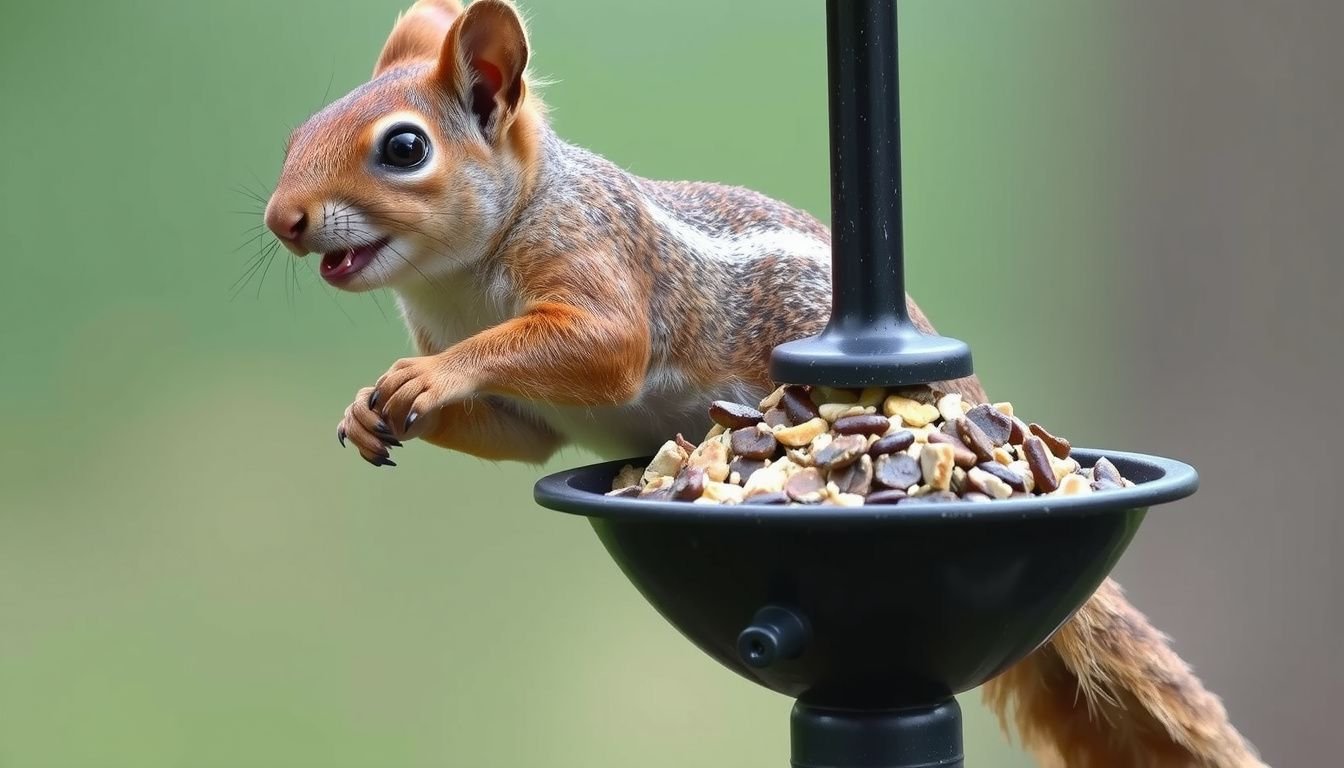
How to avoid squirrels in bird feeders starts with understanding how they’re getting there, then removing every easy route. Squirrels aren’t “bad”; they’re persistent, athletic, and motivated by high-calorie seed. If the setup rewards them once, they’ll keep testing it.
A workable plan uses layers: distance (so they can’t jump), barriers (so they can’t climb), and smarter feeding (so the payoff drops). Each change should be measurable. If the squirrels still reach the food, the setup is missing a pathway.
Look, no single gadget fixes every yard. The best results come from a baseline setup, then one upgrade at a time. That way, the homeowner knows what worked, what didn’t, and what to adjust next.
Identify How Squirrels Are Reaching the Feeder
Before buying anything, they should watch the feeder for 5–10 minutes at peak activity (early morning or late afternoon). The goal is to identify the access route, not the squirrel. Most “squirrel-proof” failures come from missed jumping points or nearby climbing aids.
They should check these common routes:
- Jumping from branches, fences, roofs, or deck rails.
- Climbing up the pole, shepherd’s hook, chain, or hanging wire.
- Dropping from above and grabbing the feeder lid or perch.
- Leaping from the ground if the feeder hangs too low.
Pro tip: Sprinkle a thin ring of flour on the ground near the pole overnight; footprints often reveal the approach path. Common mistake: assuming the pole is the issue when the real problem is a branch within jumping distance.
Gather Tools and Set a Squirrel-Proof Baseline (Before You Start)
They’ll move faster with basic tools ready. A solid baseline makes later upgrades obvious, because changes are controlled and repeatable.
- Measuring tape (for jump-distance checks)
- Work gloves and a small step ladder
- Wrench/screwdriver set (for baffles and mounts)
- Zip ties or hose clamps (for temporary tests)
- Notebook or phone notes (record what works)
Baseline rules: keep the feeder clean, avoid spilled seed, and ensure the mount is rigid. A wobbling pole invites squirrels to “ride” it and reach around baffles.
Pro tip: Start with one feeder and one seed type until the system is stable. Common mistake: changing feeder, seed, and location all at once, then not knowing which variable solved (or caused) the problem.
Relocate and Mount the Feeder to Remove Jumping Access
Distance beats gadgets. If squirrels can’t launch to the feeder, the battle is mostly won. They should relocate the feeder so it’s outside typical jumping ranges.
- Place the feeder 10–12 feet away from any launch point (branches, roof edges, fences).
- Hang it so the bottom is at least 5 feet above the ground.
- Use a dedicated metal pole set firmly in the ground, not a flexible hook.
Real-world example: A homeowner moved a tube feeder from a deck hook (2 feet from a railing) to a pole 11 feet from the nearest tree limb. With the same seed and no baffle yet, squirrel visits dropped immediately because jumping access disappeared.
Pro tip: Trim branches back if relocation isn’t possible. Common mistake: mounting near a fence line; fences function like squirrel highways.
Install the Right Baffle to Block Climbing Routes
If a pole is climbable, a baffle is non-negotiable. The right baffle forces squirrels to slide off before they reach the feeder. Size and placement matter more than brand.
| Type | Best Use | Key Setup Detail |
|---|---|---|
| Stovepipe (cylindrical) baffle | Pole-mounted feeders | Use 6–8 inch diameter; mount 4–5 feet high |
| Dome (cone) baffle | Hanging feeders | Must be wide enough to block reach-around |
They should mount the baffle low enough that squirrels can’t jump above it from the ground, but high enough to allow mowing and access. A common sweet spot is 48–60 inches from ground level.
Pro tip: Use smooth metal, not textured plastic. Common mistake: installing the baffle too close to the feeder, letting squirrels hang and reach around it.
Switch to Squirrel-Resistant Feeders and Smart Seed Choices
Once access is limited, hardware and seed finish the job. Squirrel-resistant feeders use weight-activated shrouds, caged designs, or chew-resistant materials. They don’t replace good placement; they reinforce it.
- Weight-activated feeders close ports when a squirrel lands.
- Caged feeders allow small birds through, block larger bodies.
- Metal components reduce chewing damage and lid prying.
Seed choice changes the reward. They can reduce squirrel interest by using safflower, nyjer (thistle), or seed blends without corn and milo. If they want cardinals and chickadees, safflower is often a practical middle ground.
Pro tip: Offer a separate squirrel feeder away from the bird station if local pressure is intense. Common mistake: using cheap mixes heavy in fillers that spill and train squirrels to patrol the ground.
Maintain the Setup and Troubleshoot Persistent Squirrel Behavior
Even a good system fails if it’s not maintained. They should check weekly for shifted baffles, bent poles, and seed buildup that creates a “ladder” of debris. After storms, re-measure distances; fallen branches can create new launch points.
- Rake or sweep spilled seed to remove ground feeding cues.
- Tighten mounting hardware so baffles don’t wobble or slide.
- Clean feeders regularly to prevent clogs that keep birds away.
If squirrels still succeed, they should diagnose by outcome: if they’re jumping in, increase distance; if climbing, upgrade the baffle; if chewing, switch to metal and lockable lids. Common mistake: applying sticky substances to poles; it’s messy, can harm wildlife, and rarely lasts.
Frequently Asked Questions
How far should a bird feeder be from trees to stop squirrels?
They should aim for 10–12 feet from any branch, roof edge, or fence. If space is tight, trimming branches back and adding a properly sized baffle usually delivers the next best result.
Do squirrel-proof feeders actually work?
They work best as part of a system. If a feeder is within jumping range or the pole is climbable without a baffle, even premium models can be beaten by persistent squirrels.
What seed do squirrels dislike most?
Squirrels often avoid safflower and nyjer compared with sunflower and corn-heavy mixes. Results vary by region, so they should test one seed type for two weeks before changing again.
Will a baffle stop squirrels on a hanging feeder?
A dome baffle can help if it’s wide enough and placed above the feeder so squirrels can’t reach around it. If they can jump directly to the feeder, relocation is still required.
Is it safe to use pepper-treated seed?
Capsaicin-treated seed can deter squirrels while most birds remain unaffected. They should keep it dry, avoid inhaling dust during filling, and stop use if pets or sensitive people are exposed.
Your Action Plan
They should start by observing how squirrels reach the feeder, then remove the easiest route first. Next, they should relocate the feeder to eliminate jumping access, using measured distances instead of guesswork. After that, they should install a correctly sized baffle to block climbing, and tighten the mount so nothing shifts.
Once the station is physically secure, they should switch to a squirrel-resistant feeder and a lower-attraction seed like safflower. Finally, they should maintain the area: clean spills, re-check clearances after storms, and adjust one variable at a time until squirrels stop getting rewarded.
Related read: How to Make Pine Cone Bird Feeders Step-by-Step at Home