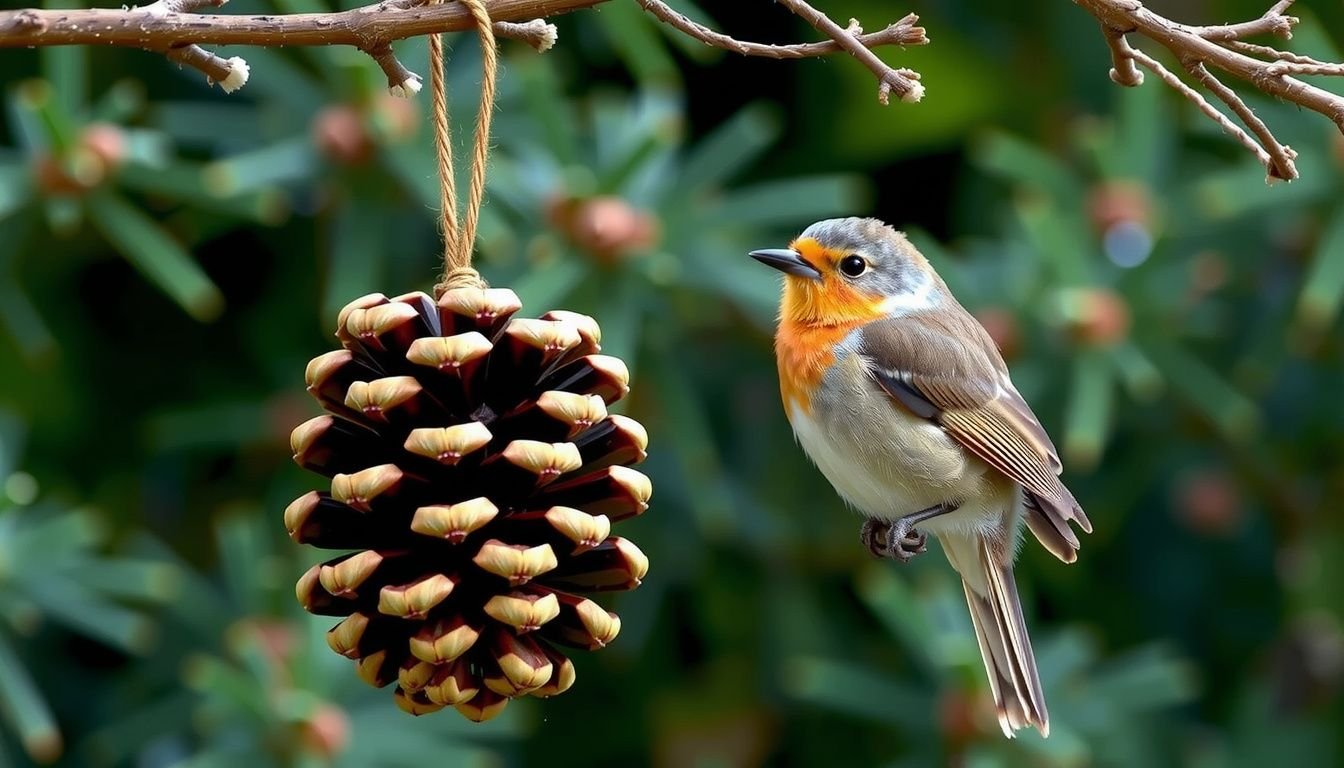
How to make pine cone bird feeders is a quick, low-cost way to support local birds while turning a natural object into a functional feeder. They work because the cone’s scales hold a sticky binder, which holds seed in place long enough for birds to peck safely. Done right, they’re kid-friendly, backyard-friendly, and easy to refresh when the seed runs out.
They’re best for small songbirds like chickadees, finches, and nuthatches. They’re not ideal for bears, raccoons, or areas with strict wildlife feeding rules, so they should always be placed thoughtfully. Look, the goal isn’t a perfect craft.
It’s a feeder that stays put, stays clean, and attracts birds without creating a mess.
Below is a simple, repeatable process that keeps ingredients bird-safe and helps each cone hold seed longer.
Gather Supplies and Choose Safe Ingredients
They’ll get better results by setting up a small “assembly line” before starting. A tray or baking sheet catches seed and reduces waste. Choosing the right ingredients matters because some pantry items spoil fast or contain additives birds shouldn’t eat.
Recommended supplies:
- Pine cones (medium to large, open scales)
- Natural twine or cotton string (avoid thin fishing line)
- Binder: peanut butter, sunflower-seed butter, or plain suet
- Seed: black oil sunflower, millet, chopped peanuts, or mealworms
- Butter knife or spoon, bowl, and a tray
Pro tip: Use no-salt, no-xylitol spreads only. Common mistake: Using bread, honey, or syrup as a binder; it can ferment, drip, or attract pests quickly.
Prep the Pine Cones for Better Seed Coverage
They should start with cones that are dry and fully open. Closed cones don’t hold seed well, and damp cones encourage mold. If cones were collected outdoors, a quick prep step improves cleanliness and adhesion.
- Shake each cone firmly to remove dirt and loose debris.
- Let cones air-dry indoors for 24–48 hours on a towel.
- If cones are tight, place them in a warm, dry room until scales open.
If sanitation is a concern, they can heat cones on a lined baking sheet at low temperature (around 200°F / 93°C) for 30–45 minutes, then cool completely. Pro tip: Tie the hanging string now, before the cone gets sticky. Common mistake: Skipping drying time, which makes the binder slide off.
Mix and Apply the Seed Binder Evenly
The binder is the “glue,” so consistency matters. They want it soft enough to spread, but thick enough to stay in the cone’s grooves. If it’s too cold, it tears the cone scales; too warm, it drips.
- For peanut butter: stir well; warm slightly if it’s stiff.
- For suet: use softened (not melted) suet for best hold.
- For seed butter: choose unsweetened, low-additive options.
They should use a knife or spoon to press binder between the scales, rotating the cone as they go. Cover most surfaces, but don’t pack it solid. Birds need texture to peck.
Pro tip: Leave a small “handle” area near the top less coated to keep twine cleaner. Common mistake: Coating only the outer tips; it falls off faster.
Coat the Pine Cones with Seed for Maximum Hold
Seed coverage is where most feeders succeed or fail. They should use a tray and roll the cone slowly, pressing seed into the binder rather than sprinkling lightly. A mixed seed blend gives more species a reason to visit.
Best seed options:
- Black oil sunflower seed (high interest, high energy)
- White proso millet (sparrows, juncos)
- Chopped peanuts (woodpeckers, nuthatches)
- Dried mealworms (bluebirds; use sparingly)
Practical example: A homeowner with a small balcony can roll one cone in sunflower seed and another in millet, then hang both 6 feet apart; finches often prefer sunflower while ground-feeders may visit the millet cone if it’s near a railing or shrub. Pro tip: Press the final layer in with clean hands. Common mistake: Using large, hard chunks that birds can’t grip.
Hang the Feeders Securely in Bird-Friendly Spots
Placement controls safety, visibility, and how quickly the feeder disappears to squirrels. They should hang cones where birds can perch, but where predators can’t easily ambush them. Wind matters too; spinning cones shed seed faster.
- Hang 5–10 feet high, near cover like shrubs (but not inside dense brush).
- Keep 10–12 feet away from jumping-off points for cats.
- Use a sturdy branch, hook, or railing bracket; double-knot the twine.
Pro tip: Add a simple baffle or place cones on thin outer branches to reduce squirrel access. Common mistake: Hanging too close to windows without precautions; they should use window decals or place feeders either within 3 feet or beyond 30 feet to reduce strikes.
Maintain, Refresh, and Troubleshoot Common Issues
These feeders are meant to be temporary. They should plan to replace or refresh them often, especially in warm or wet weather. Clean habits protect birds from disease and keep the yard from becoming a rodent buffet.
- Replace after heavy rain, visible mold, or a sour smell.
- Remove old twine and discard cones that won’t dry fully.
- Rotate locations to avoid seed buildup under one spot.
| Problem | Likely Cause | Fix |
|---|---|---|
| Seed falls off quickly | Binder too thin or cone damp | Dry cones longer; use thicker binder; press seed firmly |
| Mold appears | Humidity, rain exposure | Hang under cover; replace sooner; avoid honey/syrup |
| Squirrels take it | Easy access point | Move to thin branches; use baffle; shorten hang line |
Pro tip: Make smaller cones in summer and larger ones in winter when birds need more calories. Common mistake: Leaving feeders out “just a few more days” after they’ve gone rancid.
What Readers Ask
Can they use honey instead of peanut butter?
They shouldn’t. Honey and syrups drip, ferment, and attract ants. A thicker binder like no-salt peanut butter, seed butter, or softened suet holds seed better and stays safer in changing weather.
Which birds will use pine cone feeders?
They often attract chickadees, titmice, nuthatches, finches, and sometimes woodpeckers. Results depend on seed choice and placement; sunflower-heavy mixes usually bring the fastest activity.
How long do pine cone bird feeders last?
They typically last a few days to two weeks. Rain, heat, and humidity shorten lifespan. If there’s mold, a rancid smell, or heavy insect activity, they should remove and replace immediately.
Are pine cone feeders safe for kids to make?
Yes, with supervision. They should use blunt tools, wash hands after handling seed and cones, and avoid allergens if peanut butter is used. Twine should be tied by an adult for secure hanging.
Putting It Into Practice
They can make effective pine cone bird feeders in under 20 minutes once supplies are ready. The key moves are simple: start with dry, open cones, use a thick bird-safe binder, press seed in firmly, then hang the feeder where birds can perch and predators can’t.
Next actions: they should make two cones with different seed mixes, hang them in separate spots, and observe which birds arrive first. If the feeder gets soggy or messy, they should replace it quickly and adjust placement under light cover for longer-lasting results.
Related read: How to Make Bird Feeders: Step-by-Step Backyard Setup