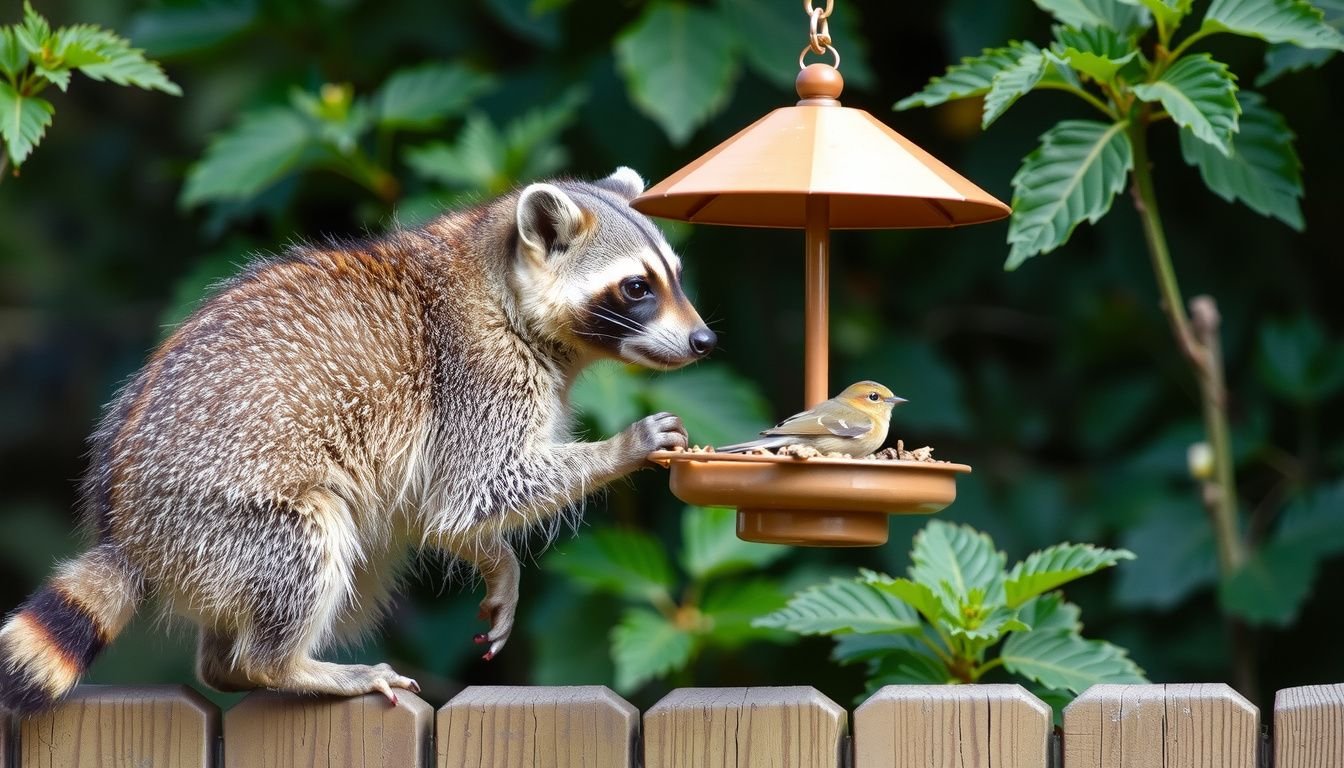
How to keep raccoons out of bird feeders starts with accepting one thing: they’re smart, strong, and patient. A raccoon can climb, pry, and even “test” a setup for weak points over several nights. The good news is that most problems come from a few fixable mistakes—low placement, easy climbing routes, and food left available after dark.
A reliable solution uses layers: confirm the culprit, control access with distance and height, block climbing with a proper baffle, then reduce the reward by changing routines. When the feeder becomes too hard to reach and not worth the effort, raccoons usually move on.
The steps below keep birds fed while making the yard less appealing to nighttime raiders.
Spot the Signs and Confirm Raccoons Are the Problem
Raccoons leave a messy, repeatable pattern. Feeders are often tipped, lids are pried open, and seed is scattered in a wide arc. They also return at consistent times—typically after dusk—so damage appears “overnight.”
Before buying hardware, confirm it isn’t squirrels, rats, or bears. Look for tracks and hand-like prints in soft soil, muddy paw marks on poles, and claw scratches on wood. If possible, aim a basic motion-activated camera at the feeder for two nights.
- Typical raccoon signs: bent hooks, twisted poles, popped lids, feeder dragged a short distance
- Common confusion: squirrels chew ports; rats leave smaller droppings under cover
- Fast confirmation: sprinkle flour under the feeder to capture prints
Pro tip: If the feeder is intact but empty, wind or birds may be the cause. If hardware is damaged, think raccoon.
Before You Start: Gather Tools, Choose Feeders, and Plan Placement
They’ll save time by staging the right gear first. A raccoon-resistant setup usually needs a stable pole system, a quality baffle, and a feeder that can’t be opened or shaken apart.
Start with a quick site plan: where the feeder will go, where raccoons could climb from, and what will be under it. The goal is a “clean” access zone with no nearby launch points.
- Tools: tape measure, adjustable wrench, screwdriver set, level, work gloves
- Materials: 1–1.25 inch metal pole (or heavy-duty kit), pole baffle, locking hardware
- Optional: seed tray removal kit, motion light (used carefully), camera
Common mistake: using a thin shepherd’s hook. It flexes, tilts, and becomes a ladder.
Relocate the Feeder for Distance, Height, and Clear Access Control
Placement does most of the work. A raccoon can jump and reach, but it struggles when there’s nothing to climb and the feeder is suspended away from edges. They should relocate the feeder before upgrading parts, because bad placement defeats “raccoon-proof” products.
Use these baseline measurements as a starting point, then adjust for the yard.
| Placement Factor | Target |
|---|---|
| Distance from trees/fences/roofs | 10–12 feet (minimum 8) |
| Feeder height from ground | 5–6 feet (with baffle below) |
| Clear space under feeder | No chairs, planters, or stacked items |
Pro tip: Keep the feeder far enough from branches that an adult raccoon can’t drop onto it. If the yard is small, prioritize “no climb” routes over perfect distance.
Install a Raccoon-Proof Pole and Add the Right Baffle
A rigid metal pole with a properly sized baffle is the core defense. Raccoons climb by hugging surfaces and using friction. A wide, smooth baffle blocks that grip and forces them to slide off.
They should install the pole vertically (use a level) and set the baffle at the correct height. Most baffles work best when the bottom edge sits about 4 feet above the ground, leaving no room for a raccoon to stand and reach over it.
- Anchor the pole securely (ground sleeve, auger, or concrete base where needed).
- Slide on a wide baffle (at least 8 inches, 10–12 is better).
- Mount the feeder above the baffle, keeping the pole clean and uncluttered.
Common mistake: placing the baffle too low or adding hooks below it, which creates a step.
Upgrade Hardware: Use Locking Lids, Weight-Activated Feeders, and Guards
If raccoons reach the feeder, they’ll try to open it, shake it, or tear it apart. Hardware upgrades prevent easy wins. They should focus on locking access points and limiting the amount of seed available to spill.
- Locking lids: thumb-screw lids, carabiners, or manufacturer lock kits stop prying.
- Weight-activated feeders: perches close under heavy weight, reducing feeding access.
- Guards: seed catch trays can help birds but often help raccoons more; remove them if raids continue.
Practical example: A homeowner in a suburban yard swapped a hanging tube feeder for a pole-mounted, weight-activated model and added a 10-inch baffle. After two nights of attempts captured on a camera, the raccoons stopped visiting the feeder area.
Pro tip: Choose feeders with metal components and fewer seams. Plastic lids are easy targets.
Remove Nighttime Attractants and Adjust Feeding Routines
Raccoons are opportunistic. If there’s food at night, they’ll keep checking. The simplest behavior change is to remove the reward after dusk, especially during heavy raccoon activity or when juveniles are learning routes.
- Bring feeders in at night for 1–2 weeks to break the pattern.
- Clean up spilled seed under feeders every evening.
- Secure trash, compost, and pet food; raccoons won’t ignore an easier meal nearby.
Common mistake: leaving a suet cage out overnight. Suet is high-value and can override other deterrents.
They can also shift to morning fills only. Birds adapt quickly, and raccoons lose the nightly payoff.
Test, Troubleshoot, and Maintain a Raccoon-Resistant Setup
Raccoon control is a system, not a single product. They should test the setup for a week, then tighten weak points. Look for new scratch marks, bent hangers, and seed scatter patterns that show where access is happening.
- Weekly: wipe the pole and baffle clean (dust and sap increase grip).
- Monthly: check fasteners, lid locks, and any wear at hanging points.
- Seasonally: reassess nearby branches and growth that create new launch points.
Pro tip: If a raccoon reaches the feeder once, it’ll try again. Respond the next day with a placement or hardware change, not just a scare tactic.
What Readers Ask
Will hot pepper seed or capsaicin stop raccoons?
It’s unreliable. Birds tolerate capsaicin, but raccoons may still eat around it, especially when other food is scarce. Physical access control—distance, pole, and baffle—works more consistently.
Do motion-activated lights or sprinklers work?
Sometimes, briefly. Raccoons often habituate within days. If used, pair them with a baffle and better placement so the deterrent supports a real barrier.
How high should a baffle be installed?
Most setups work when the baffle’s bottom edge is about 4 feet off the ground, with the feeder at 5–6 feet. The key is preventing a raccoon from standing and reaching over it.
Is it safe to grease the pole?
It’s not recommended. Grease can harm feathers and fur, collect dirt, and drip onto soil. A smooth, clean metal pole with a wide baffle is safer and more effective.
What to Do Now
They should start by confirming raccoons with tracks or a camera, then move the feeder to a clear zone away from trees and fences. Next, install a rigid metal pole and a wide baffle at the correct height. After that, lock the feeder lid and remove trays or features that spill seed.
For persistent raids, they can bring feeders in at night for two weeks while cleaning up spilled seed and securing trash. Once the setup stays quiet for a full week, maintain it with quick weekly wipe-downs and fastener checks.