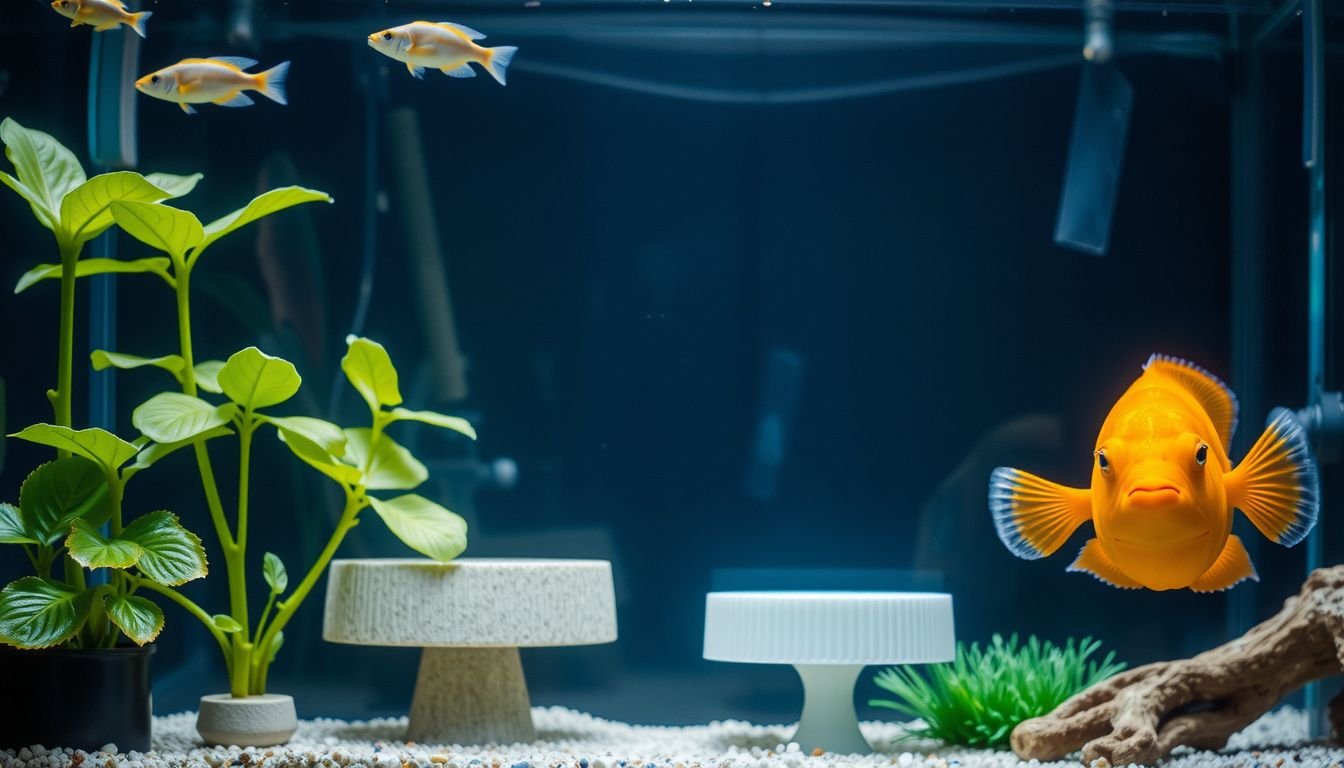
How long should an aquarium light be on to keep fish calm, plants growing, and algae under control? Get it wrong and the tank can look great for a week, then turn into a green mess. Get it right and everything just runs smoother.
Most aquariums need a consistent “day” and “night,” but the ideal photoperiod depends on what’s in the tank. A low-tech fish-only setup often wants less light than a planted aquarium, and bright LEDs can shorten the time needed. The goal is simple: enough light for health, not so much that algae takes over.
Experienced aquarists and manufacturers generally land in a reliable range, then fine-tune based on plant growth, algae spots, and fish behavior. A practical example: if a beginner runs a planted 20-gallon tank at 12 hours and sees green film on the glass, they’ll often drop to 8 hours and put the light on a timer for the same start/stop daily.
Look for guidance on:
- Tank type (fish-only vs planted vs reef)
- Light intensity and fixture quality
- Algae signals and plant response
Next, they can use a simple schedule that matches their setup, then adjust in small steps. If they want faster results, a timer and a consistent routine are the easiest wins to start with.
Why aquarium light duration matters (fish, plants, algae, and stress)
Now, the “right” schedule isn’t just about visibility; light duration drives the tank’s biology. When the photoperiod is consistent, fish settle into predictable day-night rhythms, plants photosynthesize efficiently, and nuisance algae has fewer chances to exploit instability.
Light affects four things at once:
- Fish behavior and stress: long, bright days can keep fish “on edge,” while sudden changes can trigger hiding and aggression.
- Plant growth: too little light slows growth; too much light without enough nutrients and CO₂ often backfires.
- Algae pressure: extended lighting favors fast-growing algae, especially in new tanks or tanks with excess nutrients.
- Sleep cues: fish rely on darkness to rest; constant light can disrupt feeding and immunity over time.
Practical example: a beginner runs a freshwater tank light 12 hours daily “for the plants,” but skips fertilizer. Plants stall, green dust algae appears, and tetras become skittish. Cutting to 8 hours and stabilizing the schedule usually improves all three within weeks.
Baseline photoperiods by tank type (fish-only, planted, reef)
Look, there isn’t one universal number, but there are reliable baselines that keep most systems stable. The goal is a repeatable cycle that matches livestock needs and the tank’s nutrient balance.
Common starting points by tank type:
- Fish-only freshwater: 6–8 hours. Enough for viewing, low algae risk, and minimal stress.
- Planted freshwater: 7–9 hours for low/medium light; 6–8 hours for high light setups that use CO₂.
- Reef (coral): 8–10 hours of “daylight” with optional ramp-up/ramp-down or blue-only viewing before/after.
They’ll get better results by adjusting in small steps. If algae rises, reduce by 30–60 minutes. If plants stretch or pale under adequate nutrients, increase by 30 minutes and reassess after 10–14 days.
A timer is non-negotiable for consistency. Stable photoperiods beat perfect numbers every time.
How to choose the right schedule for fish health and natural behavior
Now, the schedule should match what the fish would “expect” in nature: consistent day, consistent night, and no surprise blasts of light. When lighting is erratic, many species show stress signals like hiding, glass-surfing, or reduced feeding response.

A practical approach is to anchor the photoperiod to the room’s routine and keep it stable with a timer. Most community fish do best when the tank has a predictable “sunrise” and “sunset,” even if the light itself is simple.
- Keep start and stop times consistent (same daily window).
- Use a ramp-up feature or dimmer if available to reduce startle responses.
- Protect a true dark period; avoid night lights unless observing nocturnal species.
Example: In a living room tank, they might run lights from 1 pm to 9 pm so the fish are active when people are home, while still getting a full night of darkness. If fish look skittish at “lights on,” they can shorten the ramp time or add floating plants for shade.
How to choose the right schedule for plant growth and color
For plants, the goal is steady photosynthesis without pushing the tank into nutrient imbalance. Color and compact growth come from the right mix of light duration, intensity, and available CO2 and fertilizers.
They’ll get better results by setting a conservative window first, then adjusting based on plant response over 2–3 weeks. If leaves pale or stems stretch, plants usually need stronger light or better nutrients, not endless hours.
- Start with a consistent daily block and change only one variable at a time.
- Match duration to input levels: CO2 and fertilizers must support the light.
- Watch plant cues: pearling, new growth rate, and algae on older leaves.
Example: In a medium-tech planted tank with root tabs and weekly liquid fertilizer, they might run 7 hours daily. If red plants stay green, they can increase intensity slightly or extend to 8 hours, while confirming nitrates and iron aren’t bottoming out.
Algae control: when too much light is the real problem
Now, once the schedule looks “reasonable,” algae often points to a different issue: too much usable light for the tank’s nutrient balance. Algae doesn’t need long days; it needs opportunity—excess light paired with available nitrate, phosphate, and dissolved organics.
Common lighting-driven algae triggers include:
- Long photoperiods (especially over 10 hours)
- High intensity on shallow tanks or bare scapes
- Direct sunlight hitting the glass for part of the day
- Inconsistent timing from manual switching
Look for patterns. Green dust and hair algae often surge after intensity increases, while brown diatoms are more typical in newer systems where silicates and biofilm are still stabilizing.
Practical example: a 20-gallon planted tank runs 9 hours but develops green hair algae after an LED upgrade. The fix isn’t always “less time.” They can drop intensity 20–30%, keep 8 hours steady on a timer, and tighten feeding; algae usually slows within 2–3 weeks.
Lighting intensity, spectrum, and fixture type: how they change timing
Timing can’t be separated from the light itself. A high-output LED at 80% can deliver more plant-usable energy in 7 hours than a low-output strip light does in 10, so the “right” duration shifts with intensity.
Spectrum matters because plants and algae respond strongly to blue and red peaks. A balanced “daylight” spectrum tends to be easier to manage, while heavy blue (common in reef fixtures) can push algae if nutrients and filtration aren’t keeping up.
Fixture design changes spread and penetration. Narrow optics punch light deep, raising intensity at the substrate; wide-angle bars spread light, often allowing slightly longer runtimes without hotspots.
Useful rules of thumb:

- Brighter fixture = shorter initial photoperiod
- Deeper tank = longer or stronger light to reach plants/corals
- Better optics = watch for localized algae on hardscape
Practical example: switching from a fluorescent hood to a programmable LED, they might start at 7 hours with a 30-minute ramp, then add 15 minutes weekly only if plants improve and algae stays stable.
Practical scheduling: timers, ramp-up periods, and split photoperiods
Now, once the target hours are set, consistency becomes the real win. A simple plug-in timer or app-controlled outlet keeps the schedule stable even when they’re away. Stability reduces “random” algae flare-ups that come from skipped days and sudden catch-up lighting.
Ramp-up and ramp-down (a short sunrise/sunset) can make the tank look calmer and reduce startle responses. If the fixture supports it, they can program 30–90 minutes of gradual brightening, then the same to fade out. If it doesn’t, they can mimic it by running a low-output channel first, then the main lights.
A split photoperiod can help in rooms with heavy afternoon sun or when they want evening viewing without extending total light. A practical pattern is 4 hours on, 3 hours off, then 4 hours on, keeping the daily total unchanged.
Example: a planted community tank uses an outlet timer for 12:00–16:00 and 19:00–23:00, with a 45-minute ramp on a dimmable fixture. They get prime viewing at night without stretching the day.
Troubleshooting and fine-tuning: signs the light is on too long or too short
Look for patterns, not one-off days. When lighting is too long, the tank often shows a slow creep of nuisance growth and a “tired” look by late day. When it’s too short, growth stalls and the tank never really “wakes up.”
Common signs the light is on too long:
- Green dust or film returning quickly on glass
- Hair or fuzz algae on hardscape edges
- Plants pearling early, then looking limp later
Common signs it’s too short:
- New leaves stay small or pale, older leaves drop
- Stems stretch upward with wide gaps between nodes
- Color plants lose reds and look washed out
They should adjust in small steps: change by 30–60 minutes, then wait 10–14 days before changing again. If algae worsens after increases, they should cut time first before chasing other fixes. When unsure, they can re-check how long should an aquarium light be on against the tank’s results, not the clock.
Wrapping Up
Now, the real win is consistency: once they’ve settled on how long should an aquarium light be on, the tank should run like a routine, not a daily experiment. A steady photoperiod supports predictable feeding, calmer behavior, and cleaner viewing, while keeping the system easier to manage week to week.
A practical way to lock it in is to pick a schedule that fits the household first, then stick to it for a couple of weeks before making changes. For example, a busy office worker might run lights from 3:00–11:00 p.m. so the tank is bright during evening downtime, then keep weekends on the same timer to avoid “mini resets.”
If the setup still feels off, they can tighten the process with a simple checklist:
- Keep one stable schedule and avoid random manual overrides.
- Change only one variable at a time (timing, intensity, or maintenance).
- Track results with quick weekly notes and a photo from the same angle.
Next step: they should set a timer today, commit to one schedule for 14 days, and reassess with notes—not guesses.