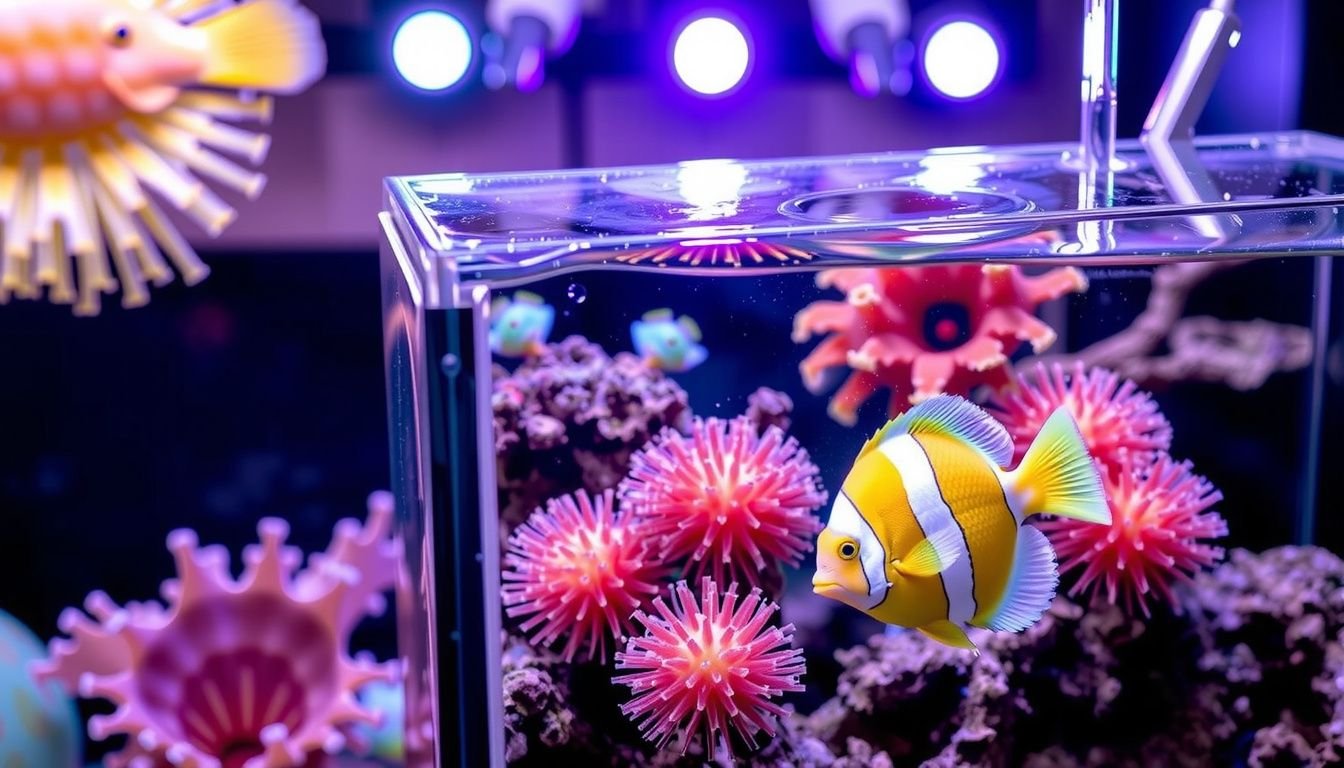
How long should aquarium lights be on if someone wants healthy plants, vibrant fish, and minimal algae? It’s a small setting that can quietly make or break a tank, because light drives feeding, sleep cycles, and plant growth all at once.
Most aquariums do best with a consistent daily “photoperiod,” but the right number depends on what’s in the tank and how bright the fixture is. A low-tech fish-only setup usually needs less light than a planted tank, and a high-output LED can push algae faster than many beginners expect.
Experienced aquarists and reputable manufacturers generally align on one principle: consistency beats intensity. Example: if someone runs a planted 20-gallon tank for 12 hours and sees green film algae by day five, cutting back to 8 hours and keeping the same schedule often improves things within two weeks.
Look, getting this right doesn’t require guesswork. They’ll learn how to set a starting schedule, what to adjust when algae shows up, and how to match lighting to tank goals, including:
- Fish-only vs. planted vs. reef needs
- Light brightness and spectrum basics
- How timers prevent “random” algae spikes
If they want a clear plan they can set once and fine-tune, start with the guidelines below and use the checklist to dial in the perfect schedule.
How Aquarium Lighting Duration Affects Fish, Plants, and Algae
Now, once the timer’s set, the real question becomes what those hours do inside the tank. Light duration drives the aquarium’s “day-night” rhythm, shaping behavior, growth, and water quality in ways beginners can see within a week.
For fish, a stable photoperiod reduces stress and supports consistent feeding and resting. Too many hours can keep fish overly active, dull colors, and trigger hiding, especially in shy species. Too few hours can disrupt routines and make a tank look lifeless even when water parameters are fine.
For plants, duration controls photosynthesis and nutrient demand. Short photoperiods can stall growth; long photoperiods can push plants harder than available CO2 and nutrients can support, creating imbalance. That imbalance is where algae wins.
Algae responds fast to excess light, especially when nutrients are present and plants can’t keep up. Watch for these early signals:
- Green dust on glass after extending hours
- Hair algae on slow-growing leaves
- Cyanobacteria in low-flow, brightly lit areas
Practical example: if a 20-gallon planted tank jumps from 7 to 11 hours, and fertilizers stay the same, algae often appears within 5–10 days. Dialing back to 8 hours and keeping timing consistent usually stabilizes the system.
Recommended Daily Light Hours by Tank Type (Fish-Only, Planted, Reef)
Look, there isn’t one universal number because livestock and lighting intensity change the target. Still, most tanks thrive when the photoperiod matches the tank’s biology and the light’s strength, not the owner’s schedule.
General daily targets (with a timer) are:
- Fish-only: 6–8 hours for viewing and a steady day/night cycle
- Planted (low to medium tech): 7–9 hours to support growth without fueling algae
- Reef: 8–10 hours total, often split into ramp-up/ramp-down with a shorter peak
Fish-only tanks need enough light for normal behavior, but extra hours mostly feed nuisance algae. Planted tanks typically do best with moderate duration and consistency, then adjustments based on plant response. Reef tanks often require longer “photo time,” yet corals respond to both spectrum and intensity, so controlled ramping matters.
Practical example: a beginner reef might run 9 hours with a 2-hour high-intensity peak; if algae blooms, they can reduce the peak to 1 hour before cutting total time. For anyone asking how long should aquarium lights be on, these ranges are a reliable starting point.

Signs the Lights Are On Too Long (and Too Short)
Now the timer’s running, the tank gives quick feedback. The clearest clue is algae: if green dust, hair algae, or brown film ramps up soon after lights-on, the photoperiod is probably too long or too intense for the tank’s nutrient balance.
Plants also “talk.” When lights run long, many plants show pale new growth, pinholes, or stalling because carbon and nutrients can’t keep pace with demand, even though the tank looks bright.
Common signs the lights are on too long include:
- Algae appearing first on slow-growing leaves and hardscape
- Fish staying hidden or looking washed out during peak lighting
- Plants pearling early, then looking tired or droopy later in the day
Too short is easier to miss. Plants may stretch toward the surface, lose lower leaves, or grow leggy; colors fade; and carpeting plants thin out.
A practical check: if a planted tank looks great for 3–4 hours, then algae or fish stress shows up after hour 7–8, the schedule is likely the problem, not the bulb. Shorten by 1 hour for a week and watch the trend.
How to Build a Stable Lighting Schedule: Photoperiod, Timers, and Ramps
Consistency beats perfection. A stable photoperiod trains fish behavior, steadies plant metabolism, and prevents the “random bright days” that often trigger algae swings.
Start with one fixed block of light per day rather than scattered on/off cycles. Keep it the same seven days a week, then adjust in small steps based on plant growth and algae pressure.
Best-practice setup looks like this:
- Timer: locks in start/stop times so weekends don’t drift
- Ramp (sunrise/sunset): 30–60 minutes to reduce fish stress and jumpy feeding
- Photoperiod changes: adjust by 30–60 minutes, then wait 7–14 days
Look, ramps don’t fix an overlong day, but they smooth the edges. They’re especially useful with bright LEDs that otherwise “snap” on and spook shy species.
Practical example: a community planted tank can run a ramp from 1:00–1:30 pm, full light 1:30–8:30 pm, then ramp down 8:30–9:00 pm. If algae creeps in, reduce full light to 6 hours before changing fertilizers or CO2.
Adjusting Light Duration for Algae Control Without Stressing Livestock
Once the schedule is stable, the next lever is fine-tuning hours to curb algae while keeping fish and invertebrates calm.
When algae shows up, the safest move is a small, consistent reduction rather than big swings. Cut the photoperiod by 30–60 minutes, hold it for 10–14 days, then reassess. Rapid changes can disrupt feeding rhythms and encourage skittish behavior, especially in shy tetras, dwarf cichlids, and nocturnal catfish.
Target the causes, not just the clock. If plants are pale or slow, shortening light without fixing nutrients and CO₂ balance can backfire and let algae win.
- Reduce intensity first (dimmer, raised light, fewer channels) if livestock seems stressed.
- Shorten duration second in small steps when algae is persistent.
- Stabilize inputs: consistent feeding, weekly maintenance, and predictable fertilization.
Practical example: a 20-gallon planted tank running 9.5 hours develops green dust algae. They drop to 8.5 hours, lower the white channel 15%, and keep fertilization consistent; within two weeks, glass cleaning drops from daily to twice weekly without fish acting jumpy.

Special Cases: New Tanks, Low-Tech Setups, and Seasonal Room Light
Now, some tanks don’t follow “typical” lighting rules because biology and ambient light change the math.
In new tanks, algae is common while bacteria and plant mass catch up. A conservative photoperiod helps: start shorter, then extend only after growth is steady and maintenance is predictable. Patience beats chasing numbers.
Low-tech planted setups (no CO₂, modest fertilization) usually do better with fewer hours and moderate intensity. Long bright days can outpace nutrient supply, leading to hair algae and stunted plants.
- New tanks: start at 6–7 hours, increase by 15–30 minutes weekly if stable.
- Low-tech: keep light moderate; avoid “high noon” intensity for long stretches.
- Reef or high-light gear: prioritize intensity control before adding hours.
Seasonal room light matters too. A tank near a window can gain 1–3 “extra” hours of usable light in summer, even if the fixture timer hasn’t changed.
Practical example: a low-tech 10-gallon by a south-facing window runs 7 hours on the timer but blooms algae in July. They add a background shade and keep the timer at 6.5 hours, restoring balance without changing stocking or filtration.
Common Lighting Mistakes and Practical Fixes for Consistent Results
Now comes the frustrating part: the schedule looks right, yet the tank still swings. Many beginners run into this, and it’s rarely about how long should aquarium lights be on as a number—it’s about consistency and control.
Fixes below are ranked by effort and payoff. Each one has a clear “you’ll notice” result, so they can verify progress fast.
-
Lowest effort: lock the timer and stop manual overrides. Turning lights on “just to view the tank” creates random micro-photoperiods. Expected outcome: steadier plant pearling/extension and fewer day-to-day algae surprises.
-
High payoff: reduce intensity before cutting hours. Many LEDs are simply too bright at stock settings. Expected outcome: slower algae growth while plants keep stable growth.
-
Most effective: match light to maintenance. Strong light with inconsistent nutrients/CO2 causes instability. Expected outcome: cleaner glass and fewer “mystery” blooms.
Real-world example: they run a planted 20-gallon at 8 hours, but crank the LED to 100% and skip fertilizer on weekends. Dropping intensity to 60% and dosing consistently often clears green dust algae within 10–14 days.
Final Summary
Now that the schedule is dialed in, the real question is how long should aquarium lights be on for steady growth and calm livestock. Most tanks do best with a consistent daily window that matches the plants’ needs, the fish’s comfort, and the room’s ambient light. Consistency beats intensity, and small, measured changes tend to outperform big resets.
A practical way to stay on track is to anchor decisions to three outcomes:
- Plant performance (new leaves, stable color, predictable growth)
- Livestock behavior (normal feeding, no skittishness, regular resting)
- Tank appearance (clear viewing, controlled film, balanced look)
Example: if a living-room tank looks best in the evening, they can run lights from 3–10 pm and use a timer so weekdays don’t drift. Next step: pick a single daily lighting window, set it on a timer today, and hold it steady for two weeks before making any tweak.