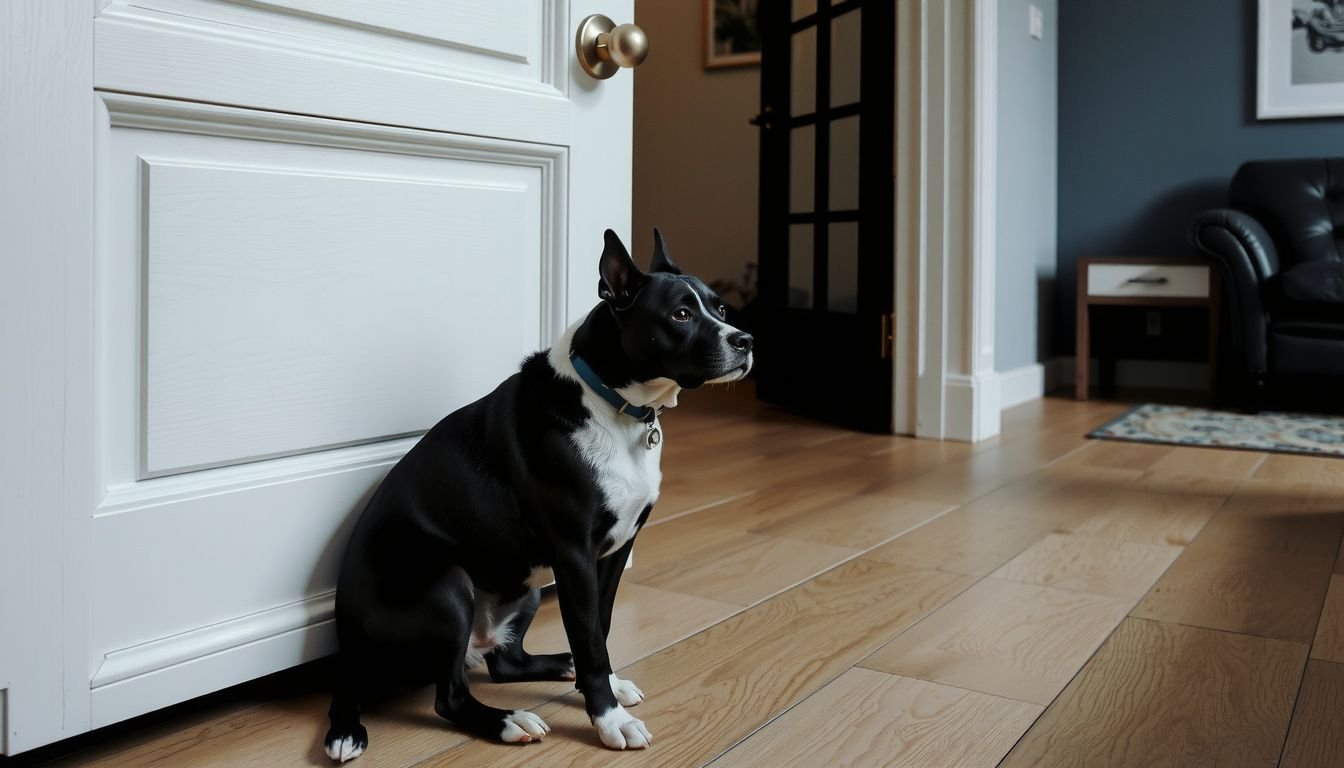
How to stop dog opening doors starts with understanding why it happens and removing the payoff. Many dogs learn that one paw on a lever equals freedom, attention, or access to food. Once the door “works,” the behavior becomes a habit that can escalate fast.
Look, this isn’t just a nuisance. Door-opening can lead to escapes, injuries, and property damage, especially with lever handles and smart, persistent dogs. The most reliable fix combines management (so the dog can’t practice it) and training (so the dog chooses a different behavior).
What follows covers motivation, safety risks, a size-and-home-based decision framework, immediate prevention tools, a step-by-step training plan, and buying guidance for locks and guards. It ends with troubleshooting for repeat offenders and when professional help makes sense.
Why Dogs Learn to Open Doors (Motivation, Reinforcement, and Breed Traits)
Dogs open doors because it pays off. The payoff may be access (yard, people, other pets), relief (escaping noise), or reward (counter food, trash). Even “accidental” openings reinforce the behavior if the dog gets what they want.
Breed traits can raise the odds. Many sporting, herding, and working breeds are problem-solvers with strong persistence; some toy breeds learn it too, simply because lever handles are easy. Puppies often copy patterns, while adolescents test boundaries.
Best For: Owners identifying the trigger
- Pros: Finds the real reward; makes solutions faster; reduces trial-and-error.
- Cons: Requires observation; multiple motivations can overlap; some triggers are subtle (boredom, separation).
Safety and Risk Check: Escapes, Injuries, and Home Damage
Door-opening creates high-risk scenarios: street escapes, dog-dog conflicts, wildlife encounters, and bites to delivery workers. Indoors, a dog can access chemicals, medications, or fall down stairs after opening a door.
Injuries also happen at the door itself. Nails can tear, paws can get pinched, and shoulders can strain from repeated jumping. Home damage adds up: scratched paint, bent levers, broken latches, and chewed trim.
Best For: Homes near roads, apartments, and multi-pet households
- Pros: Prioritizes hazards; clarifies urgency; supports insurance/landlord compliance.
- Cons: Can feel overwhelming; may require upgrades; some risks are “rare” until they aren’t.
Best for… Choosing the Right Approach by Dog Size, Age, and Home Setup
Small dogs often need height-based barriers (baby gates, door shields) more than heavy-duty locks. Medium and large dogs may need lever guards, deadbolts, or latch systems that resist body weight and repeated impact.
Age matters. Puppies benefit from simple management and foundational cues. Adolescents need more structure and impulse control.
Seniors may open doors due to anxiety or cognitive changes, so comfort and routine become part of the plan.
Best For: Matching tools to real constraints
- Pros: Prevents overbuying; improves success rate; accounts for rental vs owned homes.
- Cons: Requires honest assessment; may need multiple layers; changes as the dog grows.
Immediate Management: Preventing Door Access While Training
Management stops rehearsal, which is the fastest way to reduce frequency. Block access to problem doors using gates, exercise pens, or closed-off zones. Add a temporary deterrent like a chair barrier only if it’s stable and safe.
Adjust the environment. Remove nearby furniture the dog uses as a launch point. Use white noise if the dog opens doors during hallway sounds.
For separation issues, set up a calm confinement area with enrichment.
Best For: Immediate risk reduction
- Pros: Works today; reduces stress; buys time for training to stick.
- Cons: Needs consistency; can be inconvenient; some dogs learn to defeat weak barriers.
Training Plan: Teach “Leave It,” “Wait,” and Doorway Boundaries
Training replaces door-opening with a default behavior. Start away from the door: teach “Leave it” with a closed fist, then an open palm, then a low-value item on the floor. Reward disengagement fast.
Next, teach “Wait” at thresholds. Approach the door, ask “Wait,” and reward stillness. Open the door one inch; if they move, close it calmly.
Build to wider openings, then add distractions like knocking.
Practical example: A renter with a lever-handle balcony door used a gate to block access, then practiced “Wait” twice daily. Within two weeks, the dog sat automatically when the handle moved, even during deliveries.
Best For: Long-term behavior change
- Pros: Durable skills; improves overall manners; reduces anxiety-driven pushing.
- Cons: Takes repetition; needs household consistency; management still required early on.
Compare Your Options: Training vs Handle Covers vs Locks vs Gate Systems
| Option | Best For | Speed | Reliability |
|---|---|---|---|
| Training | All homes | Medium | High (with consistency) |
| Lever handle covers/guards | Lever doors | Fast | Medium-High |
| Locks/latches | High-risk exits | Fast | High |
| Gates/pen systems | Open layouts | Fast | Medium |
Best For: Choosing a layered setup
- Pros: Clarifies tradeoffs; encourages stacking solutions; reduces decision fatigue.
- Cons: One tool rarely fixes everything; costs vary; renters may face restrictions.
Buying Guide: Door Locks, Lever Guards, Latches, and Smart Solutions
For lever handles, choose a guard that fully blocks downward motion and fits the handle style. For round knobs, a knob cover can work, but strong dogs may still brute-force it. For exterior doors, prioritize a real lock over plastic-only solutions.
Smart options help when humans forget. Auto-locking deadbolts, door alarms, and contact sensors add redundancy. For interior doors, a high-mounted slide latch can be effective if installed safely and out of reach.
Best For: Households needing dependable hardware
- Pros: Immediate barrier; supports training; smart alerts catch mistakes.
- Cons: Installation effort; some products fail under force; alarms can startle sensitive dogs.
Troubleshooting and Maintenance: When It Keeps Happening and When to Call a Pro
If the dog keeps opening doors, the reward is still present. Tighten management, reduce access to the door area, and increase reinforcement for “Wait” and calm stationing (mat training). Check hardware: loose screws and sagging doors make opening easier.
Escalation can signal anxiety or under-enrichment. Add structured exercise, sniff walks, and food puzzles. If the dog panics when separated, a qualified trainer or veterinary behavior professional may be needed.
Best For: Repeat offenders and high-stress cases
- Pros: Addresses root causes; prevents regression; improves welfare.
- Cons: May require professional cost; behavior change isn’t instant; medical factors must be ruled out.
What Readers Ask
Can a dog really learn to open any door?
Many can learn lever handles and some latches through repetition. Knobs are harder but not impossible with jumping and pawing. Management plus training prevents practice, which is what makes the skill “stick.”
Is it okay to punish a dog for opening doors?
Punishment often increases anxiety and can create sneaky behavior. A safer path is removing access, rewarding “Wait,” and installing a barrier. If fear or separation distress is present, punishment can worsen it.
What’s the fastest fix for a lever-handle door?
A properly fitted lever guard or temporary childproof cover is usually the quickest. Pair it with “Wait” practice so the dog doesn’t switch to scratching, jumping, or targeting a different door.
Will a baby gate stop a large dog?
Sometimes, but height and mounting matter. Pressure-mounted gates can shift under impact. For strong dogs, a hardware-mounted gate or an exercise-pen barrier with secure anchors is more reliable.
Why does the dog only open doors when nobody’s home?
That pattern often points to boredom, separation anxiety, or noise-triggered checking. Cameras can confirm triggers. Increasing enrichment and adding door alarms or auto-locking hardware reduces successful attempts.
When should they call a professional trainer?
If the dog escapes, shows panic, destroys exits, or the household can’t stay consistent, professional help is warranted. A credentialed trainer can build a plan, and a vet can assess anxiety or pain.
Where to Go From Here
The most reliable way to stop door-opening is layered control: block access immediately, remove the reward, and teach a repeatable doorway routine. Hardware solutions reduce risk, but training makes the behavior unnecessary.
They should start with one problem door, one clear cue (“Wait”), and one management tool (gate or guard). Track progress for two weeks, then expand to other doors. If escape risk is high or anxiety is suspected, a qualified professional should guide the plan.