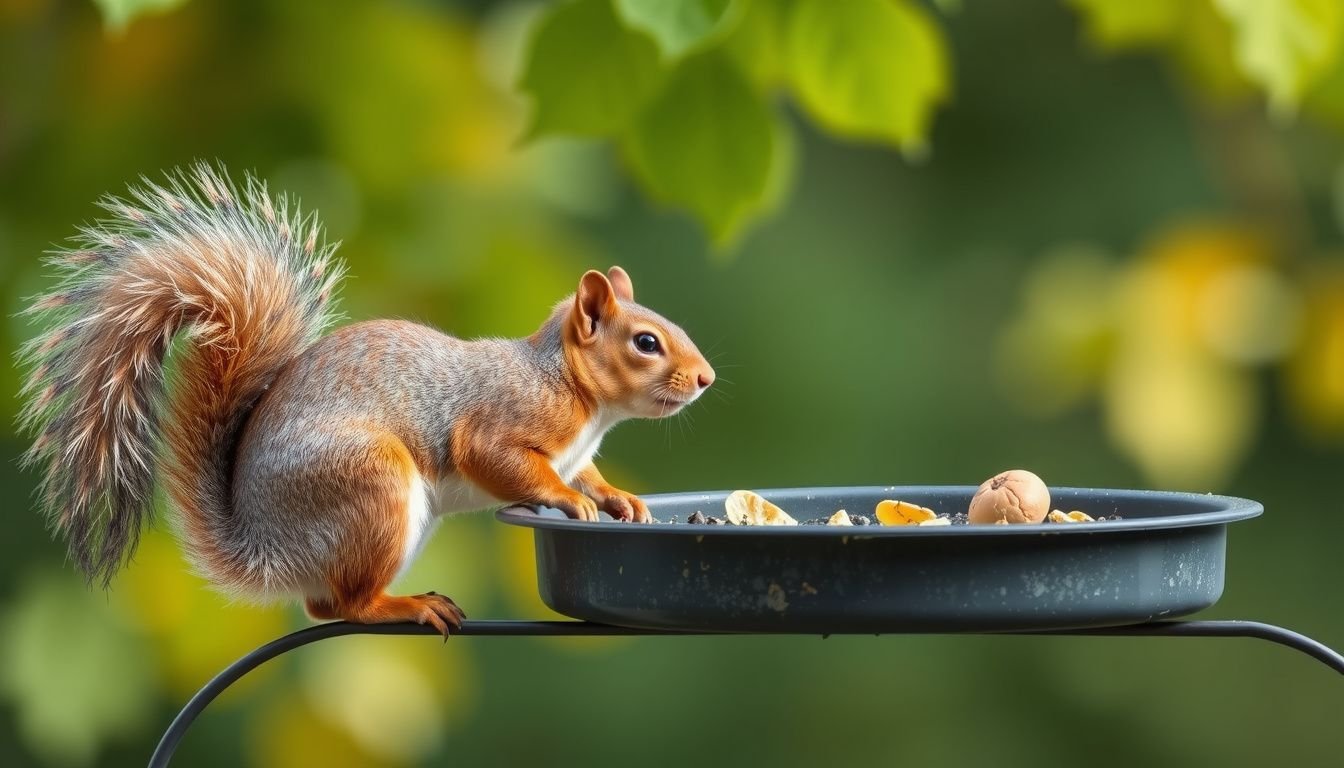
How to keep squirrels from bird feeders starts with accepting one hard truth: squirrels aren’t “visiting,” they’re problem-solving. They jump, climb, chew, and memorize routines. A reliable plan blocks access in layers—placement, hardware, and food choices—without harming wildlife.
The goal isn’t to eliminate squirrels from the yard. It’s to stop them from reaching seed and scaring off birds. When the feeder becomes too much work and too little reward, squirrels move on.
Look for the simplest fix first: remove launch points and install the right barrier. Then tighten up maintenance so the area doesn’t smell like an all-you-can-eat buffet. The steps below follow the same sequence many birders use: assess, prepare, reposition, block, and maintain.
Assess the Feeder Setup and Identify Squirrel Access Points
They should start by watching the feeder for five minutes at peak activity (early morning or late afternoon). Squirrels usually use one of three routes: a horizontal leap, a vertical climb, or a nearby “bridge” like a branch or fence rail.
Next, measure distances. Most squirrels can jump up to about 4–5 feet vertically and 8–10 feet horizontally from a solid launch point. If the feeder sits within those ranges, it’s accessible.
- Check above: overhanging branches, eaves, pergolas, wires.
- Check beside: fences, deck rails, shrubs, stacked firewood.
- Check below: poles without baffles, rough bark, climbing vines.
Common mistake: assuming a “squirrel-proof” feeder solves everything. If the mount is climbable or a branch is close, they’ll still reach it and spill seed.
Prepare Before You Start: Gather Tools and Choose a Strategy
They’ll get better results by choosing a strategy before buying gadgets. The most dependable approach is layered: correct placement plus a baffle, then seed and cleanup to reduce attraction. Hardware alone rarely wins.
Gather basic tools so adjustments don’t stall mid-project. Most setups need only simple items.
- Measuring tape, step stool, and work gloves
- Shepherd’s hook or smooth metal pole (1 inch diameter or larger)
- Quality baffle (dome or stovepipe style) sized to the pole
- Wrench/screwdriver, zip ties, and a small level
Pro tip: take a photo of the current setup and mark likely launch points. It makes repositioning faster and helps confirm what changed.
Common mistake: buying multiple “deterrents” (pepper, shiny tape, fake owls) without fixing the distance problem first.
Reposition and Mount the Feeder to Remove Launch Points
They should move the feeder to a spot that’s boring for squirrels: open air, no nearby structures, and a smooth, vertical mount. A dedicated pole beats hanging from a tree every time.
Use these placement targets as a baseline:
- 10–12 feet away from jump-off points (branches, roofs, fences)
- 5 feet off the ground to reduce easy grabs and keep it serviceable
- Clear space above so squirrels can’t drop down
Mount the feeder on a smooth metal pole, not wood. If they must use a shepherd’s hook, choose a thicker, sturdier model and keep the hook section short to limit swing access.
Pro tip: place the feeder so spilled seed falls onto a surface that’s easy to rake or sweep. Common mistake: mounting near a deck rail—squirrels treat it like a runway.
Install Baffles and Physical Barriers for Reliable Protection
Once placement is improved, they should add a baffle. A baffle is the single most consistent physical barrier because it stops climbing, not just feeding. Install it below the feeder on the pole so squirrels can’t shimmy past.
| Barrier | Best Use | Common Pitfall |
|---|---|---|
| Dome baffle | Poles and hanging setups with moderate squirrel pressure | Installed too close to the feeder, letting squirrels reach around |
| Stovepipe (cylindrical) baffle | High pressure areas; very effective on straight poles | Too short; squirrels can hug it and climb above |
They should install the baffle at least 4 feet above ground and 18–24 inches below the feeder. Tighten clamps firmly and check monthly.
Common mistake: placing a baffle on a pole that’s already within jumping distance of a fence or tree. Barriers can’t stop a clean leap.
Optimize Feed and Maintenance to Discourage Repeat Visits
Even with barriers, spilled seed trains squirrels to keep trying. They should reduce the reward by selecting less squirrel-attractive feed and keeping the area clean.
- Switch seed: safflower is disliked by many squirrels but loved by cardinals.
- Use no-mess blends: hulled sunflower chips reduce ground scraps.
- Add a tray guard: if using trays, choose ones with drainage to prevent soggy seed.
Practical example: a homeowner moved a tube feeder from a maple branch to a smooth pole 11 feet from the fence, added a stovepipe baffle, and switched to safflower. Within a week, squirrels stopped visiting daily and songbird activity increased.
Pro tip: rake under the feeder twice a week. Common mistake: topping off old seed without emptying and washing the feeder; rancid oils can repel birds and attract pests.
Quick Answers
Do squirrel-proof feeders actually work?
They can help, but only when paired with proper placement and a baffle. Many “squirrel-proof” models still spill seed, and squirrels will camp nearby if the feeder is within jumping range.
Will hot pepper seed stop squirrels?
Capsaicin can reduce squirrel feeding, but it’s inconsistent and can be expensive. It works best as a backup layer after distance, pole choice, and baffles are already correct.
How far should a feeder be from trees?
Aim for 10–12 feet from branches or trunks squirrels can launch from. If that spacing isn’t possible, they should prioritize a baffle and remove nearby “bridges” like wires or rails.
What’s the fastest fix if squirrels are already climbing the pole?
Install a properly sized baffle 4 feet above ground and ensure the pole is smooth metal. If the pole is near a fence or roofline, they should relocate it first.
Start Here
They should start with a quick assessment: watch one squirrel attempt and note the exact route. Then, move the feeder to open space, mount it on a smooth pole, and install a baffle at the correct height. Those three actions solve most cases without gimmicks.
Next, reduce the payoff by switching to safflower or no-mess seed and cleaning up spills twice weekly. If squirrels still persist, they can add a second layer—like a longer baffle or relocating farther from launch points. The best setups make access boring and unrewarding, so birds get the feeder, not the acrobats.
Related read: How to Keep Raccoons Out of Bird Feeders Step-by-Step