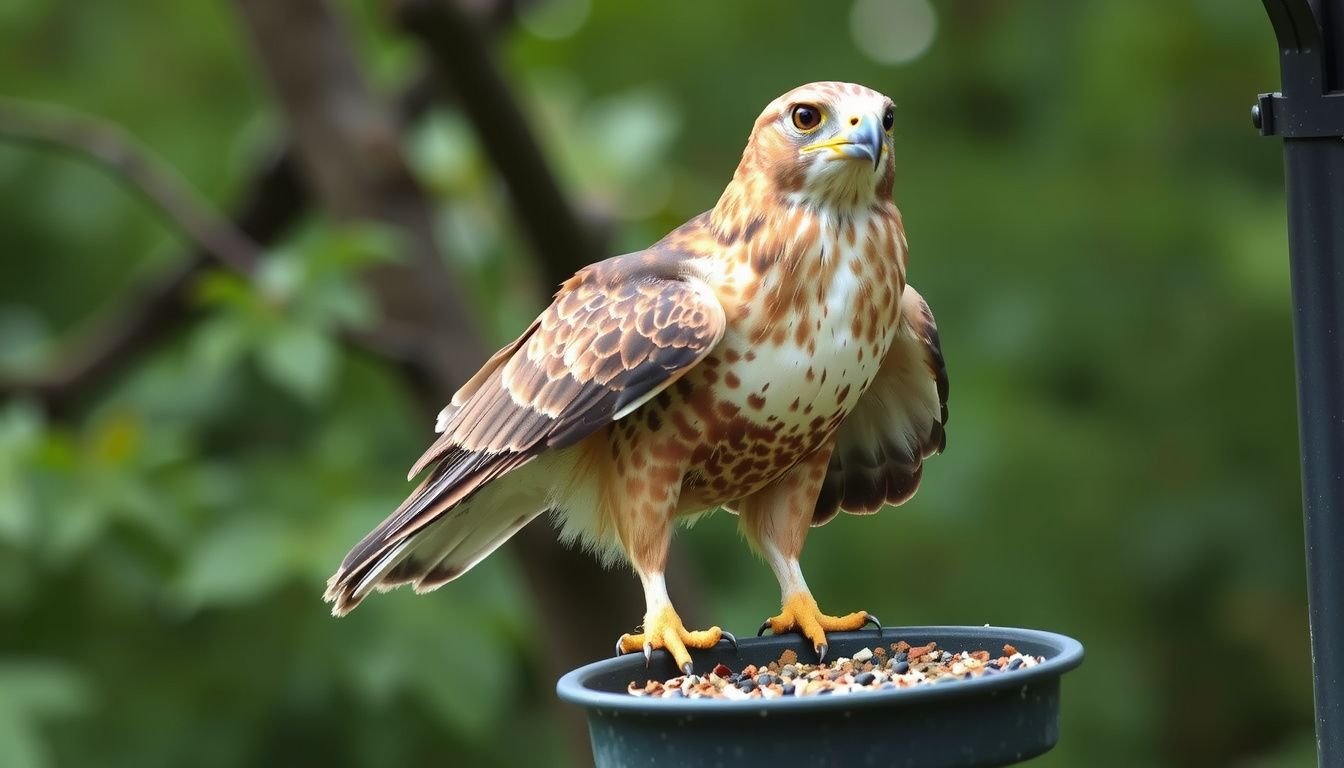
How to keep hawks away from bird feeders starts with understanding one hard truth: hawks aren’t “after the seed.” They’re after the birds the seed attracts. The goal isn’t to harm or harass a protected raptor; it’s to reduce easy hunting opportunities and give songbirds safer escape routes.
Most hawk visits spike in winter and early spring, when prey is concentrated and cover is sparse. A feeder placed in the open can become a predictable buffet line for a hunting bird that learns the schedule.
The most effective approach combines smart placement, protective cover, and physical deterrents that remove ambush angles. With a few targeted changes, a yard can still support songbirds while making the area less profitable for a hawk to patrol.
Assess the Risk and Identify Why Hawks Are Hunting Near the Feeder
They should begin by confirming what’s happening. A hawk perched nearby, repeated fly-throughs, scattered feathers, or birds freezing and vanishing for long stretches usually means active hunting pressure.
Next, they should identify the “why.” Hawks hunt where prey is concentrated, sightlines are clear, and perches are convenient. A feeder in a wide-open lawn, near a fence line, or under a perfect ambush branch is an easy setup for a raptor.
- Open sightlines: little shrub cover, trimmed hedges, bare winter branches.
- Convenient perches: dead limbs, tall shepherd’s hooks, roof edges, utility lines.
- Prey density: multiple feeders close together, seed spilled on the ground, regular feeding times.
Pro tip: they should watch from indoors for 10 minutes at peak activity (early morning). Common mistake: assuming one hawk sighting means a “problem.” A pattern is what matters.
Prepare the Setup: Relocate Feeders and Add Protective Cover Before You Start
Before installing deterrents, they should fix the layout. Placement changes often reduce hunting success immediately, because hawks rely on predictable approaches and clear strikes.
They should move feeders within 10 feet of dense cover (evergreen shrubs, thick hedges, or brush piles), but not so close that a hawk can hide inside the cover. A good rule: close enough for songbirds to dash into cover, far enough to prevent a blind ambush.
- Relocate feeders away from fence lines and straight flight corridors.
- Space feeders out to reduce crowding and panic clusters.
- Clean spilled seed to avoid drawing ground-feeding prey into the open.
Pro tip: they should add a “safe zone” by planting or placing temporary cover (potted conifers, bundled branches) near the feeding area. Common mistake: putting feeders in the middle of a yard “so cats can’t reach,” which often gives hawks a perfect runway.
Install Physical Deterrents to Block Ambushes and Limit Access
Now they should add deterrents that change the geometry of a hunt. Visual scare devices alone tend to fail once a hawk learns they’re harmless, so the focus should be on blocking perches and disrupting attack paths.
- Monofilament grid: run clear line above the feeder area (like a loose lattice) to interfere with swoops.
- Overhead cover: place feeders under a pergola, shade sail, or dense tree canopy that breaks dive angles.
- Perch removal: prune dead limbs and remove obvious “watch posts” near feeders.
- Baffle and pole setup: use a stable pole and baffle to keep feeder height consistent and reduce chaos.
Practical example: a homeowner with a 6-foot pole feeder moved it 8 feet from open lawn to the edge of a boxwood hedge, then added a simple shade sail overhead. Songbirds returned within days, and the hawk stopped making low passes because the dive path was blocked.
Common mistake: placing shiny pinwheels right next to the feeder. They can spook songbirds first and don’t reliably stop a determined raptor.
Maintain and Adjust the Deterrents Until Hawks Stop Targeting the Area
They should expect a short “testing” period. Hawks often revisit a known hunting spot for several days. Consistency matters, but so does adjustment when the hawk adapts.
They should rotate or reposition deterrents every 7–10 days, and they should keep the feeding area tidy. A clean, less crowded station reduces the panic bursts that hawks exploit.
- Check lines, sails, and hooks weekly for sagging or gaps.
- Reduce feeding for a week if attacks persist, then restart with a safer layout.
- Offer cover-friendly feed (suet cages near trunks, tube feeders near shrubs) rather than wide-open trays.
Pro tip: they should feed at slightly varied times to avoid creating a predictable “rush hour.” Common mistake: overreacting by removing all cover; songbirds need cover to survive, and bare yards favor hawks.
Quick Answers
Are hawks protected, and can someone legally trap or harm them?
In many regions, hawks are protected wildlife. They shouldn’t be trapped, poisoned, or harmed. The safer approach is habitat and feeder changes that reduce hunting success without targeting the bird.
Do fake owls or predator decoys keep hawks away?
They might work briefly, then fail once the hawk learns the decoy never moves. If used, it should be relocated often and paired with physical changes like overhead cover or a line grid.
Should they stop feeding birds if hawks keep visiting?
A short pause can help break the pattern, especially after repeated strikes. They can restart with moved feeders, better cover, and reduced crowding so songbirds have clear escape routes.
Start Here
They should start with placement. Move feeders near dense cover, clean spilled seed, and remove obvious perches that overlook the station. Next, they should add a physical barrier that changes the approach angle, such as a shade sail, pergola placement, or a monofilament grid above the feeding zone.
Then they should watch for a week and adjust. If the hawk still patrols, reduce feeding temporarily and restart with fewer, better-positioned feeders. Done correctly, the yard stays bird-friendly, and the hawk usually shifts to easier hunting elsewhere.
Related read: How to Keep Black Birds Away From Feeders Step-by-Step