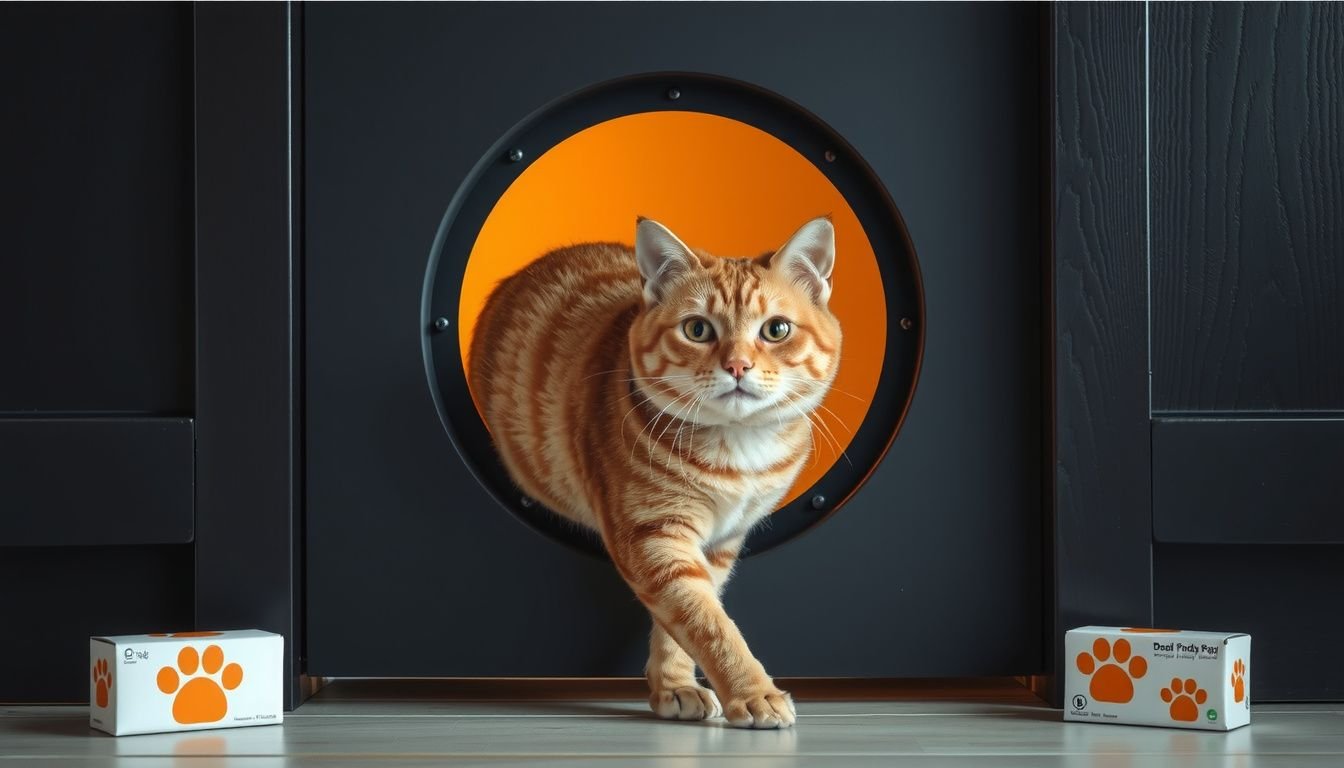
How to keep cat from using dog door comes down to two things: access control and habit change. Cats slip through dog doors for warmth, food, curiosity, or an easy escape route. If the dog door leads to the yard, the cat may be hunting, patrolling territory, or avoiding a litter box that’s too dirty or too exposed.
If it leads indoors, the cat may be following the dog to shared resources.
The good news: most households can solve it without replacing the entire door. The most reliable approach pairs a physical restriction (size, height, or selective entry) with training that rewards the dog and makes the cat’s path unrewarding. The steps below walk through diagnosis, choosing the right hardware, safe setup, and long-term maintenance.
Confirm Why the Cat Uses the Dog Door
They should start by identifying what the cat gains from using the door. If the reward stays available, the cat will keep trying, even after barriers go up. A quick observation period saves time and prevents buying the wrong solution.
They can watch patterns for two to three days: when the cat uses the door, what happens right after, and whether a trigger is present (dog going out, food being served, visitors arriving). A simple phone video helps confirm timing.
- Resource-seeking: access to dog food, sunny spots, or people.
- Avoidance: escaping a noisy room, kids, or another pet.
- Outdoor motivation: hunting, roaming, or marking territory.
Pro tip: If the cat is using the door to avoid the litter box, they should fix that first (cleaning frequency, box location, and number of boxes). Common mistake: assuming it’s “just curiosity” and skipping the root cause.
Choose the Right Strategy Based on Door Type and Pets
Next, they should match the fix to the door style and the pets’ sizes. A small cat and a small dog create the toughest scenario, where “make the flap smaller” won’t work. Door location matters too: a door in a busy hallway needs different control than one in a mudroom.
They can use the comparison below to choose a primary strategy, then add training as reinforcement. Hardware is most effective when it reduces opportunities, not when it tries to “teach” the cat through frustration.
| Door/Pet Situation | Best Primary Fix | When It Fails |
|---|---|---|
| Standard flap, dog much larger than cat | Raise door height or add step-through tunnel | If cat can jump to the opening |
| Similar-sized cat and dog | Microchip/RFID selective door | If collar tags aren’t tolerated |
| Sliding door insert | Selective insert or add interior gate “airlock” | If gate spacing allows squeezing |
Pro tip: Microchip-based doors avoid collar loss. Common mistake: buying an RFID collar system for a dog that plays rough and loses tags.
Before You Start: Gather Tools and Set Safety Rules
They should prep the work area and set rules so the dog isn’t locked out and the cat isn’t trapped. Safety matters most during the first 48 hours, when routines are disrupted and pets test boundaries.
They can gather basic tools and supplies, then stage everything near the door. This prevents leaving the door open while searching for parts.
- Screwdriver, measuring tape, and level
- Zip ties or mounting hardware (for gates/tunnels)
- High-value dog treats and a cat-safe distraction (toy or puzzle feeder)
- Temporary door cover or panel (cardboard/plexiglass) for resets
Safety rules: keep an alternate potty route for the dog, confirm the cat has water and a litter box on the “closed” side, and never use deterrent sprays near the flap where pets’ faces pass. Common mistake: changing access while nobody is home to monitor reactions.
Adjust the Dog Door for One-Way or Limited Access
They should use the door’s built-in locks first. Many dog doors support one-way (out only), in only, or fully locked modes. Limited access can solve nighttime cat roaming or stop the cat from entering a restricted area.
They can set a schedule: open access during supervised potty windows, then lock to “in only” after the last walk so the dog can’t be stranded outside. If the cat’s main behavior is sneaking out, “in only” blocks exits while still allowing returns if the cat slips out another way.
- Locate the door’s lock slider or panel system.
- Test each mode with the dog on leash.
- Use consistent time blocks for access.
Pro tip: Pair limited access with a predictable dog potty schedule to reduce scratching. Common mistake: leaving “out only” on when the dog is unsupervised, risking accidental lockout.
Install Cat-Proof Barriers and Pet-Selective Entry Options
If the cat can physically fit, they should add a barrier system that changes the approach angle or requires a credential. The goal is to make the door easy for the dog and annoying for the cat, without causing fear.
Good barrier options include a short “airlock” zone: an interior baby gate placed 3–5 feet from the dog door, creating a small holding area the dog can enter while the cat can’t. They can also install a step-through tunnel or a raised platform that favors the dog’s stride.
- Microchip/RFID selective dog door: opens only for the dog.
- Interior gate airlock: blocks the cat’s path to the flap.
- Vertical offset: raise the flap height if the dog is taller.
Practical example: In a home with a Labrador and a slim adult cat, they mounted a pressure-mounted gate in the laundry room, leaving a 4-foot corridor to the flap. The dog learned the corridor quickly, while the cat stopped attempting because the gate removed the “straight shot” to the door. Common mistake: using a gate with wide bar spacing that a cat can squeeze through.
Train the Dog to Use the Door While Redirecting the Cat
They should train the dog for confident, fast door use so the dog doesn’t hesitate and “invite” the cat to follow. At the same time, they should redirect the cat to a better alternative: a perch, a toy routine, or scheduled outdoor time on a harness if appropriate.
They can run short sessions twice daily. Reward the dog for going through on cue (“outside,” “inside”), then reward calm behavior away from the door. For the cat, they should reinforce a station behavior (mat or cat tree) placed far from the flap.
- Dog: cue → door → treat immediately after passing through.
- Cat: lure to station → reward → increase duration.
- Manage: block access during training with a leash or temporary cover.
Pro tip: Feed the dog away from the door to avoid making the doorway a high-value zone. Common mistake: chasing the cat after an attempt, which can turn it into a game.
Test, Troubleshoot, and Maintain the Setup Long-Term
They should test the setup under real conditions: dinner time, visitor arrival, and early morning. A solution that works at noon may fail when the house is busy. They can run controlled trials and adjust one variable at a time.
If the cat still succeeds, they should tighten the system: reduce gate gaps, move the gate closer to the flap, or upgrade to microchip selectivity. If the dog hesitates, they should check flap resistance, tunnel length, and whether the dog dislikes the sound.
- Weekly: inspect magnets, hinges, and lock settings.
- Monthly: clean the flap to remove scent trails and grime.
- Seasonally: check weatherstripping and drafts that attract pets.
Pro tip: Use a cheap door contact sensor to track openings and confirm progress. Common mistake: assuming the problem is solved after a few good days, then removing barriers too soon.
You’re Ready
They can stop a cat from using a dog door by combining a clear diagnosis, the right physical control, and consistent routines. The fastest wins come from limiting access first (locks and schedules), then adding either a selective-entry door or a simple airlock gate that removes the cat’s direct path.
Next actions should be practical: they should observe the cat’s motivation for 48 hours, choose one primary hardware change, and run short training sessions that reward the dog’s door use while reinforcing the cat’s station away from the flap. If the cat keeps testing, they should upgrade to microchip selectivity rather than escalating deterrents. A calm, layered setup holds up for years.
Related read: How to Protect a Door From Dog Scratches Step-by-Step