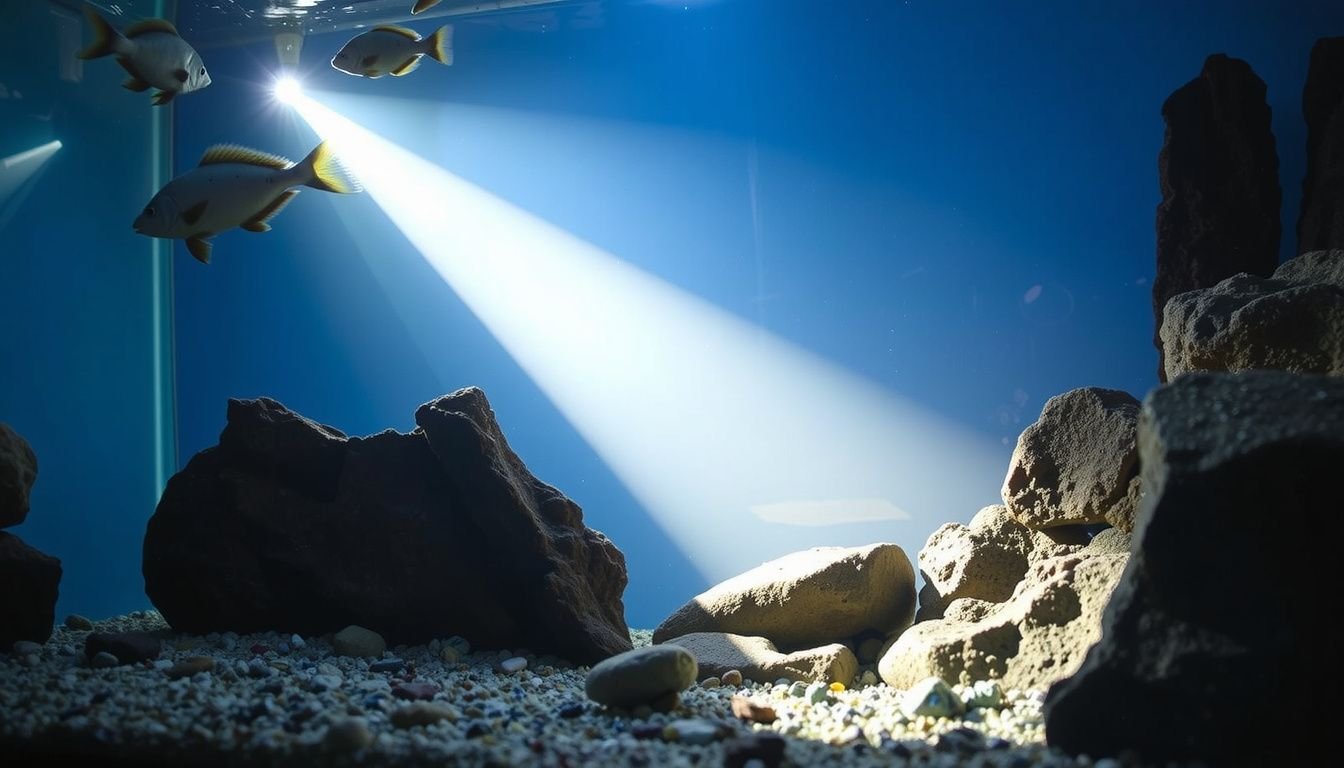
How long to leave aquarium lights on is one of those questions that seems simple—until algae shows up or fish start acting stressed. Get it right, and the tank looks crisp, plants grow steadily, and the whole setup feels easier to manage.
Light is a daily “clock” for fish and plants, but it’s also fuel for nuisance algae. That’s why the best schedule isn’t just about brightness; it’s about matching the tank’s biology, the room’s natural sunlight, and how consistent the routine is.
From an observed best-practice standpoint used by many aquarists, most community tanks do well with 8–10 hours of steady light, while planted tanks often land closer to 8 hours to start. For example, if someone turns lights on at 1:00 pm and off at 9:00 pm every day, they’ll usually see calmer fish behavior and more predictable algae control within a couple of weeks.
They’ll learn how to set a realistic photoperiod based on:
- Tank type (fish-only vs. planted vs. reef)
- Plant demand and CO2/fertilizer use
- Ambient daylight and tank placement
- Algae pressure and maintenance habits
Now, they can use the guidance ahead to pick a schedule, spot warning signs early, and lock it in with a timer for consistent results.
Why Aquarium Light Duration Matters for Fish, Plants, and Algae
Now the real issue isn’t the bulb—it’s the clock. Light duration sets the tank’s daily rhythm, and small changes can shift the whole balance.
Fish rely on a predictable photoperiod to regulate feeding, rest, and stress hormones. Too much light can keep them “on” for too long, while too little may dull activity and reduce natural behaviors.
Aquatic plants use light hours to photosynthesize, but they don’t benefit from endless exposure. Past a point, plants hit a saturation limit, and extra hours mainly feed nuisance growth.
Algae is the opportunist. When light runs long or is inconsistent, algae often outcompetes slower plants—especially in newer tanks with unstable nutrients.
- Fish: stable day/night cues reduce stress and skittish behavior
- Plants: enough hours support growth without triggering saturation
- Algae: long or erratic schedules raise bloom risk
Practical example: a beginner leaves lights on 12 hours “for the plants,” then notices green film on glass within a week. Cutting to 8 hours and keeping it consistent often reduces algae pressure while plants keep growing.
How Long to Leave Aquarium Lights On: General Hour-by-Hour Guidelines
Look, there’s no single number that fits every tank, but reliable ranges work. The goal is steady, repeatable lighting that matches the tank’s biology and planting level.
For most setups, how long to leave aquarium lights on lands between 6 and 10 hours daily. Shorter schedules help new tanks and algae-prone aquariums; longer schedules suit mature, heavily planted tanks with balanced nutrients and CO₂.
- 0–2 weeks (new tank): 6–7 hours to limit early algae
- Low-light plants / fish-only: 6–8 hours for viewing and stability
- Moderately planted: 7–9 hours for steady growth
- High-light + CO₂: 8–10 hours, only if nutrients are managed
Consistency matters as much as duration. A timer prevents “random” light spikes that confuse fish and favor algae.
Practical example: a community tank with Anubias and Java fern runs 7.5 hours daily (same start time). If algae appears, they trim to 6.5 hours for two weeks before changing anything else.

Adjusting Light Time by Tank Type: Fish-Only, Planted, and Reef Setups
Now the schedule gets more precise once the tank’s goals are clear. The right answer to how long to leave aquarium lights on depends on whether the aquarium is built for viewing fish, growing plants, or supporting corals.
Fish-only tanks usually do best with a shorter, consistent photoperiod. Six to eight hours is often enough for visibility without feeding nuisance algae, especially in tanks with bright LEDs and minimal live plants.
Planted tanks typically need more usable light time, but not unlimited time. Many beginners land in the 7–9 hour range, then adjust based on plant growth, CO2 use, and nutrient dosing.
Reef tanks work differently because corals respond to both intensity and spectrum. Many reef keepers run an 8–10 hour “daylight” window, with optional dim blue ramp-up/ramp-down periods that don’t extend the high-intensity phase.
- Low-tech planted: 6–8 hours to limit algae
- High-tech planted (CO2): 8–10 hours if nutrients are balanced
- Mixed reef: 8–10 hours at peak intensity, ramps optional
Example: A 20-gallon low-tech planted tank with an LED on 10 hours develops green dust algae; cutting to 8 hours and keeping the same start time often stabilizes growth without sacrificing viewing.
Signs the Lights Are On Too Long (and Too Short) in an Aquarium
Look for what the tank is “saying” before changing equipment. Light duration problems show up as patterns across algae, plant behavior, and animal stress—not as a single symptom.
When lights are on too long, algae usually wins the competition for nutrients. The most common clues are faster glass film, hair algae on hardscape, and cyanobacteria in low-flow zones.
- Green film returning within 24 hours of cleaning
- Plants pearling early, then stalling while algae spreads
- Fish hiding more during the brightest hours
When lights are on too short, plants may survive but won’t thrive. Growth slows, stems stretch toward the surface, and leaves can yellow as the tank’s nutrient uptake drops.
- Leggy plant growth and sparse leaves on stems
- Slow recovery after trimming or replanting
- Corals staying “closed” longer after the lights come on
Example: A reef with a 12-hour peak schedule shows persistent brown film on sand; reducing peak intensity time to 9 hours while keeping feeding steady often improves clarity within two weeks.
Best Practices for Setting a Consistent Lighting Schedule
Now that the tank’s needs are clearer, the next win is consistency. A stable photoperiod helps fish anticipate “day” and “night,” and it keeps plants from constantly re-adapting. The goal isn’t maximum brightness—it’s predictable timing.
Most aquarists get the best control with a plug-in timer or smart outlet. It removes human error, especially on weekends, and it prevents the “forgot the lights on” problem that quietly fuels algae. If the room gets strong daylight, the timer should account for that ambient light, too.
Use these habits to lock in a schedule:
- Set one daily on/off window and stick to it, even during water-change days.
- Start modest, then adjust in 30–60 minute steps after observing for 10–14 days.
- Keep the dark period truly dark; avoid night lights unless needed for brief viewing.
- Match feeding and maintenance to the “daytime” window to reduce stress.
Practical example: a beginner with a 20-gallon planted community tank sets lights from 1:00–9:00 p.m. using a smart plug. They work daytime hours, so the tank is viewable in the evening, and the schedule stays identical every day.
Common Lighting Mistakes That Trigger Algae or Stress Fish
Look, most lighting problems aren’t about choosing the “wrong” fixture. They come from small schedule choices that compound over weeks. Algae reacts fast; fish often show stress more subtly.

One common mistake is chasing clarity by extending the photoperiod. Longer light without matching nutrients and CO₂ (in planted tanks) often favors algae, not plants. Another is frequent schedule changes, which can disrupt fish resting cycles and increase skittish behavior.
These missteps show up repeatedly in new setups:
- Leaving lights on “just a bit longer” for viewing, then repeating it daily.
- Running the tank light while also getting strong window sun for hours.
- Using intense settings at 100% from day one instead of ramping up gradually.
- Keeping lights on during nighttime to “see the fish,” reducing true darkness.
Practical example: a hobbyist notices green dust algae and responds by increasing light to 12 hours. The algae worsens; the fix is reducing hours, lowering intensity, and stabilizing the routine before making any other changes.
Quick Troubleshooting: Fixing Algae Blooms, Dim Growth, and Skittish Fish
Now, when algae pops up, plants stall, or fish act jumpy, it can feel like the tank’s “off” for no clear reason. The good news: most fixes are quick, measurable, and reversible.
Ranked by effort and payoff, these steps usually work fast:
-
Lock the photoperiod first (don’t chase daily tweaks). Set how long to leave aquarium lights on to a steady target and hold it 7–10 days; expect steadier fish behavior and fewer algae spurts.
-
Reduce intensity before cutting hours if plants are dim but algae is rising. Lower brightness 10–20% (or raise the fixture); expect less film algae within a week while keeping plant momentum.
-
Control nutrients and CO2 consistency (if used). Stable dosing and flow reduce “boom-bust” algae; expect clearer water and tighter plant growth tips in 2–3 weeks.
-
Improve cover and light spread. Add floating plants or hardscape shade; expect skittish fish to spend more time in open water within days.
Example: a 20-gallon planted tank with green dust algae dropped to 80% brightness and kept the same hours; after 10 days, glass stayed cleaner and the tetras stopped hugging the corners.
Final Summary
Now that the details are dialed in, the real goal is consistency: knowing how long to leave aquarium lights on comes down to matching light exposure to what the tank is trying to support, then keeping that rhythm steady. When the photoperiod fits, the aquarium looks better, livestock behaves normally, and maintenance stays predictable.
A practical way to stay on track is to treat lighting like any other routine and make small, measured changes. For example, if they notice a new algae patch after swapping to a brighter fixture, they can shorten the daily light window slightly for a week, then reassess before changing anything else.
Next steps:
- Pick one target photoperiod and lock it in for 10–14 days.
- Track one outcome (algae, plant response, or coral color) with quick weekly notes.
- Adjust in small increments, then recheck.
Set a timer today, commit to a two-week observation window, and let the tank’s response guide the final fine-tune.
Related read: How Long to Keep Aquarium Lights On for Healthy Fish