How do you keep starlings away from bird feeders without scaring off the songbirds people actually want? It starts with understanding why starlings show up in loud groups, eat fast, and push smaller birds aside. They’re smart, adaptable, and drawn to easy calories—especially when a yard offers open access and the “wrong” seed mix.
The good news: a few targeted changes can shift the advantage back to chickadees, finches, and cardinals. The strategies below use feeder design, food choice, placement, and humane deterrents that stay effective over time. Pick two upgrades first, watch what changes, then refine the setup based on what the yard’s birds respond to.
Quick Facts Box
- Top attractant: Open trays and large ports with cheap mixed seed
- Best first fix: Starling-resistant feeder + safflower or nyjer
- Fastest results: Reduce accessible volume and add a cage/baffle
- Humane goal: Make feeding inefficient for starlings, easy for small birds
Why starlings take over feeders and what attracts them
European starlings are aggressive, social foragers that thrive where food is concentrated and easy to grab. They prefer feeders that allow broad access—platforms, wide perches, and large openings—because they can land in numbers and eat quickly.
They’re also drawn to high-volume “value” mixes that contain cracked corn, milo, and filler grains. Those ingredients create a steady, low-effort buffet. Once a flock learns a yard is reliable, it’ll return repeatedly, often at the same times each day.
- Easy access: open trays, suet cages without guards, ground feeding
- Easy calories: mixed seed with corn/milo, bread scraps, pet food
- Predictability: full feeders all day, same placement, no barriers
Identify starlings vs. desired backyard birds
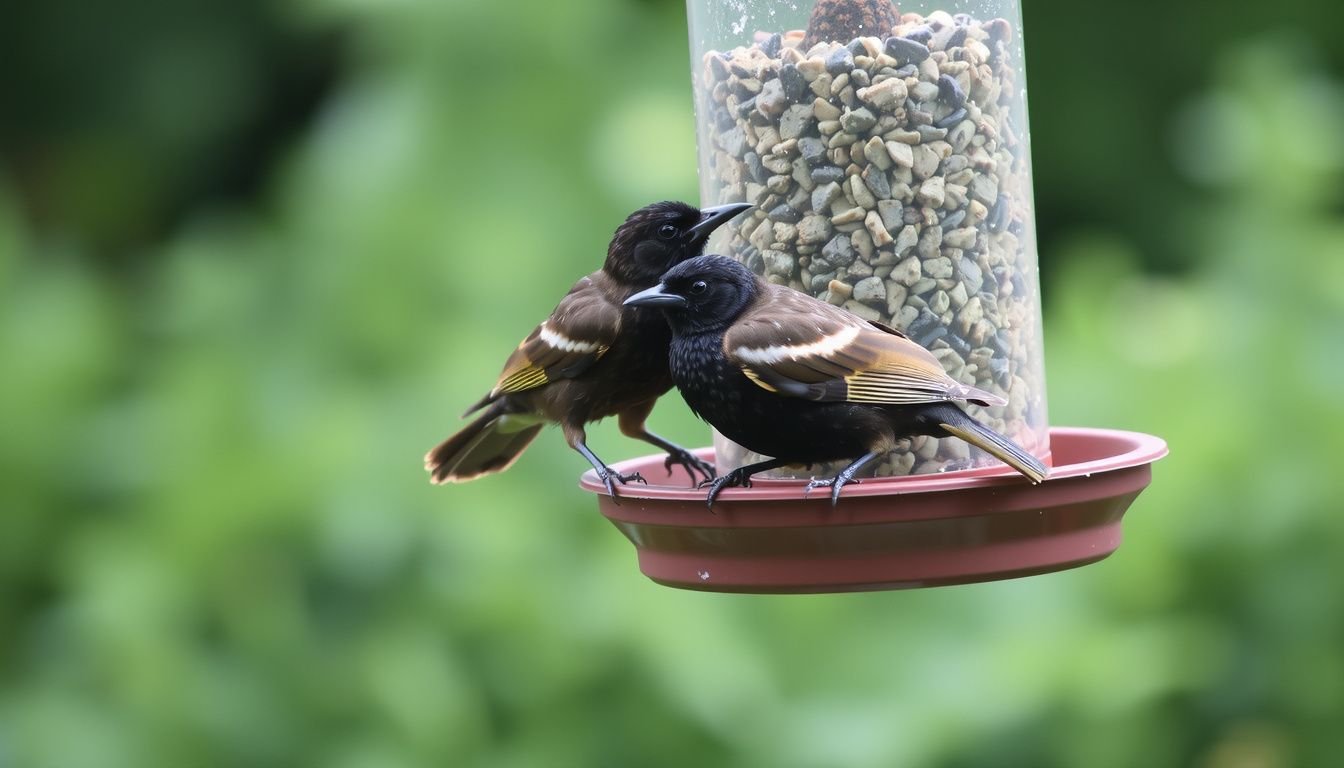
Correct ID prevents overreacting and helps tailor the solution. Starlings are medium-sized with short tails, triangular wings, and a bold, direct flight. In breeding season they look glossy black with a yellow bill; in winter they appear dark with pale speckles.
They often arrive in groups and dominate perches, chasing off smaller birds. By contrast, common feeder favorites tend to be less pushy and feed in singles or small clusters.
- Starlings: noisy flocks, strong jabbing bills, shoulder-to-shoulder feeding
- House finches: smaller, streaked, calmer at tube feeders
- Chickadees/nuthatches: quick “grab-and-go” behavior
- Cardinals: larger but less swarmy; prefer stable perches
Switch to starling-resistant feeder designs
Feeder design does more than any single deterrent. The goal is to limit access by size, weight, or body position. Starlings struggle with feeders that require clinging, short perches, or weight-sensitive mechanisms that close ports under heavier birds.
Tube feeders with small ports, caged feeders, and weight-activated feeders reduce starling success while still serving finches and chickadees. Suet is a common starling magnet, so guarded suet cages are often essential.
- Weight-activated feeders: ports close when a heavy bird lands
- Caged tube feeders: outer mesh blocks larger bodies
- Upside-down suet feeders: favors woodpeckers; frustrates starlings
Use seeds and foods starlings avoid (and birds prefer)
Food selection is a quiet but powerful lever. Starlings readily eat cracked corn, milo, and many “wild bird” mixes. They’re less enthusiastic about certain seeds that many songbirds love.
Safflower is a classic choice: cardinals and grosbeaks often take to it, while starlings tend to pass it up. Nyjer (thistle) targets finches and is typically ignored by starlings due to the small seed size and specialized feeders.
- Best options: safflower, nyjer, black-oil sunflower (in restrictive feeders)
- Limit/avoid: cracked corn, milo, bread, cheap mixed blends
- Suet tip: use hot-pepper suet where appropriate; many birds tolerate it
Adjust feeder placement, height, and access points
Placement changes who can land comfortably. Starlings prefer open approaches and broad landing zones. Hanging feeders away from launch points makes it harder for them to muscle in.
Put feeders 8–10 feet from dense shrubs (so birds can retreat) but not right next to tree trunks or fences that act as starling “runways.” Keep the area under feeders clean; spilled seed draws ground-feeding starlings and reinforces the habit.
- Hang from thin poles: fewer stable perches for larger birds
- Increase spacing: separate feeders so flocks can’t monopolize one spot
- Reduce spill: use seed trays sparingly or skip them entirely
Add baffles, cages, and spacing to block larger birds
Physical barriers work because they don’t rely on “scaring” birds—just limiting access. A dome or stovepipe baffle can stop climbing and reduce chaotic landings. Cages around feeders prevent starlings from reaching ports with their bodies and longer bills.
Spacing matters. When feeders are clustered, starlings hop station to station. When feeders are spread out, smaller birds can use cover and timing to feed without constant pressure.
| Tool | Best Use | What It Blocks |
|---|---|---|
| Cage/guard | Tube feeders, suet | Body access by larger birds |
| Stovepipe baffle | Pole-mounted setups | Climbing and jumping |
| Wide spacing | Multiple feeders | Flock monopolies |
Time feeding and portion control to reduce starling swarms
Starlings exploit constant availability. If feeders stay full all day, a flock can camp out and “train” itself to return. Portion control breaks that pattern while still supporting backyard birds.
Offer smaller amounts in the morning and late afternoon, then let feeders run empty between windows. Many songbirds adapt quickly because they feed efficiently. Starlings, which prefer prolonged, high-volume access, often move on when the payoff drops.
- Fill less: only what’s eaten in 1–2 hours
- Feed in windows: consistent times, then pause
- Clean up: remove spilled seed and hull piles
Humane deterrents that discourage starlings consistently
Deterrents work best when they change the “cost” of feeding, not when they simply startle birds for a day. Visual scare devices can help short-term, but starlings habituate fast. Rotating tactics keeps them uncertain.
Practical example: a homeowner with a platform feeder swapped to a caged tube feeder with safflower and added a stovepipe baffle. Within a week, starling visits dropped sharply, while cardinals and chickadees returned because they could feed without being crowded out.
- Rotate visuals: reflective streamers moved weekly, not left static
- Use barriers: guards and weight-activated feeders over “noise” tactics
- Remove attractants: no bread scraps, secure pet food, tidy compost
Common mistakes to avoid and a simple action checklist
Many yards fail because they try one “scare” trick and keep the same easy feeder and seed mix. Another common issue is overfeeding: full trays invite long, dominant feeding sessions. Consistency matters more than intensity.
Use a simple checklist and adjust based on what’s observed. If starlings still feed comfortably, access is still too easy.
- Mistake: relying only on owls/hawks decoys that never move
- Mistake: using cheap mixed seed with corn and milo
- Mistake: keeping platform feeders uncovered and full all day
- Switch to a caged or weight-activated feeder.
- Change seed to safflower or nyjer (as appropriate).
- Add a baffle and increase spacing between feeders.
- Feed in smaller portions and clean spill daily.
Common Questions
Do starlings scare away other birds permanently?
They usually don’t drive birds away permanently, but they can suppress visits while food is easy to monopolize. Once access is restricted and seed is adjusted, many songbirds return quickly.
Will hot pepper seed or suet harm backyard birds?
Many birds don’t sense capsaicin the way mammals do, so pepper-treated suet can deter starlings and squirrels. They should follow product directions and avoid using homemade mixes that can spoil.
Is it okay to stop feeding birds for a while?
Pausing is fine and can reset patterns when starlings are entrenched. Birds typically shift to natural food sources. Restart with a starling-resistant setup rather than the old feeder style.
What feeder works best if starlings are the main problem?
Weight-activated feeders and caged tube feeders are the most reliable. They reduce access based on size and landing behavior, which targets starlings without penalizing smaller birds.
Final Thoughts
Keeping starlings away from bird feeders works best when the yard stops rewarding their strengths: easy access, big openings, and constant volume. A starling-resistant feeder, smarter seed choices, and simple barriers shift feeding back toward smaller songbirds. Look for measurable signs—shorter visits, fewer birds per landing, less spilled seed—and refine from there.
A yard doesn’t need extreme measures; it needs consistent friction for starlings and easy wins for the birds people want to support.
- Start with design: caged or weight-activated feeders
- Change the menu: safflower/nyjer; drop corn-heavy mixes
- Control access: baffles, spacing, cleaner ground
- Manage timing: smaller fills, limited feeding windows
Related read: How to Keep Starlings Away from Bird Feeders: 6 Steps