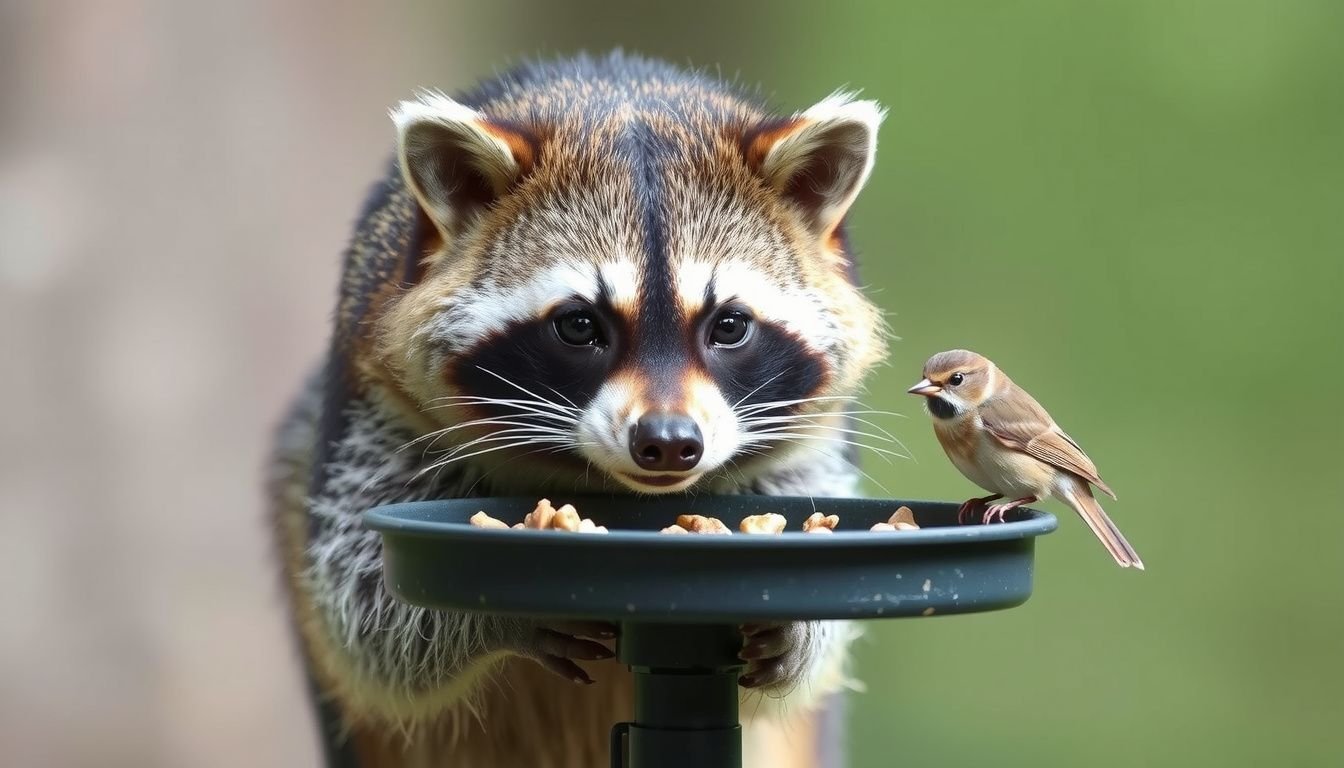
How do you keep raccoons away from bird feeders without scaring off the birds you’re trying to attract? Raccoons are smart, strong, and persistent, so casual fixes rarely last. They’ll climb, pry, and even tip feeders to get an easy, high-calorie meal.
With the right setup, though, a yard can stay bird-friendly and raccoon-resistant. It helps to understand what draws raccoons in, then block access using placement, hardware, and a few routine changes. Most homeowners can solve the problem with basic tools and consistent habits.
The steps below focus on humane deterrence, practical installation tips, and clear “do this, not that” guidance. Use them together for the best results, then fine-tune based on what the raccoons in that area learn.
Quick Facts Box
- Most effective combo: Proper placement + pole baffle + raccoon-resistant feeder
- Key distance rule: 10–12 ft from jump-off points; 5+ ft high
- Peak raccoon activity: Dusk to dawn
- Common failure point: Feeders hung near branches, fences, or decks
- Humane goal: Remove access and reward, not harm wildlife
Why Raccoons Target Bird Feeders and What That Means
Raccoons target bird feeders because they’re predictable buffets. Seed, suet, and spilled hulls offer dense calories with minimal effort, especially at night when competition is low.
They also have nimble paws and problem-solving skills. If a feeder can be opened, twisted, or shaken, a raccoon may figure it out in a few visits. Once it succeeds, it returns and may bring others.
That behavior shapes the strategy: the goal isn’t “scare them once.” It’s to remove the reward by preventing climbing, jumping, and grabbing. A single weak point—like an overhanging branch—can undo every other improvement.
Place Feeders Where Raccoons Can’t Reach Them
Placement does most of the work. Raccoons rarely fly; they climb and jump. A feeder set in open space forces them to expose themselves and limits their launch points.
Use these placement rules as a baseline:
- Hang or mount feeders at least 5 feet off the ground.
- Keep feeders 10–12 feet from trees, fences, rails, roofs, and deck edges.
- Avoid “ladder” routes like stacked planters, woodpiles, or patio furniture nearby.
If the yard is small, prioritize distance from the best jump-off point. Even moving a feeder a few feet away from a trunk or railing can break the raccoon’s approach pattern.
Use Baffles, Poles, and Mounts That Stop Climbers
A proper pole system is often the most reliable fix. Raccoons can climb wood and rough metal, but they struggle with smooth poles paired with correctly sized baffles.
Look for these hardware features:
- Stovepipe or torpedo baffle at least 6–8 inches wide (wider is better).
- Smooth metal pole (not textured, not wrapped in grip tape).
- Height and spacing: baffle mounted 4+ feet above ground, feeder above that.
Wall mounts and deck hooks often fail because raccoons can reach from the structure itself. If a mount must be used, add a baffle between the wall and the feeder and keep it far from railings and posts.
Choose Raccoon-Resistant Feeders and Smart Accessories
Not all “squirrel-proof” designs stop raccoons. Raccoons are heavier, stronger, and more willing to hang and pry. A raccoon-resistant feeder should limit grip points and protect openings with metal, not plastic.
Accessories can add a second layer of defense:
- Seed catch trays to reduce ground spill that attracts night foragers.
- Locking lids or twist-to-lock tops that can’t be popped open.
- Short hanging chains to reduce swinging and “pull-down” leverage.
If a feeder has a weak hanger or thin hook, upgrade it. Many raccoon “wins” happen when hardware bends, not when the animal outsmarts the mechanism.
Adjust Feeding Times and Seed Choices to Reduce Night Visits
Raccoons are nocturnal, so timing matters. If food is available all night, they’ll learn the schedule and return consistently. Reducing access after dusk can cut visits fast.
Practical options include:
- Bring feeders in at night, especially during heavy raccoon activity.
- Use a timer-controlled light near the feeder area to reduce comfort (not a spotlight on nests).
- Switch from suet at night-prone stations to seed blends less attractive to raccoons.
Now, a real-world example: a homeowner with a deck-mounted feeder stopped nightly raids by moving the feeder to a smooth pole 12 feet from the deck, adding a wide baffle, and bringing suet in at dusk. Bird traffic stayed steady; raccoon visits dropped within a week.
Yard and Property Changes That Remove Easy Access
Raccoon control improves when the whole yard stops offering shortcuts and snacks. If the feeder is secured but the yard still has open trash or pet food, raccoons will keep scouting.
Focus on these property tweaks:
- Secure garbage with locking lids; rinse containers that held food.
- Feed pets indoors; remove outdoor bowls before dusk.
- Trim branches 6–10 feet away from feeder zones and rooflines.
- Store fallen fruit, compost properly, and clean up spilled seed weekly.
Also check access points under decks and sheds. If raccoons are denning nearby, feeder defenses become a constant contest instead of a simple deterrent.
What to Avoid and When to Call a Wildlife Professional
Some tactics backfire. Poison is unsafe for pets, birds, and local predators, and it’s illegal in many areas. Glue traps and body-gripping traps create serious animal welfare risks and can injure non-target wildlife.
Avoid these common missteps:
- Greasing poles (messy, can harm fur and feathers, and often fails).
- Using thin plastic baffles that crack or flex under weight.
- Placing feeders on railings, fences, or tree limbs “just for a night.”
Call a licensed wildlife professional if raccoons are inside an attic, repeatedly damaging structures, showing aggression, or if there’s a suspected den with young. Professionals can exclude animals humanely and advise on local regulations.
What Readers Ask
Will cayenne pepper or hot sauce keep raccoons away from bird seed?
It can help briefly, but it’s inconsistent in wet weather and may irritate other animals. It works best as a minor add-on, not the main solution, and placement plus baffles usually outperform it.
Do motion-activated sprinklers work for raccoons near feeders?
They can, especially for ground-level approaches and spill cleanup zones. Raccoons may habituate over time, so sprinklers work best paired with a pole baffle and reduced nighttime food availability.
How high should a feeder be to stop raccoons?
Aim for at least 5 feet high, but height alone won’t do it if there’s a nearby launch point. Combine height with 10–12 feet of clearance and a properly installed baffle.
Is it okay to stop feeding birds temporarily?
Yes. A short pause can break a raccoon’s routine, especially during heavy activity. If feeding stops, it should be consistent for several days while hardware and placement upgrades are made.
Final Thoughts
Keeping raccoons away from bird feeders comes down to denying access and removing the payoff. The most reliable setup uses open placement, a smooth pole, a wide baffle, and sturdy hardware that can’t be bent or opened.
Nighttime habits matter, too. Bringing feeders in at dusk, reducing spill, and tightening up trash and pet food can cut visits quickly. If raccoons are nesting in a structure or causing repeated damage, a licensed wildlife professional is the safest next step.
60-Second Recap
- Place feeders 5+ ft high and 10–12 ft from jump points.
- Use a smooth pole plus a wide, durable baffle.
- Choose raccoon-resistant feeders with locking lids and strong hangers.
- Reduce nighttime rewards: bring feeders in, limit suet exposure, clean spills.
- Secure trash, remove pet food, and trim branches near feeder zones.
- Call a pro for denning, structural entry, or persistent aggressive behavior.
Related read: How to Keep Raccoons Off Bird Feeders Step-by-Step