How do you keep cats away from bird feeders without turning a peaceful backyard into a battleground? The answer is a mix of smart placement, physical barriers, and a few humane deterrents that make hunting feel “not worth it.” Cats are efficient ambush predators, and feeders can unintentionally create a reliable hunting lane. Bird lovers can protect visiting birds while still treating neighborhood cats responsibly.
The steps below focus on practical setups that work in typical yards, from small patios to larger gardens. Start with the easiest wins—distance, height, and baffles—then refine the landscape and feeding style for long-term results.
Quick Facts Box
- Best first move: Put feeders 10–12 feet from dense cover and 5+ feet high.
- Most effective hardware: Pole-mounted feeder with a wide baffle (at least 15–18 inches).
- Biggest mistake: Feeding where birds must land on the ground under shrubs.
- Humane approach: Combine barriers + habitat tweaks + motion deterrents.
Why Cats Target Bird Feeders (And Why It Matters)
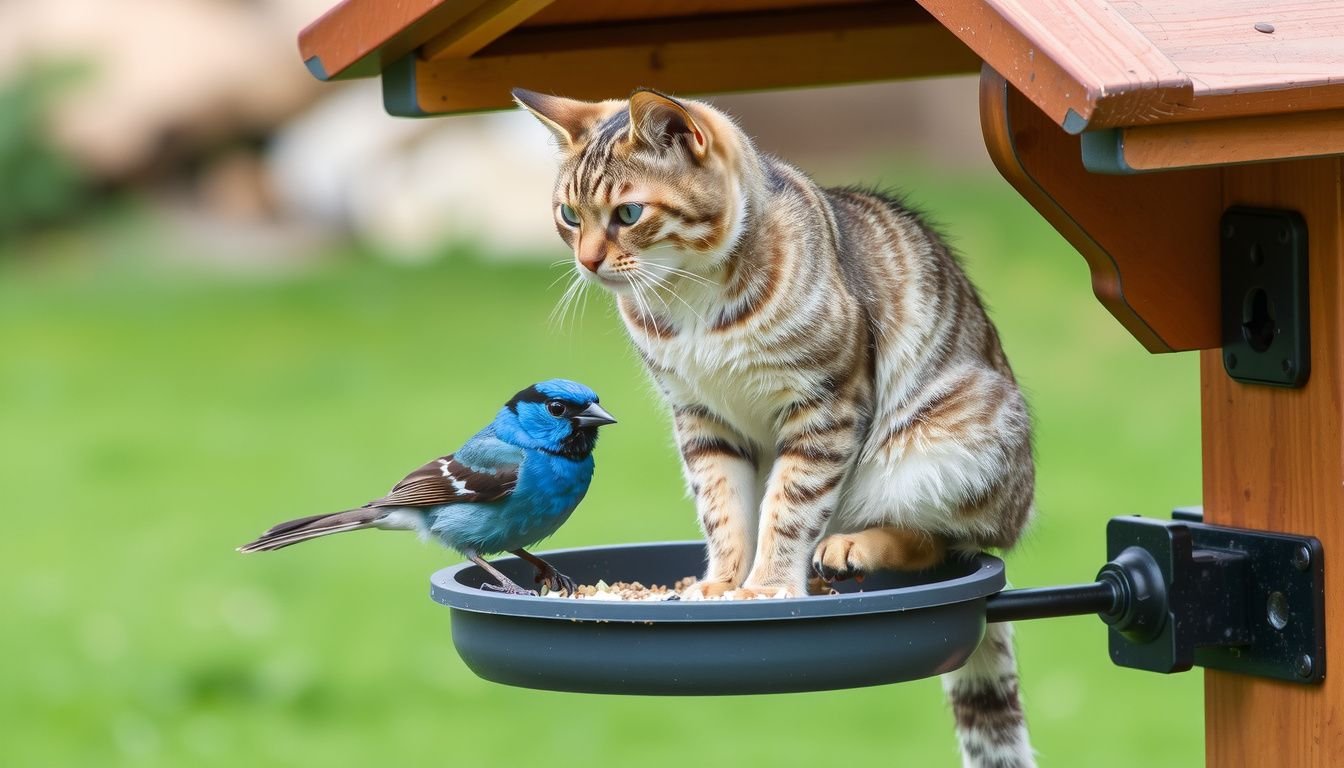
Cats target feeders because feeders concentrate birds in predictable places. Birds pause to perch, drop seed, and return repeatedly, which rewards a patient stalker. Even well-fed cats may hunt because the behavior is instinctive, not just hunger-driven.
It matters because hunting pressure changes bird behavior and can reduce visits, especially for ground-feeding species. A single cat can disrupt an entire feeding station, causing birds to avoid the area or spend more time scanning than eating.
Look for signs: cats crouched under shrubs, paw prints near spilled seed, or birds flushing suddenly. If that’s happening, the setup—not the birds—is the fix.
Place Feeders Where Cats Can’t Ambush Birds
Placement does more than any gadget. Cats succeed when they can hide, then sprint a short distance. The goal is to force a cat to cross open space where birds can spot it early.
Use these spacing rules as a baseline:
- Keep feeders 10–12 feet from shrubs, fences, woodpiles, or tall grass.
- Mount feeders 5–6 feet high so birds can launch quickly.
- Avoid placing feeders near low branches that act like “cat ladders.”
If space is tight, prioritize open sightlines. Birds tolerate a shorter distance if they can see all approaches.
Use Poles, Baffles, and Guards That Block Climbing
Dedicated feeder poles outperform hanging from trees or deck rails. A smooth metal pole removes gripping points, and a baffle blocks climbing from below. The best setups also prevent cats from leaping from nearby objects.
Choose hardware that matches the problem:
- Dome baffle: Great for rain coverage and blocking climbers.
- Stovepipe/cylindrical baffle: Strong climb prevention on poles.
- Guarded mounting: Keep the feeder arm short to reduce jump targets.
| Option | Best For | Watch-Out |
|---|---|---|
| Pole + 16–18" baffle | Most yards; consistent results | Needs open space to prevent jumping |
| Hanging from tree | Temporary placement | Cats can climb trunk or leap from branches |
| Deck hook | Small spaces | Often too close to railings and cover |
Reduce Cover: Landscaping Changes That Remove Hiding Spots
Cats don’t need much cover—just a low tunnel of foliage or a thick shrub line. Trimming and spacing plants can keep the yard attractive while removing ambush points around feeders.
Practical landscaping changes:
- Prune shrubs up from the ground (leave 8–12 inches of open “leg room”).
- Replace dense groundcover near feeders with mulch, gravel, or short lawn.
- Move brush piles and stacked lumber away from feeding zones.
Now, don’t strip the whole yard. Keep bird-friendly native shrubs elsewhere, just not within the feeder’s “safety circle.”
Choose Seed and Feeder Styles That Minimize Ground Feeding
Spilled seed draws birds to the ground, and ground feeding increases risk. The right feeder reduces waste and keeps birds up where they can escape. It also limits the scent trail that attracts rodents, which can attract cats.
Better choices:
- Tube feeders with small ports to reduce dumping and kicking.
- No-mess blends (hulled sunflower, hearts/chips) to cut hull litter.
- Seed trays used sparingly and only in open areas.
If ground-feeding birds are a priority, place a low platform feeder far from cover and monitor it closely, especially at dawn and dusk.
Humane Deterrents: Scents, Textures, and Motion Devices
Deterrents work best as a “second layer” after placement and barriers. Cats learn fast; rotating deterrents prevents them from habituating. Aim for harmless discomfort, not pain.
Common humane options:
- Motion-activated sprinklers near approach routes (highly effective).
- Texture barriers like prickly mats in beds (not where birds land).
- Scent repellents labeled for cats, reapplied after rain.
Avoid mothballs and toxic DIY chemicals. They can harm wildlife, pets, and soil—and they rarely solve the underlying access problem.
Work With Cat Owners: Indoor Enrichment and Outdoor Alternatives
When a neighborhood cat is the repeat visitor, cooperation helps. Many owners don’t realize their cat is stalking birds. A respectful message paired with clear solutions often works better than confrontation.
Useful alternatives owners can try:
- Keep cats indoors during peak bird activity (early morning, late afternoon).
- Provide indoor enrichment: puzzle feeders, wand toys, window perches.
- Use a secure “catio” or leash walks instead of free roaming.
Practical example: A homeowner moved their feeder to a pole with a baffle, trimmed the hedge beneath it, and asked the neighbor to keep their cat inside until 10 a.m. Bird visits returned within a week, and the cat shifted to lounging on a sunny porch.
Troubleshooting Common Problems and When to Adjust the Setup
If cats still show up, the feeder is usually within jumping range. Cats can leap several feet vertically and horizontally, especially from fences, chairs, and low branches. Walk the area like a cat would: “Where’s the launch point?”
Fixes that typically solve stubborn cases:
- Move the feeder another 3–6 feet into open space.
- Increase baffle size or lower it so it blocks climbs sooner.
- Reduce spillage with a better feeder or switch to no-mess seed.
Adjust seasonally. Summer foliage creates new hiding spots, and winter snowbanks can become stepping platforms.
What Readers Ask
Do ultrasonic cat repellents work near bird feeders?
Results are inconsistent. Some cats ignore them, and placement is tricky outdoors. Physical barriers and motion sprinklers tend to be more reliable and easier to validate.
How far should a bird feeder be from bushes?
Aim for 10–12 feet from dense cover. If the yard is small, maximize visibility by pruning lower branches and keeping the ground beneath the feeder open.
Will a bell collar stop a cat from catching birds?
It can reduce success for some cats, but it’s not a full solution. Many cats learn to move quietly, and birds still face stress from stalking.
Is it safe to use pepper or hot spices to deter cats?
Loose pepper can irritate eyes and noses and may affect other animals. Use labeled, pet-safe repellents and focus on placement, baffles, and motion deterrents first.
60-Second Recap
- Start with placement: 10–12 feet from cover, 5–6 feet high, clear sightlines.
- Use a proper pole setup: smooth pole plus a 15–18 inch baffle.
- Remove ambush cover: prune shrubs up, clear brush piles, keep ground open.
- Reduce ground feeding: low-waste feeders and no-mess seed cut spillage.
- Add humane deterrents: motion sprinklers and texture barriers near approach routes.
- Coordinate with owners: indoor time during peak hours, enrichment, catios.
- Re-check jump points: fences, chairs, branches, and seasonal changes.
Related read: How can I keep cats away from bird feeders safely