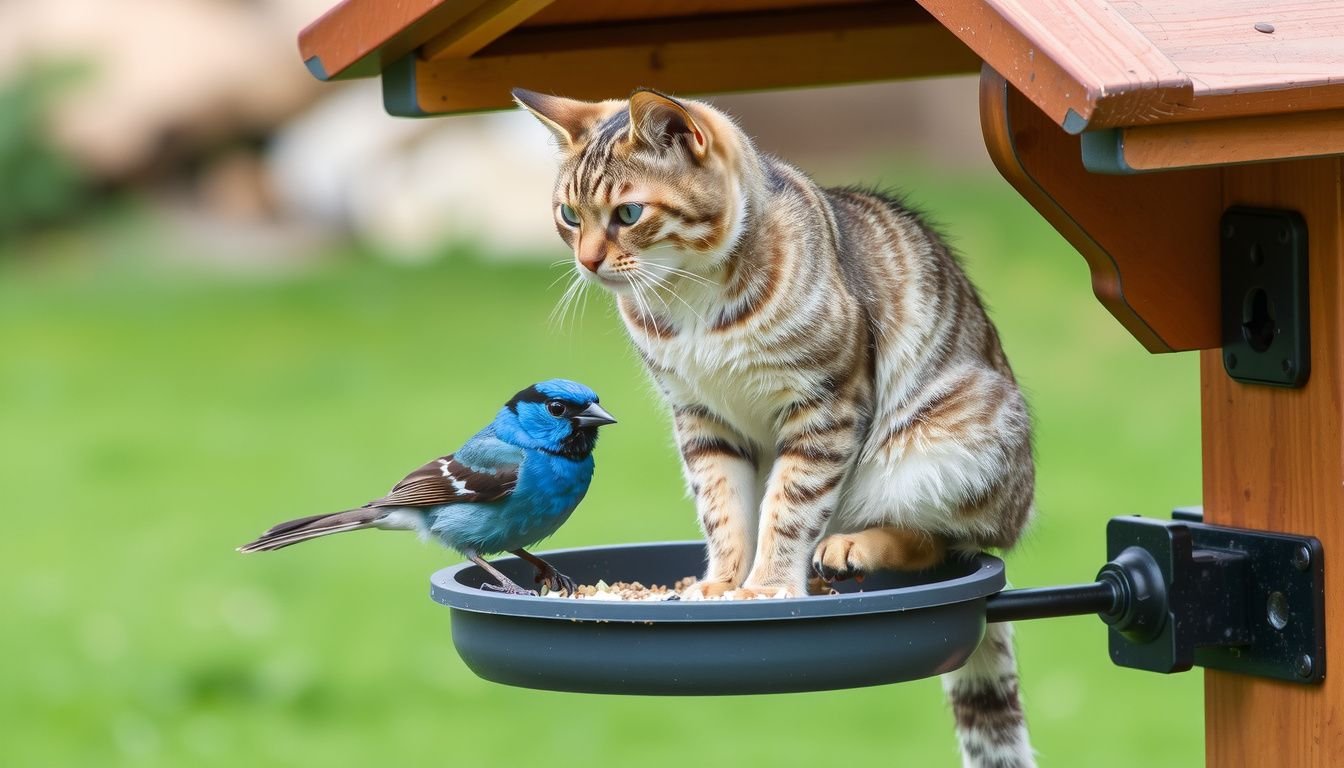
How can i keep cats away from bird feeders without turning the yard into a battleground? They can, with a few smart changes that protect birds and keep neighborhood cats safe. Bird feeders concentrate fluttering prey in one predictable spot, and cats are built to exploit that.
The good news: most “cat problems” around feeders are really setup problems—placement, hardware, and routine. With proven, humane strategies, it’s possible to reduce stalking, prevent ambushes, and keep birds feeding calmly. The steps below focus on barrier design, landscaping, deterrents, and community habits so the solution holds up over time.
Start with the placement section first; it delivers the fastest wins.
Quick Facts Box
- Best distance from cover: 10–12 feet from shrubs, fences, or low branches
- Ideal pole height: 6–7 feet with a wide baffle
- Top hardware: Cone or stovepipe baffle + smooth metal pole
- Most effective combo: Placement + baffle + clean ground
- Humane deterrents: motion-activated sprinkler, scent barriers, supervised cat time
Why cats target bird feeders and what’s at risk
Cats hunt where success is easy. Feeders create a predictable “schedule” of birds landing, feeding, and dropping seed—exactly the pattern a stalking predator wants.
The risk isn’t just a single chase. Repeated ambush attempts stress birds, reduce feeding time, and can cause injuries when birds bolt into windows or branches.
There’s also a cat-safety angle. Cats that lurk under feeders may be exposed to conflicts with other animals, parasites from prey, or dangerous deterrents used improperly.
The practical goal is simple: remove hiding spots, block access routes, and make the feeder zone feel “too open” for a cat to commit to a pounce.
Place feeders where cats can’t ambush birds
Feeder placement does more than any gadget. Cats rely on cover—shrubs, low decks, woodpiles, tall grass, and fence lines—to get close without being seen.
They should place feeders in an open area, ideally 10–12 feet away from any cover and at least 6 feet from fences or overhanging branches. Birds need clear sightlines to detect threats.
Good placement rules that tend to work:
- Keep feeders centered in open lawn, not along edges.
- Avoid spots beneath trees with low limbs.
- Don’t place feeders near outdoor furniture cats use as steps.
If the yard is small, spacing still helps. Even moving a feeder a few feet away from a shrub line can reduce successful stalking.
Choose cat-resistant feeder poles, baffles, and mounts
Hardware matters when placement can’t be perfect. A smooth metal pole with a properly sized baffle is the standard because it blocks climbing and jumping routes.
They should aim for a 6–7 foot pole and add a cone or stovepipe baffle below the feeder. The baffle must be wide enough to stop a cat reaching around it.
|
Option |
Best for |
Watch-outs |
|---|---|---|
|
Smooth pole + cone baffle |
Most yards; strong climbing prevention |
Must be installed high enough to work |
|
Stovepipe baffle (8″+ diameter) |
Persistent climbers |
Needs secure mounting; check after storms |
|
Wall/roof mount |
Limited space |
Cats can jump from railings and ledges |
They should also keep feeders far enough from the pole top so a cat can’t leap and grab the tray from above.
Create safer landing zones with smart landscaping
Birds feed more confidently when they have a clear escape route. Landscaping can either help birds or hand cats perfect cover.
They can thin dense shrubs near feeders and keep grass short in a 12-foot radius. If birds need nearby refuge, place taller shrubs farther out so birds can retreat without giving cats a hiding place right under the feeder.
Useful yard tweaks include:
- Remove brush piles and low, dense groundcover near the feeding area.
- Prune lower tree limbs to reduce “launch points” for cats.
- Add a few upright perches (tall branches or posts) away from cover so birds can scan.
Look for “cat highways” like fences and stacked planters. Breaking those routes reduces surprise approaches.
Use humane deterrents that discourage repeat visits
Deterrents work best when they’re consistent and not harmful. The goal is to make the feeder zone unpleasant for stalking, not to punish the cat.
Motion-activated sprinklers are often the fastest behavior changer because they interrupt the approach at the same spot every time. They should aim the sensor toward the cat’s entry route, not the feeder itself.
Other humane options:
- Motion lights (helpful at dawn/dusk when cats roam).
- Scent barriers placed along approach paths (follow label directions).
- Physical texture deterrents like prickly mats under shrubs (never where birds land).
They should avoid poisons, glue traps, and harmful chemicals. Those can injure wildlife, pets, and even children.
Manage food and cleanup to reduce attraction
Seed on the ground is a magnet for birds—and that keeps cats coming back. A cleaner feeding station means fewer birds feeding at ground level where cats have the advantage.
They can switch to low-waste seed (like shelled sunflower hearts) and use feeders that limit spillage. A seed tray can help, but it must be cleaned often.
Simple cleanup habits:
- Rake or sweep hulls and spilled seed every 2–3 days.
- Move feeders periodically to prevent a “seed carpet” forming.
- Pause feeding for a week if a cat is actively hunting daily.
They should also keep pet food indoors. Outdoor bowls can train cats to patrol the area.
Work with neighbors and outdoor-cat routines to prevent stalking
Many feeder “regulars” are owned cats. A polite, factual conversation often helps more than escalating deterrents.
They can ask neighbors to keep cats indoors during peak bird activity—early morning and late afternoon—or use supervised outdoor time (leash, catio, or enclosed yard). Even partial changes reduce hunting success.
Practical, cooperative steps:
- Share the exact times the cat is visiting and where it hides.
- Suggest a bell collar or bright breakaway collar cover for visibility.
- Offer to adjust feeder placement so it’s less tempting.
Practical example: One homeowner moved a tube feeder 11 feet from a hedge, added a stovepipe baffle, and ran a motion sprinkler for two weeks. The neighborhood cat stopped waiting under the feeder, and birds returned to longer feeding bouts within days.
Quick troubleshooting: common problems and best fixes
When cats still show up, it usually means one access route remains. They should diagnose the approach path before buying new products.
- Cat jumps from a fence: Move the feeder farther from the fence line or add a taller pole with a baffle.
- Cat hides in shrubs: Thin or relocate shrubs; keep a 10–12 foot open buffer.
- Birds feed on the ground: Reduce spillage, clean more often, and use no-mess seed.
- Deterrent stops working: Change angles/sensors, rotate deterrents, and remove cover that makes stalking rewarding.
If the yard is tiny, they should prioritize baffles, strict cleanup, and a short feeding pause during heavy cat activity.
Common Questions
Will a baffle stop cats completely?
It stops climbing on poles when sized and installed correctly. Cats may still jump from nearby structures, so placement—distance from fences, decks, and shrubs—must support the baffle.
Do ultrasonic cat repellents work near feeders?
Results vary by device and yard layout. They can help as a supplement, but they’re rarely as reliable as open placement, a good baffle, and motion-activated sprinklers.
Should they stop feeding birds if cats are around?
A short pause can break a cat’s routine, especially if stalking is daily. They should restart with better placement, cleanup, and deterrents so the feeder doesn’t become a hunting station again.
Are cats attracted to suet more than seed?
Cats aren’t drawn to suet itself as much as the birds it attracts. Any high-traffic feeder can become a hunting focus, so the same safety setup applies.
Final Summary
They can keep cats away from bird feeders by making stalking difficult and unrewarding. Open placement, a smooth pole with a properly sized baffle, and a clean ground zone reduce ambush opportunities fast. Landscaping should remove hiding cover near the feeder while still giving birds distant refuge.
Humane deterrents like motion-activated sprinklers reinforce the message that the area isn’t a good hunting spot. When possible, neighbor coordination and safer outdoor-cat routines prevent repeat visits. The most reliable approach is layered: placement first, hardware second, then deterrents and cleanup to maintain long-term results.
- 60-second recap: Keep feeders 10–12 feet from cover and fences.
- Use a 6–7 foot smooth pole with a wide cone or stovepipe baffle.
- Remove ambush cover: thin shrubs, mow short, prune low limbs.
- Cut ground feeding: reduce spillage and clean every few days.
- Use humane deterrents (motion sprinkler works best for many yards).
- Coordinate with neighbors on indoor hours, catios, or supervised time.
Related read: How to Build Bird Feeders: A Step-by-Step Backyard Guide