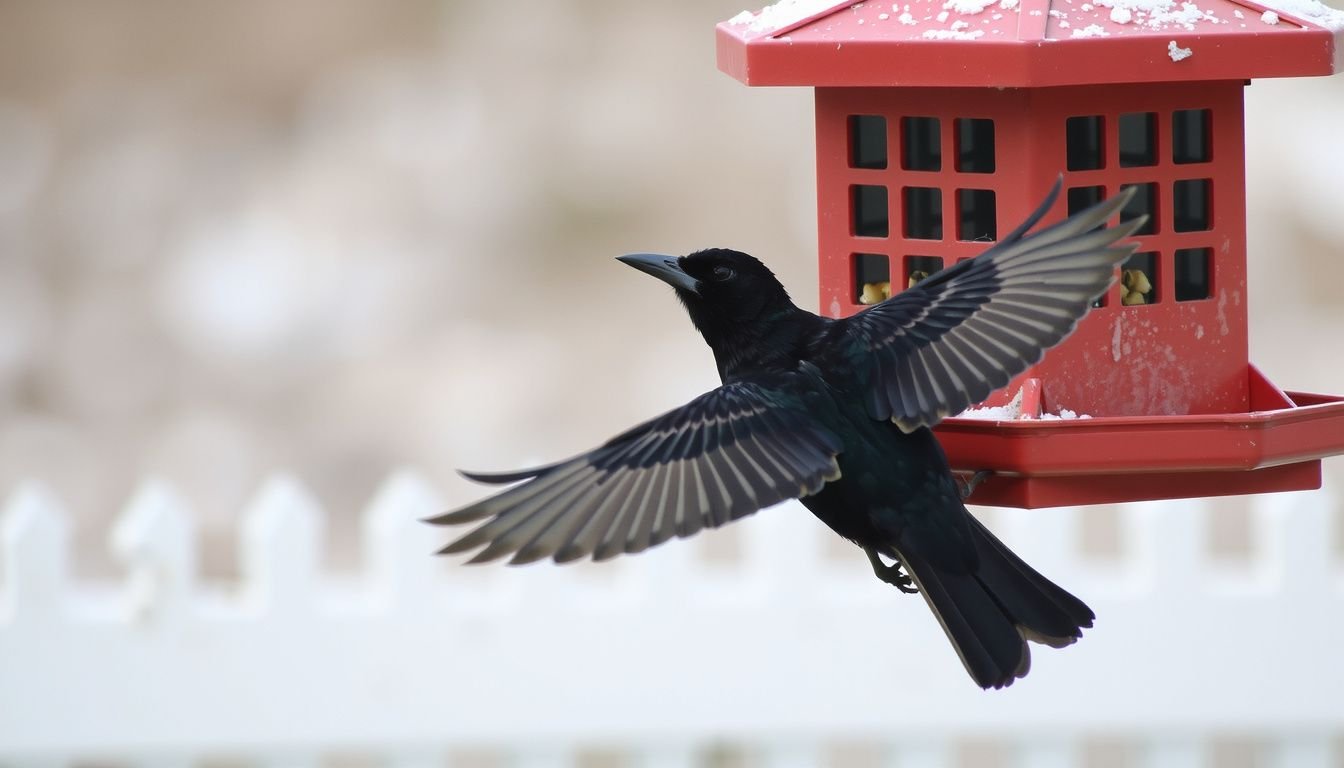
Frustrated with blackbirds taking over your feeders? Learning how to get rid of black birds in feeders is essential for anyone hoping to attract colorful songbirds instead of large, aggressive flocks. Blackbirds—like grackles, starlings, and cowbirds—can quickly overrun a backyard, crowding out smaller birds and emptying feeders in hours.
Fortunately, there are proven strategies to minimize their impact. This guide outlines step-by-step actions: identifying the culprits, choosing strategic feeder designs, adjusting seed choices, and introducing deterrents. For example, one homeowner in Ohio installed tube feeders with small perches, switched to safflower seed, and saw blackbird visits drop by 90% in two weeks.
Ready for a more balanced backyard? Let’s get started.
Assess Feeder Issues and Identify Black Bird Species
Begin by observing which black birds are frequenting your feeders. Common offenders include grackles, starlings, and red-winged blackbirds. Each species displays unique behaviors and feeding preferences.
- Starlings often arrive in noisy flocks and prefer open trays.
- Grackles use their size to dominate platform or hopper feeders.
- Red-winged blackbirds are bold but less agile on small perches.
Keep a notebook or use a phone app to log bird visits over several days. Take note of feeder types, food types, and feeding times. This assessment helps pinpoint which strategies will be most effective.
Misidentifying the birds can lead to wasted effort—don’t skip this step.
Pro Tip: Photograph the birds for accurate identification using birding apps or guides.
Select the Right Bird Feeder Designs
Feeder design plays a crucial role in deterring black birds. Choose feeders that physically limit access to larger birds.
- Tubular feeders with short perches: Only smaller birds can comfortably feed.
- Caged feeders: Surround the feeder with a metal cage; openings should be large enough for finches or chickadees, but not blackbirds.
- Weight-sensitive feeders: These close feeding ports when heavier birds land.
Remove open platform and ground feeders—these are magnets for blackbirds. Place feeders at least 6 feet off the ground and away from dense shrubs, which blackbirds use for cover.
Common Mistake: Using large, uncovered feeders that welcome all bird sizes.
Adjust Birdseed Types to Deter Black Birds
Blackbirds are opportunistic—they’ll eat almost anything, but certain seeds are far less appealing to them.
- Safflower seed: Songbirds like cardinals enjoy it, but blackbirds find it bitter.
- Nyjer (thistle) seed: Goldfinches love it. Blackbirds generally ignore it.
- Avoid cheap mixes containing corn, millet, or sunflower chips—these attract starlings and grackles.
Change your seed gradually, monitoring bird responses. Once blackbirds lose interest, they may move on. Refill feeders in the morning only, so food is less available during peak blackbird activity in the afternoon.
Pro Tip: Store seed in sealed containers to prevent blackbirds from foraging spilled seed under feeders.
Implement Physical and Environmental Deterrents
If feeder and seed adjustments aren’t enough, add layered deterrents. Physical barriers and habitat tweaks can further discourage blackbirds.
- Install feeder baffles above and below feeders to block aerial and ground approaches.
- Trim or thin out dense hedges and shrubs where blackbirds congregate.
- Use reflective tape or spinning pinwheels near feeders—moving, shiny objects startle blackbirds but don’t bother most songbirds.
- Feed birds at different heights—ground for doves, higher for small songbirds, avoiding levels favored by blackbirds.
Consider relocating feeders every few weeks. Blackbirds prefer routine; a change in location can disrupt their habits.
Example: A backyard birder in Texas rotated feeder locations monthly and reduced blackbird flocks by half.
Monitor Results and Refine Your Approach
Consistent monitoring is vital. Track which deterrents yield the best results—note any changes in species diversity and feeder activity.
- Log daily bird visits for at least two weeks after each change.
- If blackbirds persist, try combining strategies: switch both seed and feeder type simultaneously.
- Be patient—habits take time to change, especially for persistent birds.
Network with local birdwatchers or wildlife groups for region-specific tips. Not every solution works everywhere, so adapt as needed. If blackbird pressure increases seasonally, ramp up deterrents in late spring and fall.
Pro Tip: Take before-and-after photos to visually document progress.
People Also Ask
Can I use spicy bird seed to repel blackbirds?
Yes. Capsaicin-coated seed deters mammals and some blackbirds, but most songbirds are unaffected. Always check that the product is safe for all wildlife in your area.
Will blackbirds harm other birds at the feeder?
Blackbirds can bully smaller birds and monopolize food. While they rarely injure other birds, their aggressive behavior often drives songbirds away from feeders.
Is it legal to remove blackbirds from my yard?
Most blackbirds are protected under the Migratory Bird Treaty Act. Direct removal or harm is illegal. Use non-lethal deterrence and exclusion methods instead.
What to Do Now
Ready to reclaim your feeder? Start by identifying the black bird species and adjusting your feeder design. Switch to less attractive seeds like safflower, and deploy physical deterrents if needed.
Monitor your results for at least two weeks, tweaking strategies based on what works. Don’t get discouraged—persistence pays off. For ongoing advice, connect with local birding organizations and share your experiences.
A thriving, diverse backyard bird population is within reach with the right approach.
Related read: How to Build Bird Feeders: A Step-by-Step Backyard Guide