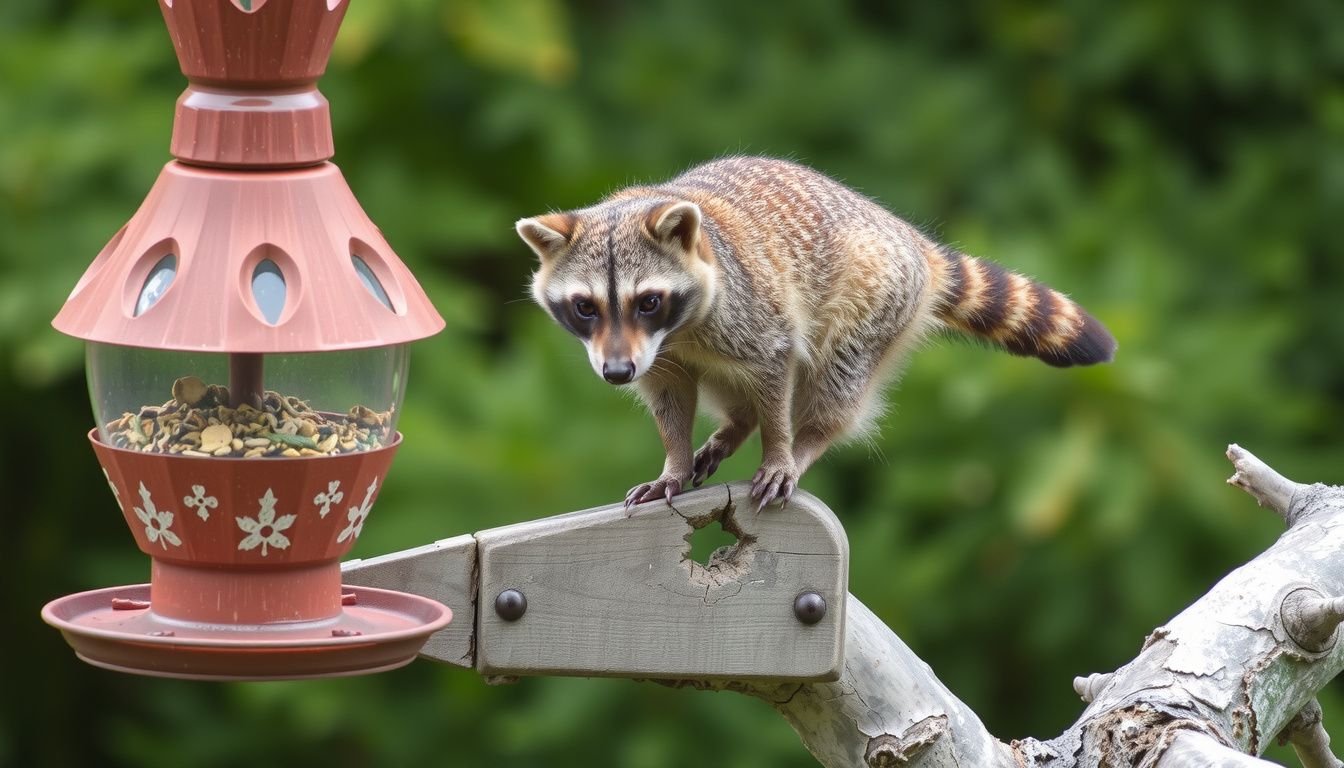
Anyone searching for how to keep racoons away from bird feeders knows the frustration of waking up to empty feeders and scattered seed. Raccoons are clever, persistent, and surprisingly agile, making them formidable adversaries for backyard bird enthusiasts. However, with the right strategies, it’s possible to outsmart these masked bandits.
Below, find out how to assess your yard for raccoon activity, select and install raccoon-proof feeders, secure your setup, use safe deterrents, and maintain a raccoon-free feeding zone. Real-world example: A homeowner in Ohio successfully kept raccoons away for a full season by combining a baffle, strategic feeder placement, and motion-activated lights. Let’s break down the steps so anyone can protect their birds and their seed.
Assess the Area for Raccoon Activity
Start by identifying whether raccoons are genuinely the culprits. Look for tracks—raccoon prints resemble tiny human hands—and droppings near feeders. Other giveaways include overturned feeders, chewed seed containers, or evidence of climbing (scratch marks on poles or trees).
- Check for common raccoon trails along fences or near dense shrubbery.
- Inspect at dusk or dawn, when raccoons are most active.
- Set up a wildlife camera to confirm nocturnal visitors.
Understanding where and how raccoons access feeders helps tailor prevention tactics. Avoid hasty assumptions; squirrels and deer can cause similar damage, so accurate identification saves time and effort. Pro tip: Documenting raccoon routes makes it easier to block access points.
Choose and Install Raccoon-Proof Bird Feeders
Not all feeders are created equal. Select models with weight-activated perches or cages that close access to heavier animals—raccoons included. Tube feeders with metal ports and sturdy construction withstand raccoon tampering better than soft plastic or wooden designs.
- Choose feeders labeled as squirrel- and raccoon-resistant.
- Install a pole-mounted feeder with a smooth, metal baffle at least 18 inches wide, placed four feet above the ground.
- Hang feeders at least eight feet from tree limbs or fences to prevent leaping access.
Avoid feeders with exposed latches or easy-to-open lids. Raccoons have dexterous paws—simple snap locks are often no match for their problem-solving skills. If possible, opt for feeders requiring two hands to open or refill.
Secure the Feeder Location and Surroundings
Placement is critical. Even the best feeder won’t work if raccoons can simply climb or jump onto it. Survey the area and remove low-hanging branches or nearby objects that could give raccoons a launching point.
- Mount feeders on metal poles—wood is too easy to climb.
- Trim bushes, tree limbs, and vines within a six-foot radius of the feeder.
- Keep trash bins and pet food well away from bird-feeding stations to avoid attracting raccoons.
Consider installing a feeder pole at least ten feet from any structure. For added security, wrap the pole with a sheet metal guard or use commercially available baffles that prevent climbing. Tip: Avoid placing feeders near decks, sheds, or fences—raccoons can use these as stepping stones.
Apply Safe Deterrents to Discourage Raccoons
Deterrents can provide an extra layer of defense. Always choose non-toxic, wildlife-safe solutions to protect both birds and raccoons.
- Motion-activated lights or sprinklers startle nocturnal raccoons and make the area less inviting.
- Sprinkle cayenne pepper or commercial animal repellent around the base of feeder poles (never on the seed).
- Apply a mix of petroleum jelly and hot pepper powder to poles—this makes climbing unpleasant.
Some homeowners use ultrasonic devices, but results are mixed. For best results, rotate deterrents every few weeks to prevent raccoons from adapting. Mistake to avoid: Never use mothballs or toxic chemicals, as these can harm birds and pets.
Maintain and Monitor for Lasting Results
Vigilance is key to long-term success. Raccoons are persistent, so ongoing maintenance and monitoring ensure they don’t return.
- Regularly inspect feeders, poles, and baffles for damage or tampering.
- Refill feeders in the morning and bring them in at dusk whenever practical—raccoons are mostly nocturnal.
- Keep the area beneath feeders clean to remove spilled seed or hulls that could attract raccoons.
Consider keeping a log of raccoon sightings or incidents. Adjust strategies if new access points are discovered. Real-world maintenance: One family found that cleaning up spilled seed every evening drastically reduced raccoon visits within a week.
Common Questions
How high should a bird feeder be mounted to deter raccoons?
Mount feeders at least four feet off the ground, with a baffle below. Make sure there’s at least eight feet of clearance from nearby structures or overhanging branches.
Is it safe to use hot pepper spray around bird feeders?
Yes, but only on feeder poles or surrounding areas—never on the seed itself. Capsaicin deters mammals but won’t affect birds, who can’t taste it.
What’s the best type of baffle for raccoons?
A smooth, metal cone or cylinder baffle at least 18 inches wide and mounted below the feeder works best. Raccoons struggle to grip or climb these surfaces.
Next Steps
Raccoon-proofing bird feeders takes planning and persistence, but consistent effort pays off. Assess the area for activity, select robust feeders, secure their placement, use safe deterrents, and maintain vigilance. Adapt as needed and track what works for your yard.
With these steps, anyone can enjoy birdwatching—minus the midnight raids from raccoons.