Learning how to hang bird feeders without trees opens up possibilities for attracting birds, even in spaces with few or no mature trees. Whether the backyard is a new development, an urban courtyard, or a patio, people often assume trees are necessary for bird feeding. That’s just not the case.
With the right supplies and a bit of planning, anyone can create a welcoming feeding station that’s safe from predators and visually appealing. This tutorial guides readers through choosing feeders, selecting mounting options, and maintaining a tree-free setup. Think of a suburban homeowner who uses a shepherd’s hook on a lawn patch, drawing goldfinches and chickadees to their window—no tree required.
Let’s break down the steps so any outdoor space can become a bird haven.
Gather Supplies and Assess Your Outdoor Space
Before hanging a bird feeder without trees, it’s essential to gather supplies and analyze the available space. Begin by measuring the area where the feeder will stand or hang. Consider sunlight, wind exposure, and proximity to windows or walkways—these factors influence feeder stability and bird safety.
Common supplies include:
- Bird feeder(s) of choice
- Free-standing poles or shepherd’s hooks
- Deck rail clamps or brackets (if applicable)
- Hanging hardware (S-hooks, chains, zip ties)
- Stabilizing weights or ground stakes
Look for spots that offer birds some shelter (like a nearby shrub or garden wall), and keep feeders at least 10 feet from thick cover to deter squirrels. A quick walk around the property helps identify the best location, whether on a lawn, patio, or balcony.
Select the Right Bird Feeder for Tree-Free Hanging
Not all bird feeders suit freestanding or bracket-mounting. Opt for feeders with secure hanging loops, flat bottoms, and robust construction. Heavier feeders may require stronger supports, while lightweight tube or hopper feeders are easier to hang from poles or railings.
Consider these popular options:
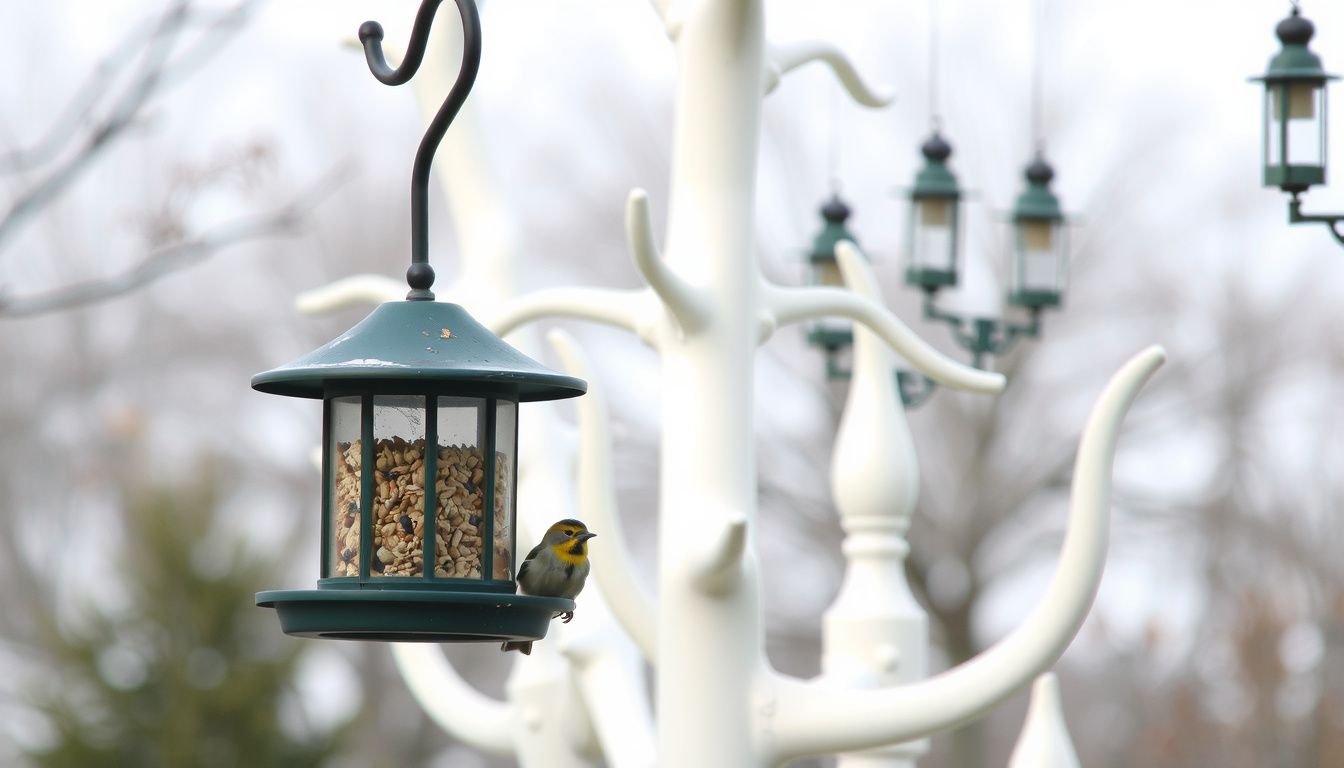
- Tubular feeders—great for small songbirds, simple to hang
- Hopper feeders—larger, attract a wider range, need sturdier support
- Platform feeders—versatile but often heavier
Keep in mind the local bird species and seed preferences. For example, a mesh thistle feeder on a shepherd’s hook attracts finches, while suet cages clipped to a deck rail can draw woodpeckers, even in tree-free environments.
Choose a Sturdy Mounting Option
Next, select a mounting solution that matches the space and feeder type. The most versatile choice is a bird feeder pole or shepherd’s hook, which can be staked into lawns or garden beds. For patios or balconies, clamp-on railing brackets or weighted stands work well.
Common mounting options include:
- Shepherd’s hooks: Easy to install in soil, various heights available
- Deck railing clamps: Ideal for hanging feeders from balcony or porch railings
- Weighted bases: Allow placement on hard surfaces without drilling
- Wall-mounted brackets: Secure for heavier feeders, require wall or fence access
Ensure the mounting option can support the feeder’s weight, especially after rain when seed or suet absorbs moisture. Avoid flimsy poles that might tip in wind or under squirrel pressure.
Install a Bird Feeder Pole or Stand
Start by assembling the pole or stand according to manufacturer instructions. For a shepherd’s hook, push or hammer the base into the ground at least 10 inches deep for stability. If using a weighted base, ensure it’s level and cannot be easily tipped.
For deck or balcony installations, attach the clamp or bracket tightly to the railing, checking for wobble or movement. Wall-mounted brackets should be anchored securely to studs or masonry with appropriate screws.
Pro tip: Position feeders at least five feet above ground to deter cats and keep birds safe. Ensure there’s enough clearance for birds to approach and fly away unimpeded.
Test the setup by gently nudging the support—if it wobbles, reinforce it before proceeding.
Secure and Hang the Bird Feeder Properly
Once the support is stable, use S-hooks, chains, or sturdy cords to hang the feeder. Double-check that all hardware is rated for outdoor use and can handle the feeder’s weight, especially after refilling.
Hang the feeder so that it swings slightly but doesn’t collide with the pole or structure in the wind. For heavy or long feeders, distribute weight evenly and use multiple attachment points if possible.
Example: A city gardener used a heavy clay pot as a weighted base for a shepherd’s hook, then hung a tube feeder from the top. This setup attracted house sparrows and cardinals to a small patio, all without a single tree nearby.
After hanging, fill the feeder and observe for a few days. Adjust placement if birds seem hesitant or if pests become a problem.
Maintain and Monitor Your Bird Feeder Setup
Regular maintenance keeps the feeding station healthy and effective. Clean feeders weekly with hot water and a mild detergent, and rake up spilled seed to prevent mold or unwanted visitors.
Inspect poles, brackets, and hardware monthly for rust, bending, or loosening. Tighten or replace parts as needed. Refill seed or suet as required, and adjust feeder height or location seasonally for optimal bird traffic.
Keep a journal or take photos to track which species visit and when. This helps fine-tune seed choices and feeder types. Most importantly, enjoy the increased bird activity—even without a single mature tree in sight.
What Readers Ask
Can bird feeders be hung from fences?
Yes, sturdy fences can support feeders using wall-mount brackets or heavy-duty hooks. Always check the fence’s stability and avoid thin or weak sections that might not bear the weight.
How do I keep squirrels off tree-free bird feeders?
Install baffles below feeders on poles, place feeders at least 10 feet from jumping points, and use squirrel-proof feeder designs. Regularly check for potential climbing routes nearby.
What type of pole is best for heavy feeders?
Choose a powder-coated steel pole at least one inch in diameter for durability. For large or heavy feeders, a pole with a ground auger or stabilizer is recommended to prevent tipping.
Will birds find feeders not hung in trees?
Yes, birds are highly observant and will find feeders wherever they’re placed, as long as the feeders are visible and filled with suitable food. Consistency helps attract regular visitors.
What to Do Now
Ready to attract more birds? Review your outdoor area, gather the right supplies, and pick a sturdy mounting solution that fits your space. Start with one feeder and observe bird activity, making adjustments as needed.
Regular cleaning and monitoring ensure a thriving, bird-friendly environment—no trees required. Soon, you’ll enjoy the sights and sounds of feathered visitors, all thanks to your well-planned setup.
Related read: How Do You Keep Cats Away From Bird Feeders Safely