How to keep pigeons away from bird feeders starts with understanding what pigeons want: easy calories, flat perches, and predictable meals. When they move in, they don’t just eat seed. They scare off songbirds, foul the area, and can turn a tidy feeding station into a daily cleanup job.
They’re also persistent. If the setup rewards them, they’ll return at the same time every day and bring friends. The good news is a pigeon problem is usually a setup problem, not a “no birds allowed” problem.
The most reliable approach stacks small changes: better feeder design, smarter placement, less attractive seed, and a consistent routine. Done right, pigeons lose interest while finches, chickadees, and nuthatches keep visiting.
Identify Why Pigeons Are Taking Over the Feeder
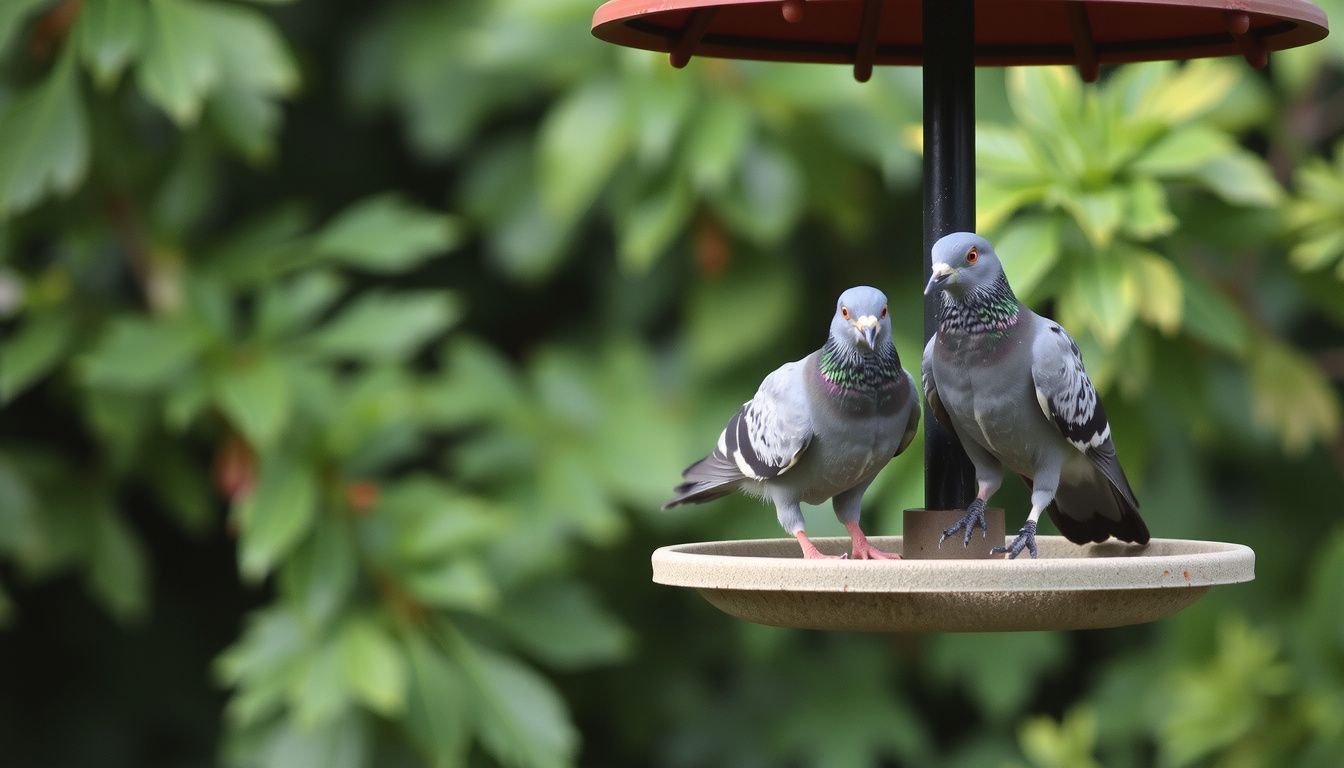
Pigeons dominate feeders because they’re built for ground feeding and bullying. They prefer wide, stable surfaces and easy access, so tray feeders, open platforms, and spilled seed are basically an invitation.
They also thrive on routine. If seed is always available, pigeons learn the schedule fast and camp out. Nearby cover matters too.
Rooflines, fences, and low branches give them staging areas to watch and swoop in.
- Feeder type: platforms and large perches favor heavier birds.
- Mess: hulls and spillover create a “second feeder” on the ground.
- Location: close to roofs, rails, or open pavement helps pigeons land.
Look for clues: flattened seed piles below the feeder, droppings on rails, and pigeons arriving in groups. Those signs point to access and food choice as the main levers.
Before You Start: Gather Tools, Choose Seed, and Set Expectations
They’ll get faster results by preparing a few basics before changing anything. The goal isn’t to “fight” pigeons daily. It’s to remove the payoff so they move on.
- Baffle (stovepipe or dome) sized for the pole
- Shepherd’s hook or pole system with a smooth metal surface
- Seed catcher tray (optional) to reduce ground spill
- Cleaning kit: gloves, brush, mild soap, bucket
Seed choice matters as much as hardware. Pigeons love cheap mixes heavy in millet, milo, and cracked corn. Many songbirds prefer black oil sunflower and nyjer, which pigeons typically avoid or can’t use efficiently.
Set a realistic timeline: after changes, pigeons may test the station for 7–14 days before giving up. Consistency is what makes the shift stick.
Switch to Pigeon-Resistant Feeders and Add Baffles
They should upgrade away from anything a pigeon can stand on. Tube feeders with short perches, caged feeders (for small birds), and weight-activated feeders reduce access without harming wildlife.
| Option | Why It Works | Best For |
|---|---|---|
| Tube feeder (short perches) | Limits footing for heavy birds | Finches, chickadees |
| Caged feeder | Physical barrier blocks pigeons | Mixed small songbirds |
| Weight-activated feeder | Closes ports under heavy load | Areas with persistent pigeons |
Add a baffle on any pole-mounted feeder. A smooth stovepipe baffle (4–6 inches diameter, 24+ inches long) stops climbing. A dome baffle above the feeder blocks drop-ins from branches.
Common mistake: using a small baffle or placing it too low, letting pigeons reach around it. The baffle must be high enough that they can’t lean over from the ground or a nearby rail.
Relocate and Mount Feeders to Limit Pigeon Access
Placement decides who can land. They should mount feeders on a smooth metal pole, not on a deck rail or fence. Pigeons love broad, stable takeoff points, and rails give them exactly that.
- Keep feeders 10–12 feet from roofs, fences, and thick branches.
- Hang feeders so the lowest point is 5+ feet above ground.
- Avoid open concrete or patios directly underneath; pigeons prefer hard, open staging areas.
Now, a practical example: a homeowner with a tray feeder on a deck rail moved it to a pole 12 feet into the yard, added a stovepipe baffle, and swapped to a caged sunflower feeder. Pigeons stopped landing within a week, while goldfinches returned within two days.
Pro tip: if relocation isn’t possible, use a hanging feeder under a narrow hook with no nearby perch points, and remove any “resting ledges” like planter edges.
Change Seed and Feeding Practices to Discourage Pigeons
Pigeons are opportunists. They’ll work hard for corn and mixed grain, but they’re less interested in foods that require clinging or specialized feeding.
- Use black oil sunflower in tube or caged feeders.
- Offer nyjer in a finch feeder for small-bird draw.
- Avoid mixes with cracked corn, milo, wheat, and millet if pigeons are present.
They should also tighten the feeding schedule. Fill feeders in the morning, then only refill when low. If pigeons arrive in force, temporarily reduce volume for a week so there’s no all-day buffet.
Common mistake: tossing extra seed “for the ground birds.” That’s pigeon fuel. If they want to support ground feeders, they can use a small, covered ground tray placed away from the main station and cleaned daily.
Add Humane Deterrents and Maintain a Pigeon-Proof Routine
Deterrents work best after access and food are fixed. Otherwise, pigeons simply tolerate the annoyance. Humane options should focus on making landing uncomfortable and visits unpredictable.
- Reflective spinners placed near (not on) the feeder to disrupt approach
- Motion-activated sprinkler aimed at the feeding zone (daytime use)
- Decoy raptor moved every 1–2 days so pigeons don’t habituate
Maintenance keeps the station from becoming a repeat destination. They should rake or sweep under feeders twice a week, remove wet seed immediately, and scrub feeders every 2–4 weeks.
Pro tip: add a seed catcher only if it’s cleaned often. A dirty catcher becomes a pigeon platform. The goal is less spill, not a new perch.
What Readers Ask
Will cayenne pepper or “hot seed” keep pigeons away?
Capsaicin can deter some mammals, but pigeons may still eat around it. It also doesn’t fix access. They’ll get better results from feeder design, baffles, and switching away from grain-heavy mixes.
Do ultrasonic devices work for pigeons?
Most ultrasonic repellents show inconsistent results outdoors. Wind, distance, and habituation reduce impact. Physical exclusion (cages, baffles) and reducing food rewards are more reliable long term.
Can they legally remove or relocate pigeons?
Rules vary by city and country. Many areas regulate trapping or relocation. They should check local wildlife and animal control guidance and focus first on non-lethal prevention methods.
How long until pigeons stop coming back?
If food and access are removed, many flocks reduce visits within 7–14 days. Stubborn groups can take longer. Consistency matters most; occasional “easy meals” resets the habit.
Next Steps
They should start with the highest-impact changes: replace platform feeders, mount on a smooth pole, and install a properly sized baffle. Then, switch seed to black oil sunflower and nyjer while eliminating corn and cheap grain mixes.
Over the next two weeks, they should keep the area clean, reduce spill, and add a humane deterrent only if pigeons still test the station. Once pigeons stop getting rewarded, the yard becomes a songbird-friendly space again. The next action is simple: pick one feeder upgrade and one placement fix today, then lock in the new routine.
Related read: How to Keep Starlings Away from Bird Feeders: 6 Steps